Algae-Based Biofuels Market Hits $17.9B by 2034 | CAGR of 7.5%
Global Algae-Based Biofuels Market Size, Share & Analysis By Fuel Type (Biodiesel, Bioethanol, Jet Fuel), By Production Technology, By Application (Transportation, Aviation, Power Generation), By End-User Industry Industry Outlook, Sustainability Impact, Investment Trends & Forecast 2025–2034
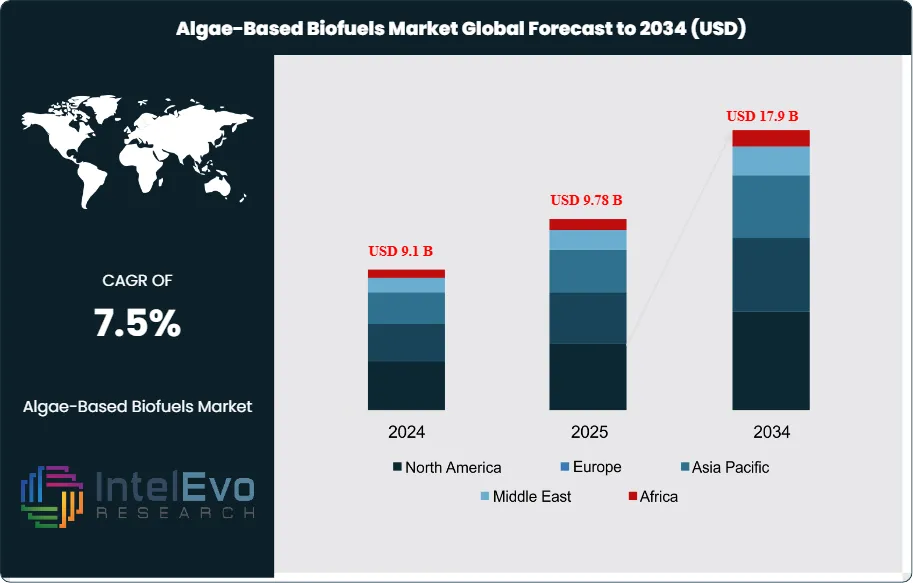
The Global Algae-Based Biofuels Market size is expected to be worth around USD 17.9 Billion by 2034, up from USD 9.1 Billion in 2024, growing at a CAGR of 7.5% during the forecast period from 2025 to 2034. This growth is driven by increasing demand for renewable energy sources, government incentives, and the need to reduce greenhouse gas emissions across key industries.
The global algae-based biofuels market encompasses the production of biofuels derived from algae, including biodiesel, bioethanol, and jet fuel. These biofuels are considered sustainable alternatives to fossil fuels due to their lower carbon footprint and potential for renewable energy. As environmental concerns and energy security become increasingly pressing, the market dynamics reflect a growing investment in research and development of algae-based fuels. Currently, the market is valued at approximately USD 8.55 billion, with significant attention on its potential to reduce greenhouse gas emissions and dependence on non-renewable resources.
The increasing demand for sustainable and eco-friendly fuel alternatives primarily drives growth in the algae-based biofuels market. Regulatory support and incentives from governments worldwide are promoting the use of biofuels, further encouraging investment in this sector. The quest for energy independence and the urgent need to mitigate climate change effects have led to increased focus on renewable energy sources, with algae biofuels emerging as a key player. Additionally, technological advancements in algae cultivation and processing methods are expected to enhance efficiency and reduce costs, driving further growth in the market. The market is projected to grow at a compound annual growth rate (CAGR) of 8.76% from 2024 to 2031.
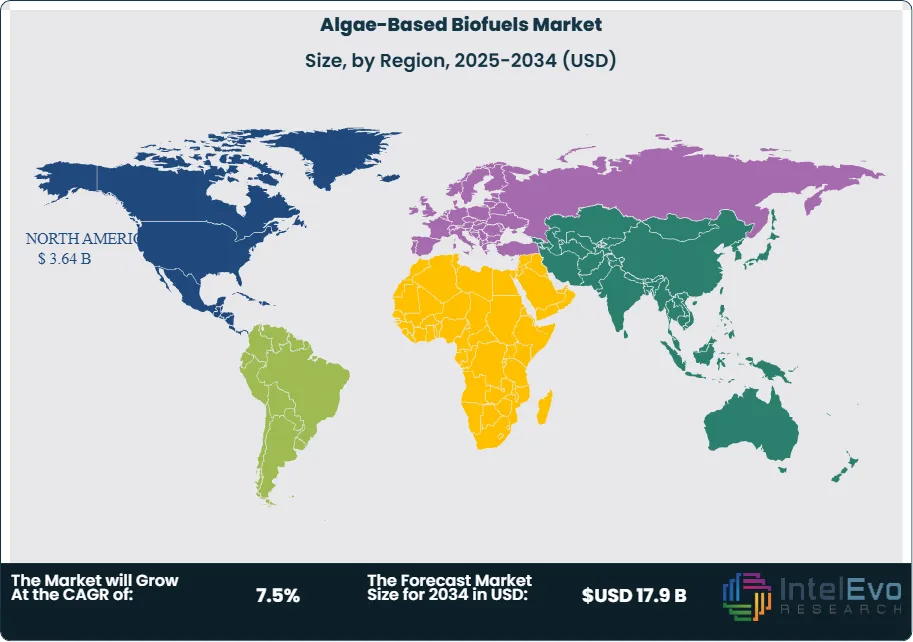
North America and Europe currently dominate the algae-based biofuels market due to supportive regulatory frameworks and advanced research initiatives. The United States is a leader in algae biofuel research, with several initiatives aimed at commercializing algae-based fuels. In Europe, countries such as Germany and France are also heavily investing in algae technologies to reduce carbon emissions and achieve renewable energy targets. Meanwhile, the Asia-Pacific region is expected to experience rapid growth due to increasing energy demands, government initiatives, and a focus on developing sustainable energy solutions.
The COVID-19 pandemic had a significant impact on the algae-based biofuels market, disrupting supply chains and slowing down production and research activities. The reduced demand for transportation fuels during lockdowns led to a temporary decline in biofuel consumption. However, as economies recover and focus on sustainable recovery plans, the algae biofuels market is poised to rebound. The pandemic has also heightened awareness of environmental issues, potentially accelerating the transition to renewable energy sources as governments and industries prioritize sustainability in their recovery strategies.
Key Takeaways
Market Growth: The global algae-based biofuels market is expected to reach USD 17.9 Billion by 2034, growing at a robust CAGR of 7.5% during the forecast period, indicating strong market expansion driven by increasing demand for sustainable energy solutions.
Type Segment Analysis: Biodiesel holds a significant share of the market, primarily due to its compatibility with existing diesel engines and lower emissions. The growing focus on reducing greenhouse gas emissions further bolsters the demand for algae-derived biodiesel.
Application Segment Analysis: Transportation is projected to be the leading application for algae-based biofuels, driven by the global shift towards sustainable fuel alternatives in vehicles. The increasing adoption of biofuels in the aviation sector also contributes to this trend.
Driver: The growing need for sustainable and renewable energy sources to combat climate change is a primary driver for the algae-based biofuels market. Supportive government policies and incentives are further encouraging the adoption of biofuels.
Restraint: High production costs and technical challenges associated with large-scale algae cultivation and processing can hinder market growth. These factors may limit the commercial viability of algae-based biofuels compared to traditional fossil fuels.
Opportunity: Advances in technology and increased investment in research and development present significant opportunities for the algae-based biofuels market. The potential to produce biofuels from various algae species can diversify product offerings and enhance sustainability.
Trend: Increasing focus on carbon-neutral and environmentally friendly fuel solutions is driving trends in the algae-based biofuels market, with innovations in cultivation and extraction technologies gaining prominence.
Regional Analysis: North America and Europe are leading regions in the algae-based biofuels market due to regulatory support and investments in research. Meanwhile, Asia-Pacific is emerging as a growth region, spurred by rising energy demands and government initiatives towards sustainable fuels.
Type
The global algae-based biofuels market can be segmented by type into biodiesel, bioethanol, jet fuel, and methane. Biodiesel is currently the most significant segment due to its compatibility with conventional diesel engines and its potential to reduce greenhouse gas emissions. It is derived primarily from microalgae, which have high lipid content, making them ideal feedstock for biodiesel production. Bioethanol, produced through fermentation processes using algae, is gaining traction as a sustainable alternative to fossil fuels in various applications. Jet fuel from algae is also emerging, particularly as the aviation sector seeks greener fuel options. Methane produced from algae through anaerobic digestion is less common but presents a valuable renewable energy source, particularly for biogas applications.
Application
In terms of application, the algae-based biofuels market is primarily segmented into transportation, aerospace, and other applications. Transportation is the leading segment, driven by the increasing adoption of biofuels in vehicles to meet regulatory mandates for renewable fuel use. Algae-derived biodiesel and bioethanol are particularly favored for this purpose. The aerospace sector is also showing a growing interest in algae-based jet fuels, spurred by a global push for sustainable aviation fuels (SAFs) to mitigate the environmental impact of air travel. Other applications include energy generation and heating, where algae-based fuels can be utilized as a biomass feedstock. This diversification in applications is crucial for market growth as it opens up new revenue streams and encourages further investment in algae-based technologies.
Region Analysis:
North America Leads With 35% Market Share in the Algae-Based Biofuels Market; North America is currently the dominant region in the algae-based biofuels market, accounting for approximately 35% of the total market share. Several factors contribute to this dominance, including substantial investment in research and development, advanced technological capabilities, and supportive government policies promoting renewable energy. The U.S. has implemented various incentives, such as tax credits and grants, to encourage the production and use of biofuels. Furthermore, the presence of numerous established companies and startups focusing on algae biofuel technologies enhances market competitiveness and innovation. The region's commitment to reducing greenhouse gas emissions and reliance on fossil fuels aligns with global sustainability goals, propelling further growth. Additionally, collaborations between academic institutions and industry players are fostering breakthroughs in algae cultivation and processing technologies.
The Asia-Pacific region is the fastest-growing market for algae-based biofuels, driven by increasing energy demands and a strong push for sustainable energy solutions. Countries like China, India, and Australia are focusing on developing biofuels as part of their strategies to reduce reliance on fossil fuels and improve energy security. The region benefits from a variety of climatic conditions suitable for algae cultivation, which can lead to higher yield and lower production costs. Government initiatives promoting renewable energy, along with rising awareness of the environmental benefits of biofuels, are key drivers of growth in this region. Additionally, collaborations between private companies and government entities are expected to accelerate research and development efforts, paving the way for innovative algae biofuel technologies. Other regions, such as Europe and Latin America, are also making significant strides but are currently not growing as rapidly as Asia-Pacific.
By Type (Bioethanol, Biodiesel, Biogas/Methane, Biohydrogen, Jet Fuel), By Feedstock (Macroalgae, Microalgae), By End-User (Automotive & Aviation, Energy & Utilities, Industrial Manufacturing, Others), By Application (Transportation Fuels, Power Generation, Industrial Use, Aerospace, Others)
Research Methodology
Primary Research- 100 Interviews of Stakeholders
Secondary Research
Desk Research
Regional scope
North America (United States, Canada, Mexico)
Latin America (Brazil, Argentina, Columbia)
East Asia And Pacific (China, Japan, South Korea, Australia, Cambodia, Fiji, Indonesia)
Sea And South Asia (India, Singapore, Thailand, Taiwan, Malaysia)
Eastern Europe (Poland, Russia, Czech Republic, Romania)
Western Europe (Germany, U.K., France, Spain, Itlay)
Middle East & Africa (GCC Countries, Egypt, Nigeria, South Africa, Israel)
Competitive Landscape
Solazyme Inc., Algenol Biofuels Inc., Sapphire Energy Inc., Green Plains Renewable Energy Inc., Renewable Energy Group Inc., Phycal Inc., BioEnergy Technologies Inc., Carbon Clean Solutions Limited, BASF SE, Marina Biotech Inc., Heliae Development LLC, Fuels from Algae LLC, Kraig Biocraft Laboratories Inc., Algix LLC, Emerging Fuels Technology Inc., Ecosystem Renewables Ltd., Algae Biomass Organization, AquaBioTech Group, Dunaliella Salina, Cyanotech Corporation
Customization Scope
Customization for segments, region/country-level will be provided. Moreover, additional customization can be done based on the requirements.
Pricing and Purchase Options
Avail customized purchase options to meet your exact research needs. We have three licenses to opt for: Single User License, Multi-User License (Up to 5 Users), Corporate Use License (Unlimited User and Printable PDF).
TABLE OF CONTENTS
1. EXECUTIVE SUMMARY
1.1. MARKET SNAPSHOT
1.2. KEY FINDINGS & INSIGHTS
1.3. ANALYST RECOMMENDATIONS
1.4. FUTURE OUTLOOK
2. RESEARCH METHODOLOGY
2.1. MARKET DEFINITION & SCOPE
2.2. RESEARCH OBJECTIVES: PRIMARY & SECONDARY DATA SOURCES
2.3. DATA COLLECTION SOURCES
2.3.1. COVERAGE OF 100+ PRIMARY RESEARCH/CONSULTATION CALLS WITH INDUSTRY STAKEHOLDERS
FIGURE 17 NORTH AMERICA ALGAE-BASED BIOFUELS CURRENT AND FUTURE TYPE ANALYSIS, 2025–2034, (USD MILLION)
FIGURE 18 NORTH AMERICA ALGAE-BASED BIOFUELS CURRENT AND FUTURE END USER ANALYSIS, 2025–2034, (USD MILLION)
FIGURE 19 MARKET SHARE BY COUNTRY
FIGURE 20 LATIN AMERICA ALGAE-BASED BIOFUELS CURRENT AND FUTURE TYPE ANALYSIS, 2025–2034, (USD MILLION)
FIGURE 21 LATIN AMERICA ALGAE-BASED BIOFUELS CURRENT AND FUTURE END USER ANALYSIS, 2025–2034, (USD MILLION)
FIGURE 22 MARKET SHARE BY COUNTRY
FIGURE 23 EASTERN EUROPE ALGAE-BASED BIOFUELS CURRENT AND FUTURE TYPE ANALYSIS, 2025–2034, (USD MILLION)
FIGURE 24 EASTERN EUROPE ALGAE-BASED BIOFUELS CURRENT AND FUTURE END USER ANALYSIS, 2025–2034, (USD MILLION)
FIGURE 25 MARKET SHARE BY COUNTRY
FIGURE 26 WESTERN EUROPE ALGAE-BASED BIOFUELS CURRENT AND FUTURE TYPE ANALYSIS, 2025–2034, (USD MILLION)
FIGURE 27 WESTERN EUROPE ALGAE-BASED BIOFUELS CURRENT AND FUTURE END USER ANALYSIS, 2025–2034, (USD MILLION)
FIGURE 28 MARKET SHARE BY COUNTRY
FIGURE 29 EAST ASIA AND PACIFIC ALGAE-BASED BIOFUELS CURRENT AND FUTURE TYPE ANALYSIS, 2025–2034, (USD MILLION)
FIGURE 30 EAST ASIA AND PACIFIC ALGAE-BASED BIOFUELS CURRENT AND FUTURE END USER ANALYSIS, 2025–2034, (USD MILLION)
FIGURE 31 MARKET SHARE BY COUNTRY
FIGURE 32 SEA AND SOUTH ASIA ALGAE-BASED BIOFUELS CURRENT AND FUTURE TYPE ANALYSIS, 2025–2034, (USD MILLION)
FIGURE 33 SEA AND SOUTH ASIA ALGAE-BASED BIOFUELS CURRENT AND FUTURE END USER ANALYSIS, 2025–2034, (USD MILLION)
FIGURE 34 MARKET SHARE BY COUNTRY
FIGURE 35 MIDDLE EAST AND AFRICA ALGAE-BASED BIOFUELS CURRENT AND FUTURE TYPE ANALYSIS, 2025–2034, (USD MILLION)
FIGURE 36 MIDDLE EAST AND AFRICA ALGAE-BASED BIOFUELS CURRENT AND FUTURE END USER ANALYSIS, 2025–2034, (USD MILLION)
FIGURE 37 NORTH AMERICA ALGAE-BASED BIOFUELS CURRENT AND FUTURE MARKET VOLUME SHARE REGIONAL ANALYSIS, 2025–2034, (USD MILLION)
FIGURE 38 U.S. ALGAE-BASED BIOFUELS CURRENT AND FUTURE TYPE ANALYSIS, 2025–2034, (USD MILLION)
FIGURE 39 U.S. ALGAE-BASED BIOFUELS CURRENT AND FUTURE END USER ANALYSIS, 2025–2034, (USD MILLION)
FIGURE 40 CANADA ALGAE-BASED BIOFUELS CURRENT AND FUTURE TYPE ANALYSIS, 2025–2034, (USD MILLION)
FIGURE 41 CANADA ALGAE-BASED BIOFUELS CURRENT AND FUTURE END USER ANALYSIS, 2025–2034, (USD MILLION)
FIGURE 42 LATIN AMERICA ALGAE-BASED BIOFUELS CURRENT AND FUTURE MARKET VOLUME SHARE REGIONAL ANALYSIS, 2025–2034, (USD MILLION)
FIGURE 43 MEXICO ALGAE-BASED BIOFUELS CURRENT AND FUTURE TYPE ANALYSIS, 2025–2034, (USD MILLION)
FIGURE 44 MEXICO ALGAE-BASED BIOFUELS CURRENT AND FUTURE END USER ANALYSIS, 2025–2034, (USD MILLION)
FIGURE 45 BRAZIL ALGAE-BASED BIOFUELS CURRENT AND FUTURE TYPE ANALYSIS, 2025–2034, (USD MILLION)
FIGURE 46 BRAZIL ALGAE-BASED BIOFUELS CURRENT AND FUTURE END USER ANALYSIS, 2025–2034, (USD MILLION)
FIGURE 47 ARGENTINA ALGAE-BASED BIOFUELS CURRENT AND FUTURE TYPE ANALYSIS, 2025–2034, (USD MILLION)
FIGURE 48 ARGENTINA ALGAE-BASED BIOFUELS CURRENT AND FUTURE END USER ANALYSIS, 2025–2034, (USD MILLION)
FIGURE 49 COLUMBIA ALGAE-BASED BIOFUELS CURRENT AND FUTURE TYPE ANALYSIS, 2025–2034, (USD MILLION)
FIGURE 50 COLUMBIA ALGAE-BASED BIOFUELS CURRENT AND FUTURE END USER ANALYSIS, 2025–2034, (USD MILLION)
FIGURE 51 REST OF LATIN AMERICA ALGAE-BASED BIOFUELS CURRENT AND FUTURE TYPE ANALYSIS, 2025–2034, (USD MILLION)
FIGURE 52 REST OF LATIN AMERICA ALGAE-BASED BIOFUELS CURRENT AND FUTURE END USER ANALYSIS, 2025–2034, (USD MILLION)
FIGURE 53 EASTERN EUROPE ALGAE-BASED BIOFUELS CURRENT AND FUTURE MARKET VOLUME SHARE REGIONAL ANALYSIS, 2025–2034, (USD MILLION)
FIGURE 54 POLAND ALGAE-BASED BIOFUELS CURRENT AND FUTURE TYPE ANALYSIS, 2025–2034, (USD MILLION)
FIGURE 55 POLAND ALGAE-BASED BIOFUELS CURRENT AND FUTURE END USER ANALYSIS, 2025–2034, (USD MILLION)
FIGURE 56 RUSSIA ALGAE-BASED BIOFUELS CURRENT AND FUTURE TYPE ANALYSIS, 2025–2034, (USD MILLION)
FIGURE 57 RUSSIA ALGAE-BASED BIOFUELS CURRENT AND FUTURE END USER ANALYSIS, 2025–2034, (USD MILLION)
FIGURE 58 CZECH REPUBLIC ALGAE-BASED BIOFUELS CURRENT AND FUTURE TYPE ANALYSIS, 2025–2034, (USD MILLION)
FIGURE 59 CZECH REPUBLIC ALGAE-BASED BIOFUELS CURRENT AND FUTURE END USER ANALYSIS, 2025–2034, (USD MILLION)
FIGURE 60 ROMANIA ALGAE-BASED BIOFUELS CURRENT AND FUTURE TYPE ANALYSIS, 2025–2034, (USD MILLION)
FIGURE 61 ROMANIA ALGAE-BASED BIOFUELS CURRENT AND FUTURE END USER ANALYSIS, 2025–2034, (USD MILLION)
FIGURE 62 REST OF EASTERN EUROPE ALGAE-BASED BIOFUELS CURRENT AND FUTURE TYPE ANALYSIS, 2025–2034, (USD MILLION)
FIGURE 63 REST OF EASTERN EUROPE ALGAE-BASED BIOFUELS CURRENT AND FUTURE END USER ANALYSIS, 2025–2034, (USD MILLION)
FIGURE 64 WESTERN EUROPE ALGAE-BASED BIOFUELS CURRENT AND FUTURE MARKET VOLUME SHARE REGIONAL ANALYSIS, 2025–2034, (USD MILLION)
FIGURE 65 GERMANY ALGAE-BASED BIOFUELS CURRENT AND FUTURE TYPE ANALYSIS, 2025–2034, (USD MILLION)
FIGURE 66 GERMANY ALGAE-BASED BIOFUELS CURRENT AND FUTURE END USER ANALYSIS, 2025–2034, (USD MILLION)
FIGURE 67 FRANCE ALGAE-BASED BIOFUELS CURRENT AND FUTURE TYPE ANALYSIS, 2025–2034, (USD MILLION)
FIGURE 68 FRANCE ALGAE-BASED BIOFUELS CURRENT AND FUTURE END USER ANALYSIS, 2025–2034, (USD MILLION)
FIGURE 69 UK ALGAE-BASED BIOFUELS CURRENT AND FUTURE TYPE ANALYSIS, 2025–2034, (USD MILLION)
FIGURE 70 UK ALGAE-BASED BIOFUELS CURRENT AND FUTURE END USER ANALYSIS, 2025–2034, (USD MILLION)
FIGURE 71 SPAIN ALGAE-BASED BIOFUELS CURRENT AND FUTURE TYPE ANALYSIS, 2025–2034, (USD MILLION)
FIGURE 72 SPAIN ALGAE-BASED BIOFUELS CURRENT AND FUTURE END USER ANALYSIS, 2025–2034, (USD MILLION)
FIGURE 73 ITALY ALGAE-BASED BIOFUELS CURRENT AND FUTURE TYPE ANALYSIS, 2025–2034, (USD MILLION)
FIGURE 74 ITALY ALGAE-BASED BIOFUELS CURRENT AND FUTURE END USER ANALYSIS, 2025–2034, (USD MILLION)
FIGURE 75 REST OF WESTERN EUROPE ALGAE-BASED BIOFUELS CURRENT AND FUTURE TYPE ANALYSIS, 2025–2034, (USD MILLION)
FIGURE 76 REST OF WESTERN EUROPE ALGAE-BASED BIOFUELS CURRENT AND FUTURE END USER ANALYSIS, 2025–2034, (USD MILLION)
FIGURE 77 EAST ASIA AND PACIFIC ALGAE-BASED BIOFUELS CURRENT AND FUTURE MARKET VOLUME SHARE REGIONAL ANALYSIS, 2025–2034, (USD MILLION)
FIGURE 78 CHINA ALGAE-BASED BIOFUELS CURRENT AND FUTURE TYPE ANALYSIS, 2025–2034, (USD MILLION)
FIGURE 79 CHINA ALGAE-BASED BIOFUELS CURRENT AND FUTURE END USER ANALYSIS, 2025–2034, (USD MILLION)
FIGURE 80 JAPAN ALGAE-BASED BIOFUELS CURRENT AND FUTURE TYPE ANALYSIS, 2025–2034, (USD MILLION)
FIGURE 81 JAPAN ALGAE-BASED BIOFUELS CURRENT AND FUTURE END USER ANALYSIS, 2025–2034, (USD MILLION)
FIGURE 82 AUSTRALIA ALGAE-BASED BIOFUELS CURRENT AND FUTURE TYPE ANALYSIS, 2025–2034, (USD MILLION)
FIGURE 83 AUSTRALIA ALGAE-BASED BIOFUELS CURRENT AND FUTURE END USER ANALYSIS, 2025–2034, (USD MILLION)
FIGURE 84 CAMBODIA ALGAE-BASED BIOFUELS CURRENT AND FUTURE TYPE ANALYSIS, 2025–2034, (USD MILLION)
FIGURE 85 CAMBODIA ALGAE-BASED BIOFUELS CURRENT AND FUTURE END USER ANALYSIS, 2025–2034, (USD MILLION)
FIGURE 86 FIJI ALGAE-BASED BIOFUELS CURRENT AND FUTURE TYPE ANALYSIS, 2025–2034, (USD MILLION)
FIGURE 87 FIJI ALGAE-BASED BIOFUELS CURRENT AND FUTURE END USER ANALYSIS, 2025–2034, (USD MILLION)
FIGURE 88 INDONESIA ALGAE-BASED BIOFUELS CURRENT AND FUTURE TYPE ANALYSIS, 2025–2034, (USD MILLION)
FIGURE 89 INDONESIA ALGAE-BASED BIOFUELS CURRENT AND FUTURE END USER ANALYSIS, 2025–2034, (USD MILLION)
FIGURE 90 SOUTH KOREA ALGAE-BASED BIOFUELS CURRENT AND FUTURE TYPE ANALYSIS, 2025–2034, (USD MILLION)
FIGURE 91 SOUTH KOREA ALGAE-BASED BIOFUELS CURRENT AND FUTURE END USER ANALYSIS, 2025–2034, (USD MILLION)
FIGURE 92 REST OF EAST ASIA AND PACIFIC ALGAE-BASED BIOFUELS CURRENT AND FUTURE TYPE ANALYSIS, 2025–2034, (USD MILLION)
FIGURE 93 REST OF EAST ASIA AND PACIFIC ALGAE-BASED BIOFUELS CURRENT AND FUTURE END USER ANALYSIS, 2025–2034, (USD MILLION)
FIGURE 94 SEA AND SOUTH ASIA ALGAE-BASED BIOFUELS CURRENT AND FUTURE MARKET VOLUME SHARE REGIONAL ANALYSIS, 2025–2034, (USD MILLION)
FIGURE 95 BANGLADESH ALGAE-BASED BIOFUELS CURRENT AND FUTURE TYPE ANALYSIS, 2025–2034, (USD MILLION)
FIGURE 96 BANGLADESH ALGAE-BASED BIOFUELS CURRENT AND FUTURE END USER ANALYSIS, 2025–2034, (USD MILLION)
FIGURE 97 NEW ZEALAND ALGAE-BASED BIOFUELS CURRENT AND FUTURE TYPE ANALYSIS, 2025–2034, (USD MILLION)
FIGURE 98 NEW ZEALAND ALGAE-BASED BIOFUELS CURRENT AND FUTURE END USER ANALYSIS, 2025–2034, (USD MILLION)
FIGURE 99 INDIA ALGAE-BASED BIOFUELS CURRENT AND FUTURE TYPE ANALYSIS, 2025–2034, (USD MILLION)
FIGURE 100 INDIA ALGAE-BASED BIOFUELS CURRENT AND FUTURE END USER ANALYSIS, 2025–2034, (USD MILLION)
FIGURE 101 SINGAPORE ALGAE-BASED BIOFUELS CURRENT AND FUTURE TYPE ANALYSIS, 2025–2034, (USD MILLION)
FIGURE 102 SINGAPORE ALGAE-BASED BIOFUELS CURRENT AND FUTURE END USER ANALYSIS, 2025–2034, (USD MILLION)
FIGURE 103 THAILAND ALGAE-BASED BIOFUELS CURRENT AND FUTURE TYPE ANALYSIS, 2025–2034, (USD MILLION)
FIGURE 104 THAILAND ALGAE-BASED BIOFUELS CURRENT AND FUTURE END USER ANALYSIS, 2025–2034, (USD MILLION)
FIGURE 105 TAIWAN ALGAE-BASED BIOFUELS CURRENT AND FUTURE TYPE ANALYSIS, 2025–2034, (USD MILLION)
FIGURE 106 TAIWAN ALGAE-BASED BIOFUELS CURRENT AND FUTURE END USER ANALYSIS, 2025–2034, (USD MILLION)
FIGURE 107 MALAYSIA ALGAE-BASED BIOFUELS CURRENT AND FUTURE TYPE ANALYSIS, 2025–2034, (USD MILLION)
FIGURE 108 MALAYSIA ALGAE-BASED BIOFUELS CURRENT AND FUTURE END USER ANALYSIS, 2025–2034, (USD MILLION)
FIGURE 109 REST OF SEA AND SOUTH ASIA ALGAE-BASED BIOFUELS CURRENT AND FUTURE TYPE ANALYSIS, 2025–2034, (USD MILLION)
FIGURE 110 REST OF SEA AND SOUTH ASIA ALGAE-BASED BIOFUELS CURRENT AND FUTURE END USER ANALYSIS, 2025–2034, (USD MILLION)
FIGURE 111 MIDDLE EAST AND AFRICA ALGAE-BASED BIOFUELS CURRENT AND FUTURE MARKET VOLUME SHARE REGIONAL ANALYSIS, 2025–2034, (USD MILLION)
FIGURE 112 GCC COUNTRIES ALGAE-BASED BIOFUELS CURRENT AND FUTURE TYPE ANALYSIS, 2025–2034, (USD MILLION)
FIGURE 113 GCC COUNTRIES ALGAE-BASED BIOFUELS CURRENT AND FUTURE END USER ANALYSIS, 2025–2034, (USD MILLION)
FIGURE 114 SAUDI ARABIA ALGAE-BASED BIOFUELS CURRENT AND FUTURE TYPE ANALYSIS, 2025–2034, (USD MILLION)
FIGURE 115 SAUDI ARABIA ALGAE-BASED BIOFUELS CURRENT AND FUTURE END USER ANALYSIS, 2025–2034, (USD MILLION)
FIGURE 116 UAE ALGAE-BASED BIOFUELS CURRENT AND FUTURE TYPE ANALYSIS, 2025–2034, (USD MILLION)
FIGURE 117 UAE ALGAE-BASED BIOFUELS CURRENT AND FUTURE END USER ANALYSIS, 2025–2034, (USD MILLION)
FIGURE 118 BAHRAIN ALGAE-BASED BIOFUELS CURRENT AND FUTURE TYPE ANALYSIS, 2025–2034, (USD MILLION)
FIGURE 119 BAHRAIN ALGAE-BASED BIOFUELS CURRENT AND FUTURE END USER ANALYSIS, 2025–2034, (USD MILLION)
FIGURE 120 KUWAIT ALGAE-BASED BIOFUELS CURRENT AND FUTURE TYPE ANALYSIS, 2025–2034, (USD MILLION)
FIGURE 121 KUWAIT ALGAE-BASED BIOFUELS CURRENT AND FUTURE END USER ANALYSIS, 2025–2034, (USD MILLION)
FIGURE 122 OMAN ALGAE-BASED BIOFUELS CURRENT AND FUTURE TYPE ANALYSIS, 2025–2034, (USD MILLION)
FIGURE 123 OMAN ALGAE-BASED BIOFUELS CURRENT AND FUTURE END USER ANALYSIS, 2025–2034, (USD MILLION)
FIGURE 124 QATAR ALGAE-BASED BIOFUELS CURRENT AND FUTURE TYPE ANALYSIS, 2025–2034, (USD MILLION)
FIGURE 125 QATAR ALGAE-BASED BIOFUELS CURRENT AND FUTURE END USER ANALYSIS, 2025–2034, (USD MILLION)
FIGURE 126 EGYPT ALGAE-BASED BIOFUELS CURRENT AND FUTURE TYPE ANALYSIS, 2025–2034, (USD MILLION)
FIGURE 127 EGYPT ALGAE-BASED BIOFUELS CURRENT AND FUTURE END USER ANALYSIS, 2025–2034, (USD MILLION)
FIGURE 128 NIGERIA ALGAE-BASED BIOFUELS CURRENT AND FUTURE TYPE ANALYSIS, 2025–2034, (USD MILLION)
FIGURE 129 NIGERIA ALGAE-BASED BIOFUELS CURRENT AND FUTURE END USER ANALYSIS, 2025–2034, (USD MILLION)
FIGURE 130 SOUTH AFRICA ALGAE-BASED BIOFUELS CURRENT AND FUTURE TYPE ANALYSIS, 2025–2034, (USD MILLION)
FIGURE 131 SOUTH AFRICA ALGAE-BASED BIOFUELS CURRENT AND FUTURE END USER ANALYSIS, 2025–2034, (USD MILLION)
FIGURE 132 ISRAEL ALGAE-BASED BIOFUELS CURRENT AND FUTURE TYPE ANALYSIS, 2025–2034, (USD MILLION)
FIGURE 133 ISRAEL ALGAE-BASED BIOFUELS CURRENT AND FUTURE END USER ANALYSIS, 2025–2034, (USD MILLION)
FIGURE 134 REST OF MEA ALGAE-BASED BIOFUELS CURRENT AND FUTURE TYPE ANALYSIS, 2025–2034, (USD MILLION)
FIGURE 135 REST OF MEA ALGAE-BASED BIOFUELS CURRENT AND FUTURE END USER ANALYSIS, 2025–2034, (USD MILLION)
FIGURE 136 U. S. MARKET SHARE ANALYSIS BY TYPE (2024)
FIGURE 137 U. S. MARKET SHARE ANALYSIS BY END USER (2024)
FIGURE 138 CANADA MARKET SHARE ANALYSIS BY TYPE (2024)
FIGURE 139 CANADA MARKET SHARE ANALYSIS BY END USER (2024)
FIGURE 140 MEXICO MARKET SHARE ANALYSIS BY TYPE (2024)
FIGURE 141 MEXICO MARKET SHARE ANALYSIS BY END USER (2024)
FIGURE 142 CHINA MARKET SHARE ANALYSIS BY TYPE (2024)
FIGURE 143 CHINA MARKET SHARE ANALYSIS BY END USER (2024)
FIGURE 144 JAPAN MARKET SHARE ANALYSIS BY TYPE (2024)
FIGURE 145 JAPAN MARKET SHARE ANALYSIS BY END USER (2024)
FIGURE 146 INDIA MARKET SHARE ANALYSIS BY TYPE (2024)
FIGURE 147 INDIA MARKET SHARE ANALYSIS BY END USER (2024)
FIGURE 148 SOUTH KOREA MARKET SHARE ANALYSIS BY TYPE (2024)
FIGURE 149 SOUTH KOREA MARKET SHARE ANALYSIS BY END USER (2024)
FIGURE 150 SAUDI ARABIA MARKET SHARE ANALYSIS BY TYPE (2024)
FIGURE 151 SAUDI ARABIA MARKET SHARE ANALYSIS BY END USER (2024)
FIGURE 152 UAE MARKET SHARE ANALYSIS BY TYPE (2024)
FIGURE 153 UAE MARKET SHARE ANALYSIS BY END USER (2024)
FIGURE 154 EGYPT MARKET SHARE ANALYSIS BY TYPE (2024)
FIGURE 155 EGYPT MARKET SHARE ANALYSIS BY END USER (2024)
FIGURE 156 NIGERIA MARKET SHARE ANALYSIS BY TYPE (2024)
FIGURE 157 NIGERIA MARKET SHARE ANALYSIS BY END USER (2024)
FIGURE 158 SOUTH AFRICA MARKET SHARE ANALYSIS BY TYPE (2024)
FIGURE 159 SOUTH AFRICA MARKET SHARE ANALYSIS BY END USER (2024)
FIGURE 160 GERMANY MARKET SHARE ANALYSIS BY TYPE (2024)
FIGURE 161 GERMANY MARKET SHARE ANALYSIS BY END USER (2024)
FIGURE 162 FRANCE MARKET SHARE ANALYSIS BY TYPE (2024)
FIGURE 163 FRANCE MARKET SHARE ANALYSIS BY END USER (2024)
FIGURE 164 UK MARKET SHARE ANALYSIS BY TYPE (2024)
FIGURE 165 UK MARKET SHARE ANALYSIS BY END USER (2024)
FIGURE 166 SPAIN MARKET SHARE ANALYSIS BY TYPE (2024)
FIGURE 167 SPAIN MARKET SHARE ANALYSIS BY END USER (2024)
FIGURE 168 ITALY MARKET SHARE ANALYSIS BY TYPE (2024)
FIGURE 169 ITALY MARKET SHARE ANALYSIS BY END USER (2024)
FIGURE 170 BRAZIL MARKET SHARE ANALYSIS BY TYPE (2024)
FIGURE 171 BRAZIL MARKET SHARE ANALYSIS BY END USER (2024)
FIGURE 172 ARGENTINA MARKET SHARE ANALYSIS BY TYPE (2024)
FIGURE 173 ARGENTINA MARKET SHARE ANALYSIS BY END USER (2024)
FIGURE 174 COLUMBIA MARKET SHARE ANALYSIS BY TYPE (2024)
FIGURE 175 COLUMBIA MARKET SHARE ANALYSIS BY END USER (2024)
FIGURE 176 GLOBAL ALGAE-BASED BIOFUELS CURRENT AND FUTURE MARKET KEY COUNTRY LEVEL ANALYSIS, 2024–2034, (USD MILLION)
FIGURE 177 FINANCIAL OVERVIEW:
Key Players Analysis:
Solazyme, Inc.: Solazyme, based in San Francisco, California, specializes in producing renewable oils and biofuels from algae. Their proprietary technology enables the conversion of biomass into tailored oil products for various applications, including transportation fuels and consumer goods. Solazyme's strategy focuses on partnerships with major brands to integrate sustainable products into their supply chains.
Sapphire Energy, Inc.: Headquartered in San Diego, California, Sapphire Energy is a leader in algae-derived biofuels and has developed a unique process to convert algae into crude oil. Their flagship product, "Green Crude," can be refined into conventional fuels. Sapphire's strategy emphasizes scaling production and collaborating with industry stakeholders to promote algae as a viable biofuel alternative.
Algenol Biofuels, Inc.: Algenol, located in Fort Myers, Florida, focuses on using algae to produce ethanol and other renewable fuels through its patented technology. Their process involves using carbon dioxide and sunlight to grow algae that can be converted into biofuels. Algenol's strategy is centered on innovation and securing partnerships with energy companies to expand production capabilities.
Green Plains Renewable Energy, Inc.: Based in Omaha, Nebraska, Green Plains is one of the largest ethanol producers in North America, with an expanding focus on algae-based biofuels. The company develops sustainable biofuels and ingredients for various markets. Their strategy includes diversifying their product offerings and investing in technologies that support environmental sustainability.
Renewable Energy Group, Inc.: Located in Ames, Iowa, Renewable Energy Group specializes in producing biodiesel and renewable diesel from various feedstocks, including algae. The company offers a range of services, including renewable fuel production and distribution. Their business strategy involves expanding their production facilities and investing in research to enhance biofuel efficiency.
Phycal, Inc.: Phycal, based in Miami, Florida, develops advanced biofuels from algae through its proprietary cultivation and processing techniques. The company aims to produce sustainable biofuels at competitive costs. Their strategy focuses on scaling operations and forming alliances with key players in the renewable energy sector to enhance market penetration.
BASF SE: A global chemical giant based in Ludwigshafen, Germany, BASF is involved in algae biofuels through research and product development. They focus on integrating biofuel solutions into their chemical offerings. BASF's strategy emphasizes sustainability and innovation, aiming to lead in sustainable agriculture and renewable energy solutions.
Heliae Development, LLC: Heliae, located in Gilbert, Arizona, focuses on algae production and the development of renewable biofuels. They emphasize a multi-product strategy, producing not just fuels but also nutraceuticals and animal feed. Heliae's approach includes collaboration with agricultural partners to optimize algae cultivation and commercialization.
Cyanotech Corporation: Based in Kailua-Kona, Hawaii, Cyanotech specializes in microalgae production for health and wellness products, as well as biofuels. Their core products include spirulina and astaxanthin, but they are also exploring biofuel applications. Cyanotech's strategy emphasizes sustainability and health benefits, positioning algae as a superfood and a biofuel source.
Emerging Fuels Technology, Inc.: Emerging Fuels Technology, located in Houston, Texas, is dedicated to developing advanced biofuel technologies, including those utilizing algae. They focus on producing renewable fuels that meet regulatory standards. Their strategy includes leveraging proprietary technologies to enhance production efficiency and reduce costs in the algae biofuel sector.
Market Key Players
Solazyme, Inc.
Algenol Biofuels, Inc.
Sapphire Energy, Inc.
Green Plains Renewable Energy, Inc.
Renewable Energy Group, Inc.
Phycal, Inc.
BioEnergy Technologies, Inc.
Carbon Clean Solutions Limited
BASF SE
Marina Biotech, Inc.
Heliae Development, LLC
Fuels from Algae, LLC
Kraig Biocraft Laboratories, Inc.
Algix, LLC
Emerging Fuels Technology, Inc.
Ecosystem Renewables Ltd.
Algae Biomass Organization
AquaBioTech Group
Dunaliella Salina
Cyanotech Corporation
Driver:
Increasing Demand for Personalized Content
Sustainable Energy Demand: The increasing global demand for sustainable energy sources is a significant driver for the algae-based biofuels market. As concerns about climate change and environmental degradation grow, governments and organizations are seeking alternatives to fossil fuels. Algae biofuels offer a renewable and carbon-neutral option that can help reduce greenhouse gas emissions and dependency on non-renewable energy. This shift is further supported by regulatory frameworks and incentives promoting biofuels, such as mandates for renewable energy usage and carbon credits. As countries implement stricter environmental policies and set ambitious targets for emissions reduction, the algae-based biofuels market is poised for robust growth, attracting investments in research and technology to enhance production efficiency and scalability.
Technological Advancements
Continuous advancements in algae cultivation and processing technologies are propelling the growth of the algae-based biofuels market. Innovations in genetic engineering, biotechnology, and cultivation techniques are enhancing algae strains' lipid content, leading to more efficient biofuel production. Techniques such as photobioreactor systems and open pond cultivation are being optimized to increase yield while reducing production costs. Moreover, advancements in extraction and conversion processes are enabling higher biofuel outputs with lower energy inputs. These technological improvements not only make algae biofuels more economically viable but also enhance their competitiveness against traditional fossil fuels. As research progresses, new methodologies are expected to emerge, further driving market expansion and sustainability.
Government Support and Policies
Government initiatives and policies play a crucial role in shaping the algae-based biofuels market. Various countries have introduced regulations, incentives, and funding programs to promote renewable energy sources, including biofuels derived from algae. For instance, subsidies, tax credits, and grants are being provided to encourage research and development in this field. Additionally, international agreements and commitments to reduce carbon emissions are prompting governments to support biofuel adoption as part of their climate action strategies. This favorable policy environment creates a conducive atmosphere for investment and innovation, driving the growth of the algae-based biofuels market. As countries strive to meet their renewable energy targets, government support will continue to be a key driver.
Restraints:
High Production Costs
One of the significant challenges facing the algae-based biofuels market is the high production costs associated with algae cultivation and processing. Compared to traditional fossil fuels, the economics of producing biofuels from algae remain less favorable due to several factors, including the need for advanced technologies, infrastructure investments, and operational expenses. The costs of cultivating and harvesting algae, coupled with the extraction and conversion processes, contribute to the overall expense of biofuel production. This financial barrier can deter potential investors and limit the widespread adoption of algae biofuels. Unless significant technological breakthroughs or economies of scale are achieved to reduce production costs, the market may face challenges in competing with established fossil fuel sources.
Technical Challenges
The algae-based biofuels industry faces several technical challenges that can impede its growth. Cultivating algae on a large scale requires specific environmental conditions, which may not be easily replicated in various geographic locations. Additionally, harvesting and processing algae can be complex, often involving sophisticated technology and methods that require significant capital investment. Furthermore, variations in algae strains and their biochemical properties can impact the consistency and quality of biofuels produced. These technical hurdles necessitate ongoing research and development efforts, and until solutions are effectively implemented, they may hinder the market's ability to scale up production and meet the growing demand for renewable energy.
Opportunities:
R&D Investments
The algae-based biofuels market presents significant opportunities for growth through increased research and development investments. As interest in renewable energy solutions rises, funding for innovative projects in algae cultivation, processing, and extraction technologies is expanding. Public and private sector collaborations can lead to breakthroughs in optimizing algae strains for higher lipid yields, enhancing the overall efficiency of biofuel production. Additionally, investments in pilot projects and demonstration facilities can help validate new technologies and encourage commercial scalability. With the right funding and resources, researchers can explore untapped potential in algae biofuels, paving the way for market expansion and sustainability.
Diversification of Applications
The potential to diversify the applications of algae-based biofuels offers considerable opportunities for market growth. Beyond traditional uses in transportation and energy generation, algae biofuels can be utilized in various sectors, including pharmaceuticals, cosmetics, and animal feed. The versatility of algae as a feedstock allows for the development of a wide range of bio-based products, enhancing their marketability and appeal. By expanding the range of applications, manufacturers can tap into new revenue streams and improve the economic viability of algae biofuels. As awareness of the benefits of algae-derived products increases, this diversification can significantly boost market demand and innovation.
Trend:
Sustainability Focus
A prominent trend shaping the algae-based biofuels market is the increasing focus on sustainability and carbon neutrality. With growing awareness of climate change and environmental issues, consumers and businesses are seeking greener alternatives to traditional fossil fuels. Algae biofuels are perceived as a sustainable solution, as they can significantly reduce greenhouse gas emissions and utilize non-arable land for cultivation. This trend is reflected in investments in sustainable technologies and research aimed at improving the efficiency and scalability of algae biofuel production. Moreover, corporations are increasingly committing to sustainability goals, driving demand for renewable energy sources. As environmental considerations become integral to energy policies and consumer preferences, the algae-based biofuels market is likely to see accelerated growth.
Recent Development
In August 2024: Modular construction firm Southeast Modular announced a partnership with Agile Construction to enhance its capacity for modular residential and commercial projects. This collaboration aims to combine Agile's innovative construction technology with Southeast Modular's expertise in manufacturing and installation, streamlining processes and reducing project timelines.
In September 2024: Z Modular introduced a new line of modular office spaces designed for rapid deployment in urban environments. These units can be constructed off-site and assembled in just a few days, addressing the growing demand for flexible workspaces. The product launch reflects the company's commitment to sustainable building practices, utilizing eco-friendly materials and construction methods.
Frequently Asked Questions
How big is the Algae-Based Biofuels Market?
The Algae-Based Biofuels Market will grow from USD 9.1B in 2024 to USD 17.9B by 2034 at 7.5% CAGR, fueled by renewable energy demand & govt incentives.
Who are the major players in the Algae-Based Biofuels Market?
Solazyme Inc., Algenol Biofuels Inc., Sapphire Energy Inc., Green Plains Renewable Energy Inc., Renewable Energy Group Inc., Phycal Inc., BioEnergy Technologies Inc., Carbon Clean Solutions Limited, BASF SE, Marina Biotech Inc., Heliae Development LLC, Fuels from Algae LLC, Kraig Biocraft Laboratories Inc., Algix LLC, Emerging Fuels Technology Inc., Ecosystem Renewables Ltd., Algae Biomass Organization, AquaBioTech Group, Dunaliella Salina, Cyanotech Corporation
Which segments covered the Algae-Based Biofuels Market?
By Type (Bioethanol, Biodiesel, Biogas/Methane, Biohydrogen, Jet Fuel), By Feedstock (Macroalgae, Microalgae), By End-User (Automotive & Aviation, Energy & Utilities, Industrial Manufacturing, Others), By Application (Transportation Fuels, Power Generation, Industrial Use, Aerospace, Others)
How can this market research report help my business make strategic decisions?
Our market research reports provide actionable intelligence, including verified market size data, CAGR projections, competitive benchmarking, and segment-level opportunity analysis. These insights support strategic planning, investment decisions, product development, and market entry strategies for enterprises and startups alike.
How frequently is the data updated?
We continuously monitor industry developments and update our reports to reflect regulatory changes, technological advancements, and macroeconomic shifts. Updated editions ensure you receive the latest market intelligence.


 Aerospace And Defence
 Agriculture
 Automotive And Transportation
 Banking And Finance
 Business
 Chemicals And Materials
 Consumer And Retail
 Electronics And Semiconductors
 Food And Beverages
 Machinery & Equipments
 Manufacturing And Construction
 Medical Devices
 Others
 Pharmaceuticals And Healthcare
 Power And Energy
 Sports
 Technology