

- Home
- Industries
 Aerospace And Defence
 Agriculture
 Automotive And Transportation
 Banking And Finance
 Business
 Chemicals And Materials
 Consumer And Retail
 Electronics And Semiconductors
 Food And Beverages
 Machinery & Equipments
 Manufacturing And Construction
 Medical Devices
 Others
 Pharmaceuticals And Healthcare
 Power And Energy
 Sports
 Technology
- Services
- News Room
- About us
- Contact Us
-
Brazil Virtual Nutrition Coach App Market Size, Growth & Forecast | CAGR 12.7%
Brazil Virtual Nutrition Coach App Market Size, Share & Industry Analysis By Product Type (Live Streaming, On-Demand Streaming), By Device Type (Smartphones, Smart TVs, Laptops & Desktops, Other Devices), By Revenue Model (Subscription, Advertisement), By End-User & Application Industry Region & Key Players – Industry Segment Overview, Market Drivers, Restraints, Competitive Strategies, AI-Powered Personalization Trends & Forecast 2025–2034

Report Overview
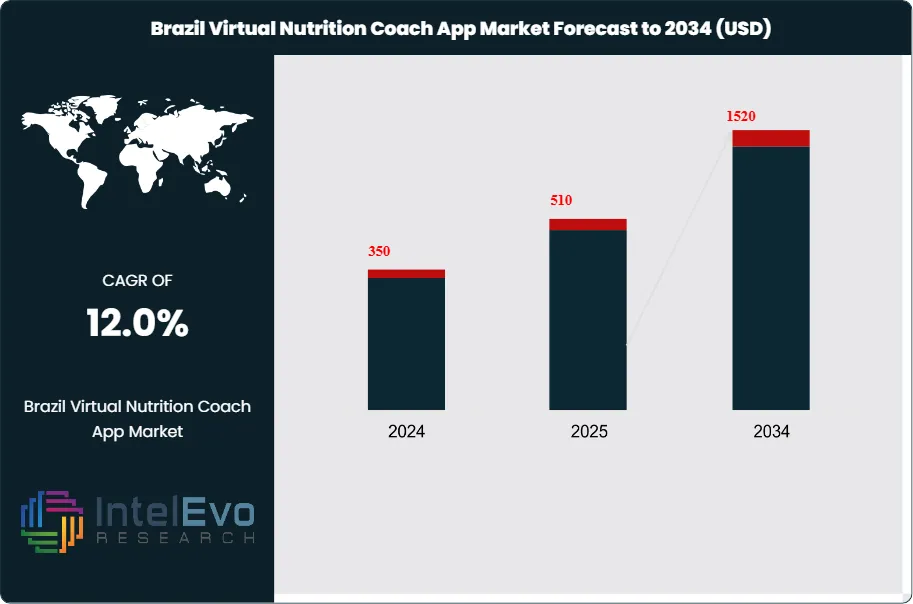
The Brazil Virtual Nutrition Coach App Market is valued at approximately USD 51 million in 2025 and is projected to reach around USD 152 million by 2034, expanding at a compound annual growth rate (CAGR) of about 12.7% during the forecast period from 2026 to 2034. Market growth is driven by rising adoption of AI-powered health and wellness applications, increasing prevalence of lifestyle-related disorders, and growing consumer focus on personalized nutrition and preventive healthcare. In addition, integration of wearable data, real-time dietary analytics, and subscription-based digital health platforms is accelerating user engagement, positioning virtual nutrition coach apps as a core component of the global digital health ecosystem.
Get More Information about this report -
Request Free Sample ReportThe Brazil virtual nutrition coach app market is experiencing strong expansion, supported by an impressive 87% smartphone penetration rate and a nationwide shift toward preventive healthcare solutions. In 2024, Brazil’s broader digital health coaching market reached an estimated value of USD 245 million, with nutrition and diet coaching representing approximately 25% of total market revenue—making it the largest segment within the digital coaching ecosystem. With a projected compound annual growth rate (CAGR) of 13.4% through 2030, Brazil continues to strengthen its position as a leading force in the Latin American digital health industry.
The competitive landscape combines international digital health leaders with agile local innovators. While global brands such as MyFitnessPal and Noom maintain substantial user bases, Brazilian platforms like Queima Diária and Zen App are differentiating themselves through culturally adapted meal plans, Portuguese-language interfaces, and localized wellness strategies. Regulatory compliance is also playing a strategic role in market development. Brazil’s Lei Geral de Proteção de Dados (LGPD) requires strict data protection measures for digital platforms, encouraging enhanced security standards across nutrition apps. Rather than slowing growth, these privacy requirements have strengthened user confidence, contributing to the expansion of subscription-based revenue models, which now account for approximately 54% of total market earnings.
Overall, the Brazil virtual nutrition coach app market is transitioning from early adoption to a mature, technology-driven ecosystem. With increasing consumer engagement, AI integration, regulatory clarity, and strong subscription monetization, Brazil is positioned as one of the most attractive markets for digital nutrition platforms in Latin America.

Key Takeaways
- Market Growth: The global virtual nutrition coach app market grows from US$ 288.5 billion in 2024, USD 310.0 billion in 2025 to USD 1,420.0 billion by 2034, reflecting strong monetization of digital health engagement. This trajectory implies a normalized CAGR of 17.0% over 2026-2034 as recurring subscription and hybrid B2B2C models scale.
- Segment Dominance: Live streaming functionalities lead the product landscape with 60.0% market share, 2023, as real-time coaching sessions and interactive content drive higher engagement and perceived value. This segment will likely remain the core revenue engine with estimated: 62.0% share of in-app spending, 2027.
- Segment Dominance: Smartphones hold 39.0% of device-based usage share, 2023, reinforcing mobile-first design as the primary delivery channel. Subscription-based revenue models contribute 54.0% of total market revenues, 2023, with estimated: 65.0% contribution to recurring revenues, 2030 as retention strategies mature.
- Market Growth Drivers:
- Rising prevalence of lifestyle-related conditions such as obesity and diabetes
- Increased health consciousness among millennials and Gen Z consumers
- Expansion of telemedicine and digital health services
- Higher smartphone and mobile internet usage rates
- Growing demand for personalized nutrition and AI-driven health solutions.
- Technology & Innovation Trends:
- AI-powered meal recommendations based on regional dietary patterns
- Integration with grocery delivery and food tracking platforms
- Real-time health analytics and biometric data syncing
- Multilingual interfaces with localized Brazilian Portuguese content
- Gamification and behavior-based engagement tools
- Opportunities in Brazil:
Healthcare providers and clinics seeking remote dietary support tools
Health insurance companies implementing preventive wellness programs
Corporate wellness providers offering employee health benefits
Fitness chains and gyms integrating nutrition guidance into digital memberships
Technology companies developing white-label nutrition coaching platforms
By Product Type
Live streaming holds the largest position in the virtual nutrition coach app market. It accounted for about 60 percent of global revenue in 2023. Adoption remains strong in 2025 as users seek real-time interaction with certified nutrition professionals. The format supports immediate feedback, structured check-ins, and measurable progress monitoring. It also encourages repeat usage, which strengthens retention metrics for providers. Platforms that support multi-participant sessions continue to gain attention among users who prefer a group-based format.
On-demand streaming maintains a solid share as well. Users value the ability to access pre-recorded content at any time. This format appeals to individuals with inconsistent schedules or those who prefer self-paced learning. The two formats complement each other. Providers that offer both live and on-demand services report higher average engagement and stronger conversion rates into long-term subscription plans. As of 2025, hybrid models remain a core feature in product strategies across the industry.
By Device Type
Smartphones remain the primary access point for virtual nutrition coaching. They represented 39 percent of global usage in 2023 and continue to expand in 2025 as mobile adoption grows in both mature and emerging markets. Their portability allows users to record meals, track progress, and join coaching sessions in real time. This continuous accessibility strengthens user participation and supports the rapid expansion of mobile-based nutrition ecosystems.
Smart TVs and laptops or desktops serve users who prefer larger displays and more stable connections. Smart TVs help create a more comfortable viewing experience for extended coaching sessions. Laptops and desktops support high-resolution live broadcasts, structured assessments, and data-rich dashboards. Other device categories, such as tablets and wearables, add flexibility. They allow users to integrate nutrition tracking into exercise routines and daily activities. Combined usage across device categories supports broader market penetration.
By Revenue Model
Subscription models account for 54 percent of the market and remain the primary revenue generator. Subscribers gain ongoing access to structured coaching plans, live sessions, and individualized recommendations. This approach provides predictable monthly revenue for providers and supports continuous delivery of new features. Sustained user interaction increases lifetime value and supports expansion into premium tiers that include specialized coaching and progress analytics.
Advertisement-supported models maintain relevance. They allow low-cost access, which attracts new users and supports volume-based growth. Ads typically come from health, fitness, and nutrition brands, which align well with user interests. The combination of subscription and advertisement models gives providers a balanced revenue structure. Industry assessments in 2025 indicate that platforms using both models record stronger global reach and higher overall engagement.
By Region
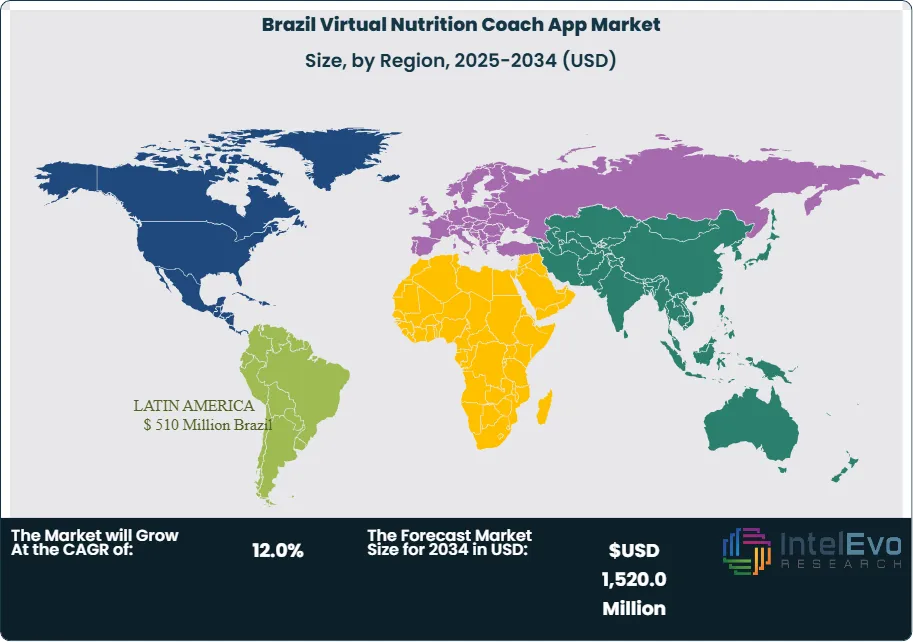
Market growth is increasingly driven by consumer demand for advanced, hyper-personalized nutrition experiences. Brazilian users are moving beyond traditional calorie-tracking apps toward AI-powered platforms offering predictive meal planning, adaptive coaching algorithms, and real-time biometric integration. Studies show that nearly 62% of Brazilian adults are interested in personalized health and nutrition plans, highlighting a significant opportunity for high-performance app developers. This trend is reflected in the rapid expansion of global platforms such as YAZIO, which recorded approximately 719,000 weekly active users in Brazil by mid-2024. Additionally, live coaching and interactive features—now accounting for over 60% of the global virtual coaching segment—are gaining strong adoption in Brazil’s major metropolitan regions, particularly São Paulo and Rio de Janeiro.
Get More Information about this report -
Request Free Sample ReportMarket Key Segments
Product Type
- Live Streaming
- On-Demand Streaming
Device Type
- Smart TVs
- Smartphones
- Laptops Desktops
- Other Device Types
Revenue Model
- Subscription
- Advertisement
Regions
- Brazil
| Report Attribute | Details |
| Market size (2025) | USD 51 Million |
| Forecast Revenue (2034) | USD 152 Million |
| CAGR (2025-2034) | 12.7% |
| Historical data | 2020-2024 |
| Base Year For Estimation | 2025 |
| Forecast Period | 2025-2034 |
| Report coverage | Revenue Forecast, Competitive Landscape, Market Dynamics, Growth Factors, Trends and Recent Developments |
| Segments covered | Product Type, (Live Streaming, On-Demand Streaming), Device Type, (Smart TVs, Smartphones, Laptops Desktops, Other Device Types), Revenue Model, (Subscription, Advertisement) |
| Research Methodology |
|
| Regional scope | Brazil |
| Competitive Landscape | Nashville Nutrition Partners, Culina Health, Headspace, OnPoint Nutrition, FRESH Med LLC, GB HealthWatch, Eat This Much Inc., DayTwo Ltd., Asken Diet, Nourishly |
| Customization Scope | Customization for segments, region/country-level will be provided. Moreover, additional customization can be done based on the requirements. |
| Pricing and Purchase Options | Avail customized purchase options to meet your exact research needs. We have three licenses to opt for: Single User License, Multi-User License (Up to 5 Users), Corporate Use License (Unlimited User and Printable PDF). |


Frequently Asked Questions
How big is the Brazil Virtual Nutrition Coach App Market?
The brazil virtual nutrition coach app market was valued at USD 51 Million in 2025 and is projected to reach USD 1,52 Million by 2034, growing at a CAGR of 12.7% from 2026 to 2034, driven by AI-powered nutrition apps, personalized wellness solutions, wearable integration, and rising demand for preventive digital healthcare.
Who are the major players in the Brazil Virtual Nutrition Coach App Market?
Nashville Nutrition Partners, Culina Health, Headspace, OnPoint Nutrition, FRESH Med LLC, GB HealthWatch, Eat This Much Inc., DayTwo Ltd., Asken Diet, Nourishly
Which segments covered the Brazil Virtual Nutrition Coach App Market?
Product Type, (Live Streaming, On-Demand Streaming), Device Type, (Smart TVs, Smartphones, Laptops Desktops, Other Device Types), Revenue Model, (Subscription, Advertisement)
How can this market research report help my business make strategic decisions?
Our market research reports provide actionable intelligence, including verified market size data, CAGR projections, competitive benchmarking, and segment-level opportunity analysis. These insights support strategic planning, investment decisions, product development, and market entry strategies for enterprises and startups alike.
How frequently is the data updated?
We continuously monitor industry developments and update our reports to reflect regulatory changes, technological advancements, and macroeconomic shifts. Updated editions ensure you receive the latest market intelligence.

Select Licence Type
Connect with our sales team

Brazil Virtual Nutrition Coach App Market
Published Date : 04 Feb 2026 | Formats :Why IntelEvoResearch
100%
Customer
Satisfaction
24x7+
Availability - we are always
there when you need us
200+
Fortune 50 Companies trust
IntelEvoResearch
80%
of our reports are exclusive
and first in the industry
100%
more data
and analysis
1000+
reports published
till date
