

- Home
- Industries
 Aerospace And Defence
 Agriculture
 Automotive And Transportation
 Banking And Finance
 Business
 Chemicals And Materials
 Consumer And Retail
 Electronics And Semiconductors
 Food And Beverages
 Machinery & Equipments
 Manufacturing And Construction
 Medical Devices
 Others
 Pharmaceuticals And Healthcare
 Power And Energy
 Sports
 Technology
- Services
- News Room
- About us
- Contact Us
-
Digital Nomad Insurance Market to Reach $19.4B by 2034 | CAGR 14.6%
Global Digital Nomad Insurance Market Size, Share, Analysis Report By Type (Health Insurance, Travel Insurance, Liability Insurance), Coverage (Comprehensive Coverage, Limited Coverage), Distribution Channel (Online, Offline), End User (Individual Travelers, Business Travelers), Duration (Short-term Insurance, Long-term Insurance), Region and Key Players - Industry Segment Overview, Market Dynamics, Competitive Strategies, Trends and Forecast 2025-2034

Report Overview
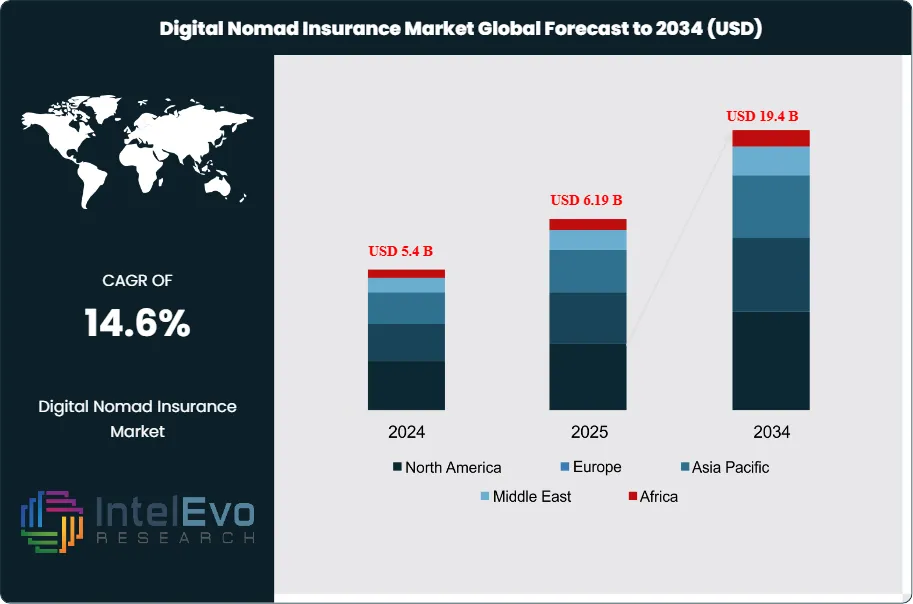
The Global Digital Nomad Insurance Market size is projected to reach approximately USD 19.4 billion by 2034, up from USD 5.4 billion in 2024, growing at a CAGR of 14.6% during the forecast period from 2024 to 2034. This surge is driven by the rapid expansion of remote work culture, cross-border freelancing, and rising demand for flexible health and travel coverage solutions. With digital nomads seeking seamless global mobility, insurers are innovating tailored policies that combine healthcare, emergency support, and travel protection. The trend underscores how lifestyle shifts are reshaping the future of the global insurance industry.
Get More Information about this report -
Request Free Sample ReportThe Global Digital Nomad Insurance Market refers to specialized insurance products tailored for individuals who work remotely while traveling internationally. These insurance plans typically cover medical emergencies, trip cancellations, lost luggage, and other risks associated with living and working abroad. As remote work gains traction, the demand for such insurance is surging, driven by a rise in digital nomad visas issued by various countries. Current market dynamics reveal a fragmented landscape with several players offering diverse insurance solutions to meet the needs of this growing population, resulting in increased competition and innovation in product offerings.
Key growth drivers include the increasing number of remote workers seeking flexibility and the growing trend of long-term travel. The proliferation of digital nomad visa programs worldwide, which often require proof of adequate health insurance, further fuels demand. Additionally, the rising awareness of the importance of health and travel insurance among potential digital nomads supports market growth. This segment also benefits from advancements in technology, enabling insurers to offer personalized and accessible insurance solutions tailored to individual needs.
North America currently holds a significant share of the digital nomad insurance market, primarily due to the high number of remote workers and the established travel infrastructure. Europe follows closely, with many countries actively promoting digital nomad visas. Asia-Pacific is expected to witness the fastest growth, driven by rising remote work adoption and an increasing number of travelers seeking insurance solutions that cater to their unique lifestyles. Emerging markets in Latin America and the Middle East are also beginning to tap into this segment, recognizing the potential to attract digital nomads and the associated insurance needs.
The COVID-19 pandemic has significantly impacted the digital nomad insurance market, highlighting the need for comprehensive travel insurance solutions. The crisis underscored the vulnerabilities associated with international travel, prompting many remote workers to reconsider their insurance needs. This led to a surge in demand for flexible, comprehensive insurance plans that cover pandemic-related risks. As countries reopen their borders and remote work becomes more entrenched, the market is expected to rebound and grow stronger, with an emphasis on ensuring that digital nomads have adequate protection while navigating a post-pandemic world.

Key Takeaways
- Market Growth: The global digital nomad insurance market is projected to reach USD 19.4 billion by 2034, growing at a robust CAGR of 14.6%, indicating strong market expansion driven by the rise of remote work and travel.
- Type Analysis: Health insurance is the dominant segment, comprising a significant share of the market due to the necessity for medical coverage while traveling. This segment is driven by the increasing awareness of health risks associated with international travel and the growing number of digital nomads requiring comprehensive health plans.
- Coverage Analysis: Comprehensive coverage is preferred among digital nomads, as it offers protection against a wide range of risks, including medical emergencies and trip cancellations. This preference reflects the need for robust insurance solutions that accommodate the unpredictable nature of travel and remote work.
- Driver: The growing trend of remote work, accelerated by the pandemic, has led to a surge in demand for digital nomad insurance. As more professionals embrace location independence, the need for tailored insurance products has intensified, driving market growth.
- Restraint: One of the primary restraints is the lack of awareness among potential customers regarding digital nomad insurance products. Many travelers may underestimate their need for such coverage, leading to lower adoption rates and market growth constraints.
- Opportunity: The introduction of digital nomad visa programs by various countries presents significant opportunities for insurers. These programs often require proof of adequate insurance, creating a burgeoning market for tailored policies catering to this demographic.
- Trend: Increasing customization of insurance products to meet the unique needs of digital nomads is a significant trend, enhancing the appeal of these offerings and driving market growth.
- Regional Analysis: North America and Europe are leading the market, driven by high numbers of remote workers. Asia-Pacific is emerging rapidly, fueled by increasing digital nomadism and favorable policies promoting long-term travel and work abroad.
Type:
The digital nomad insurance market can be categorized primarily into three types: health insurance, travel insurance, and liability insurance. Health insurance is crucial for digital nomads, providing coverage for medical emergencies, routine check-ups, and repatriation costs, ensuring peace of mind while abroad. Travel insurance protects against risks such as trip cancellations, lost baggage, and travel delays, appealing to those who frequently change locations. Liability insurance covers legal expenses arising from personal injuries or property damage caused by the insured, which can be particularly relevant for digital nomads engaging in various activities. This diversification in insurance types allows providers to cater to the unique needs of digital nomads, enhancing market growth and competition.
Coverage:
Coverage can be broadly classified into comprehensive and limited coverage options. Comprehensive coverage is designed to provide extensive protection, addressing a wide range of potential risks that digital nomads might face during their travels. This often includes medical emergencies, repatriation, trip cancellations, and loss of personal belongings. In contrast, limited coverage plans offer basic protection, typically covering essential medical expenses but excluding more extensive benefits like trip cancellation or adventure sports coverage. The preference for comprehensive coverage is growing among digital nomads, driven by the desire for security and the understanding of risks involved in a nomadic lifestyle. Insurance providers are increasingly focusing on developing customized comprehensive plans to meet the evolving needs of this demographic.
Distribution Channel:
Distribution channels for digital nomad insurance include online and offline methods. Online distribution has become the dominant channel due to its convenience and accessibility, allowing travelers to compare different policies, read reviews, and purchase insurance from anywhere in the world. Insurers have invested in user-friendly websites and mobile apps, making the purchasing process seamless for digital nomads who are often on the move. Offline distribution, though less common, includes insurance brokers and agents who provide personalized service, assisting clients in understanding their options. While online channels are expected to continue growing, offline channels still play a crucial role for customers seeking expert advice, particularly when navigating complex insurance needs in unfamiliar territories.
End User:
The end-user segment can be divided into individual travelers and business travelers. Individual travelers are typically freelancers, remote workers, or entrepreneurs who prioritize flexibility and affordability in their insurance choices. They often seek coverage tailored to personal needs, such as long-term stays or specific activities while traveling. Business travelers, on the other hand, may require more comprehensive coverage that includes aspects such as corporate liability and business equipment protection. This segment tends to have higher insurance spending due to the nature of their travel, which often involves multiple trips and various risks. As remote work continues to rise, both segments are likely to see increasing demand for tailored insurance solutions that accommodate their specific lifestyles and travel patterns.
Duration:
Digital nomad insurance can also be categorized by duration into short-term and long-term insurance. Short-term insurance plans are typically designed for travelers who need coverage for specific trips or durations, often ranging from a few days to several months. These plans are ideal for digital nomads who travel frequently but may not stay in one location for extended periods. Long-term insurance, however, caters to those who plan to work and live abroad for extended durations, often a year or more. These policies provide comprehensive protection that aligns with the extended nature of their travels. The growth in both segments indicates a broader acceptance of digital nomadism as a lifestyle, driving insurance providers to offer more tailored options for varying durations of travel.
Region Analysis:
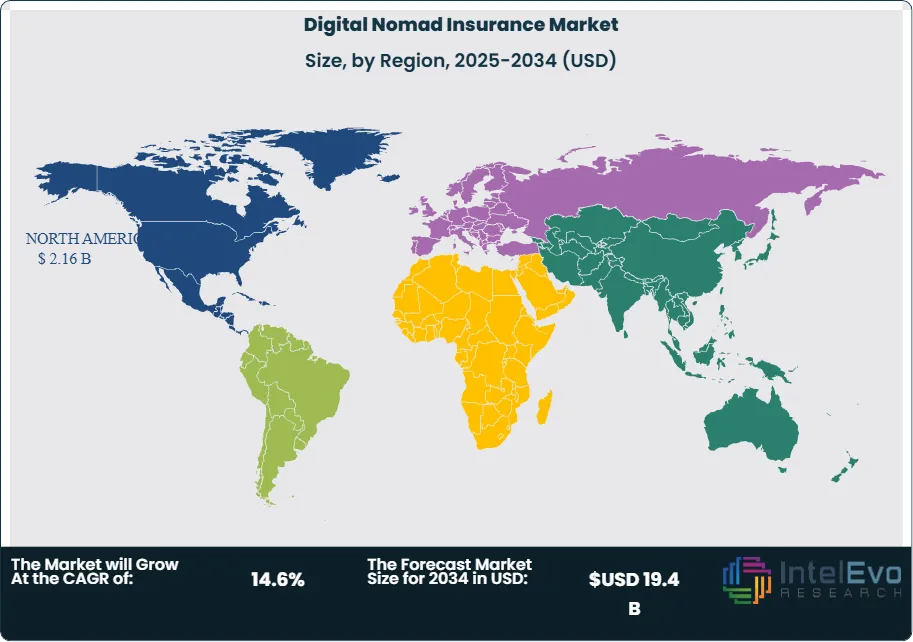
North America Holds the Largest Market Share in Digital Nomad Insurance: North America is the leading region in the digital nomad insurance market, commanding over 40% of the global share. This dominance is attributed to the high number of remote workers and freelancers, driven by a robust digital economy and a culture that embraces flexible work arrangements. The availability of a wide range of insurance products tailored specifically for digital nomads enhances the appeal of this market. Major insurance providers have established a strong presence, offering comprehensive policies that cater to the unique needs of this demographic. Additionally, the region's technological advancements facilitate seamless online purchasing processes, making it easier for digital nomads to obtain insurance. The combination of a large target population, extensive product offerings, and convenient access positions North America as the frontrunner in this rapidly evolving market.
In contrast, the Asia-Pacific region is recognized as the fastest-growing market for digital nomad insurance, expected to exhibit a CAGR exceeding 16% over the next decade. This growth is primarily driven by the rising popularity of remote work, particularly in countries like Indonesia, Thailand, and Vietnam, which are becoming preferred destinations for digital nomads. The influx of international workers seeking flexible lifestyles has prompted local insurers to develop tailored products, addressing specific needs such as healthcare and travel safety. Additionally, favorable government policies encouraging long-term stays and digital nomad visas further stimulate market demand. While North America maintains a substantial market share, the rapid expansion in the Asia-Pacific region signifies a shift in global dynamics, with emerging economies playing a pivotal role in shaping the future of digital nomad insurance. Other regions, including Europe, Latin America, and the Middle East, are also witnessing growth, but at a comparatively slower pace, influenced by varying economic conditions and digital nomadism adoption rates.
Get More Information about this report -
Request Free Sample ReportKey Market Segment
By Type:
- Health & Medical Insurance
- Travel Insurance
- Income Protection
- Liability Insurance
- Others
By Coverage:
- Comprehensive Coverage
- Limited Coverage
By Policy Duration:
- Short-Term (Less than 6 Months)
- Mid-Term (6–12 Months)
- Long-Term (Above 1 Year)
By Distribution Channel:
- Direct Insurance Providers
- Online Platforms & Aggregators
- Brokers & Agents
- Others
By End-User:
- Freelancers
- Entrepreneurs & Business Owners
- Remote Employees
- Students & Travelers
By Region:
- North America
- Latin America
- East Asia And Pacific
- Sea And South Asia
- Eastern Europe
- Western Europe
- Middle East & Africa
| Report Attribute | Details |
| Market size (2025) | USD 6.19 B |
| Forecast Revenue (2034) | USD 19.4 B |
| CAGR (2025-2034) | 14.6% |
| Historical data | 2018-2023 |
| Base Year For Estimation | 2024 |
| Forecast Period | 2025-2034 |
| Report coverage | Revenue Forecast, Competitive Landscape, Market Dynamics, Growth Factors, Trends and Recent Developments |
| Segments covered | By Type:(Health & Medical Insurance, Travel Insurance, Income Protection, Liability Insurance, Others), By Coverage:(Comprehensive Coverage, Limited Coverage), By Policy Duration:(Short-Term (Less than 6 Months), Mid-Term (6–12 Months), Long-Term (Above 1 Year)),By Distribution Channel:(Direct Insurance Providers, Online Platforms & Aggregators, Brokers & Agents, Others), By End-User:(Freelancers, Entrepreneurs & Business Owners, Remote Employees, Students & Travelers) |
| Research Methodology |
|
| Regional scope |
|
| Competitive Landscape | SafetyWing, World Nomads, Allianz Global Assistance, IMG (International Medical Group), InsureMyTrip, Cigna Global Re Direct, AXA Assistance, Seven Corners, HTH Worldwide, Travelex Insurance Services, Nationwide Insurance, True Traveller, Berkshire Hathaway Travel Protection, Medjet, RoamRight, GoReady, InsureandGo, Travel Guard (AIG), Peppermint, Cover-More |
| Customization Scope | Customization for segments, region/country-level will be provided. Moreover, additional customization can be done based on the requirements. |
| Pricing and Purchase Options | Avail customized purchase options to meet your exact research needs. We have three licenses to opt for: Single User License, Multi-User License (Up to 5 Users), Corporate Use License (Unlimited User and Printable PDF). |


Frequently Asked Questions
How big is the Digital Nomad Insurance Market?
Discover insights into the Global Digital Nomad Insurance Market, projected to hit USD 19.4 billion by 2034 at a CAGR of 14.6%. Driven by remote work, cross-border freelancing, and demand for flexible travel-health coverage, insurers are reshaping global mobility solutions.
Who are the major players in the Digital Nomad Insurance Market?
SafetyWing, World Nomads, Allianz Global Assistance, IMG (International Medical Group), InsureMyTrip, Cigna Global Re Direct, AXA Assistance, Seven Corners, HTH Worldwide, Travelex Insurance Services, Nationwide Insurance, True Traveller, Berkshire Hathaway Travel Protection, Medjet, RoamRight, GoReady, InsureandGo, Travel Guard (AIG), Peppermint, Cover-More
Which segments covered the Digital Nomad Insurance Market?
By Type:(Health & Medical Insurance, Travel Insurance, Income Protection, Liability Insurance, Others), By Coverage:(Comprehensive Coverage, Limited Coverage), By Policy Duration:(Short-Term (Less than 6 Months), Mid-Term (6–12 Months), Long-Term (Above 1 Year)),By Distribution Channel:(Direct Insurance Providers, Online Platforms & Aggregators, Brokers & Agents, Others), By End-User:(Freelancers, Entrepreneurs & Business Owners, Remote Employees, Students & Travelers)
How can this market research report help my business make strategic decisions?
Our market research reports provide actionable intelligence, including verified market size data, CAGR projections, competitive benchmarking, and segment-level opportunity analysis. These insights support strategic planning, investment decisions, product development, and market entry strategies for enterprises and startups alike.
How frequently is the data updated?
We continuously monitor industry developments and update our reports to reflect regulatory changes, technological advancements, and macroeconomic shifts. Updated editions ensure you receive the latest market intelligence.

Select Licence Type
Connect with our sales team

Digital Nomad Insurance Market
Published Date : 11 Dec 2024 | Formats :Why IntelEvoResearch
100%
Customer
Satisfaction
24x7+
Availability - we are always
there when you need us
200+
Fortune 50 Companies trust
IntelEvoResearch
80%
of our reports are exclusive
and first in the industry
100%
more data
and analysis
1000+
reports published
till date
