
The Global Gut Microbiome Therapeutics Market size is projected to reach approximately USD 8.95 billion by 2034, up from USD 552.4 million in 2024, growing at a CAGR of 23.2% during the forecast period from 2024 to 2034. Growing awareness of the gut microbiome’s role in overall health, coupled with advancements in microbiome-based drug development, is driving rapid adoption across pharmaceutical and biotech industries. With increasing investments, clinical trials, and partnerships, this market is poised to reshape personalized medicine and open new frontiers in digestive, metabolic, and neurological healthcare solutions.
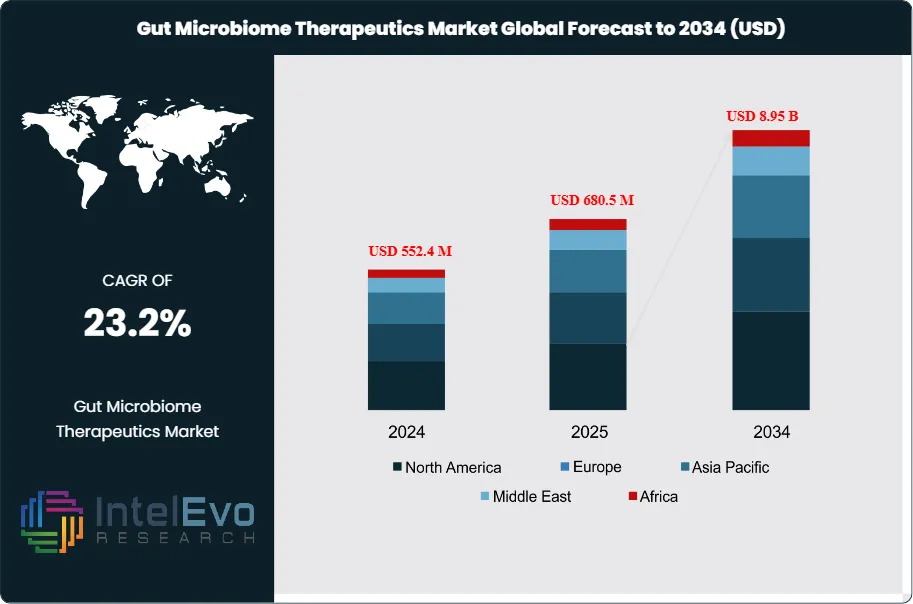
The Gut Microbiome Therapeutics Market focuses on products designed to modulate gut microbiota to enhance health outcomes. This market includes fecal microbiota transplantation (FMT), probiotics, prebiotics, and microbiome-based pharmaceuticals. The dynamics of this market are changing as awareness of the gut's critical role in overall health increases. In 2024, the market is valued at approximately USD $552.4 million, reflecting substantial investments in microbiome research and innovation. The growing prevalence of gastrointestinal disorders, diabetes, and obesity drives demand for microbiome therapies, indicating a promising growth trajectory for the sector.
Several factors are contributing to the robust growth of the gut microbiome therapeutics market. Key growth drivers include the increasing acknowledgment of the gut microbiome's influence on a wide array of health conditions, such as autoimmune diseases and metabolic disorders. The rising incidence of Clostridium difficile infections, along with a growing interest in personalized medicine, further propels market growth. Technological advancements in biotechnology and genomics facilitate the development of innovative microbiome-based products. Additionally, improved regulatory support and funding for microbiome research contribute to the positive outlook of the market. The gut microbiome therapeutics market is projected to grow at a CAGR of 23.6% from 2024 to 2034, reaching USD $8.59 billion by the end of the forecast period.
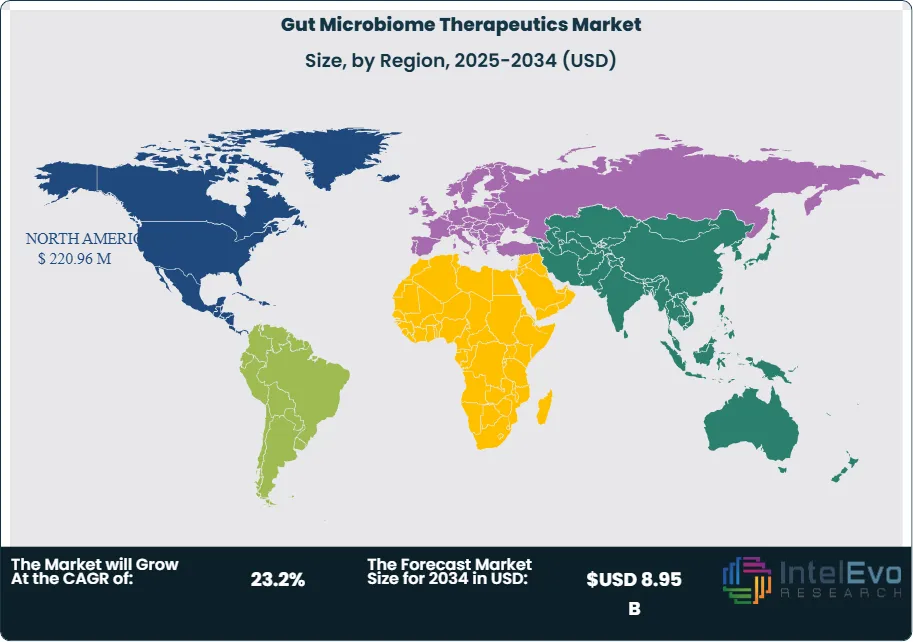
North America is expected to lead the gut microbiome therapeutics market, holding approximately 40% of the total market share by 2037. This dominance is attributed to advanced healthcare infrastructure, increased healthcare spending, and a strong focus on research and development. Europe is anticipated to capture around 29% of the market, supported by favorable regulatory environments and a high prevalence of gastrointestinal disorders. In contrast, the Asia-Pacific region is likely to exhibit significant growth due to rising awareness of gut health and improved healthcare access, making it a promising market for future investments.
The COVID-19 pandemic has significantly impacted the gut microbiome therapeutics market. Although initial disruptions in clinical trials and supply chains presented challenges, the pandemic heightened awareness of gut health and immunity. The increased focus on preventive healthcare has led to a surge in interest in microbiome-based products as potential solutions for maintaining health during and after the pandemic. This shift in consumer behavior is expected to sustain the market's momentum in the post-pandemic landscape, further solidifying its growth trajectory.
Key Takeaways:
Market Growth: The gut microbiome therapeutics market is expected to reach USD $8.95 billion by 2034, growing at a robust CAGR of 23.2%, indicating strong market expansion.
Type Segment Analysis: Fecal Microbiota Transplantation (FMT) is a leading segment, primarily used for treating Clostridium difficile infections. It showcases significant clinical effectiveness, driving its adoption and market share within gut microbiome therapeutics.
Application Segment Analysis: Diabetes is anticipated to be a prominent application, as emerging research highlights the gut microbiome's role in metabolic health. This focus positions diabetes-related products for considerable market demand and growth.
Driver: Increasing recognition of the gut microbiome's influence on health, particularly in managing gastrointestinal disorders and autoimmune diseases, is a key driver of market growth, along with advancements in personalized medicine.
Restraint: High production costs and regulatory hurdles associated with developing microbiome-based therapies can limit market accessibility and slow down the introduction of new products in the market.
Opportunity: The expanding demand for personalized medicine and the increasing prevalence of gut-related health issues in developing regions, particularly in Asia-Pacific, present significant growth opportunities for industry players.
Trend: The trend towards preventive healthcare is rising, with consumers increasingly seeking microbiome-based solutions to enhance overall health and immunity.
Regional Analysis: North America is projected to dominate the market, driven by advanced healthcare infrastructure and significant investments in microbiome research, while the Asia-Pacific region shows promising growth potential due to rising awareness of gut health.
By Therapy Type:
The therapy type segment of the Global Gut Microbiome Therapeutics Market includes microbiome-based drugs, probiotics and prebiotics, live biotherapeutics, postbiotics and synbiotics, and fecal microbiota transplants (FMT). Microbiome-based drugs and live biotherapeutics are gaining traction because they can directly modify microbial balance and improve patient outcomes. Probiotics and prebiotics are still widely used for preventive healthcare, while postbiotics and synbiotics show promising therapeutic potential. FMT remains effective for recurrent infections like C. difficile. Together, these therapies create a diverse landscape that meets both preventive and curative healthcare needs, playing an important role in market growth and innovation.
By Indication:
The market by indication shows the broad clinical use of gut microbiome therapeutics. Key areas include gastrointestinal disorders such as IBD, IBS, Crohn’s disease, and ulcerative colitis, where microbial imbalance is critical. Therapies are also being studied for metabolic disorders like diabetes and obesity, as well as infectious diseases such as recurrent C. difficile. Neurological disorders, including Parkinson’s, autism, and depression, are getting more attention as research on the gut-brain connection grows. Furthermore, oncology applications are emerging, where microbiome adjustment improves cancer treatment effectiveness. This wide range highlights the transformative potential of microbiome-based therapies across many therapeutic areas.
By Route of Administration:
Segmentation by route of administration shows how delivery methods are vital for ensuring treatment effectiveness. Oral delivery is the most common and preferred method for probiotics, prebiotics, and microbiome-based drugs due to its ease of use and patient compliance. Intravenous (IV) delivery is used for advanced bio-therapeutics that need to reach systemic circulation, while rectal administration is important in FMT procedures. New delivery systems, including encapsulated microbes and engineered formulations, are creating new possibilities by improving stability, targeted delivery, and bioavailability. The variety of administration routes is key to addressing individual patient needs and maximizing clinical success in microbiome therapeutics.
By Distribution Channel:
The distribution channel segment emphasizes the importance of different access points for gut microbiome therapeutics. Hospitals and clinics lead the way because they are essential for prescribing advanced therapies and conducting FMT procedures. Specialty pharmacies are an important channel for microbiome-based drugs and bio-therapeutics, providing tailored services for complex prescriptions. Online pharmacies are quickly becoming a growth area, boosted by increasing consumer interest in probiotics, prebiotics, and over-the-counter microbiome supplements. Research and academic institutes also play a significant role, especially in early-stage product trials and experimental therapies. This varied distribution network ensures that microbiome solutions are available in both clinical and consumer settings.
By End User:
The end user segment highlights the groups driving growth in the gut microbiome therapeutics market. Pharmaceutical companies are investing heavily in drug development, focusing on regulatory approvals and commercialization. Biotech companies lead innovation, exploring next-generation therapies and personalized solutions. Research organizations and academic institutes are crucial for advancing scientific understanding and clinical validation of microbiome-based therapies. Additionally, Contract Research Organizations (CROs) are vital for supporting clinical trials, regulatory work, and scalability. Together, these end users create an integrated ecosystem that promotes innovation, speeds up product development, and encourages global market adoption.
Region Analysis:
North America leads with 40% Market Share in the Gut Microbiome Therapeutics Market: North America holds the largest market share in the gut microbiome therapeutics market, accounting for approximately 40% of the total revenue. This dominance is primarily driven by advanced healthcare infrastructure, significant investments in microbiome research, and a high prevalence of gastrointestinal disorders. The presence of key players and innovative biotechnology firms in the region enhances product development and accelerates the introduction of new therapies. Additionally, the increasing awareness among consumers regarding gut health and its correlation with overall well-being supports market growth. Regulatory bodies in North America have also established supportive frameworks for microbiome-related therapies, further contributing to the market's expansion. The strong focus on research and development in universities and research institutions reinforces the region's leadership in this field.
Asia-Pacific is recognized as the fastest-growing region in the gut microbiome therapeutics market, with a projected CAGR exceeding 25% over the next decade. Several factors contribute to this rapid growth, including rising consumer awareness of the importance of gut health, increased healthcare expenditure, and the growing prevalence of gut-related health issues. The expanding middle class in countries like China and India is driving demand for advanced healthcare solutions, including microbiome therapies. Furthermore, ongoing research initiatives and collaborations between academic institutions and biotech companies in the region are fostering innovation and product development. Other regions, such as Europe and Latin America, are also witnessing steady growth, driven by increasing investments in microbiome research and a growing emphasis on preventive healthcare. The Middle East and Africa are gradually emerging, focusing on health awareness campaigns and improving healthcare infrastructure, contributing to overall market expansion.
Customization for segments, region/country-level will be provided. Moreover, additional customization can be done based on the requirements.
Pricing and Purchase Options
Avail customized purchase options to meet your exact research needs. We have three licenses to opt for: Single User License, Multi-User License (Up to 5 Users), Corporate Use License (Unlimited User and Printable PDF).
TABLE OF CONTENTS
1. EXECUTIVE SUMMARY
1.1. MARKET SNAPSHOT
1.2. KEY FINDINGS & INSIGHTS
1.3. ANALYST RECOMMENDATIONS
1.4. FUTURE OUTLOOK
2. RESEARCH METHODOLOGY
2.1. MARKET DEFINITION & SCOPE
2.2. RESEARCH OBJECTIVES: PRIMARY & SECONDARY DATA SOURCES
2.3. DATA COLLECTION SOURCES
2.3.1. COVERAGE OF 100+ PRIMARY RESEARCH/CONSULTATION CALLS WITH INDUSTRY STAKEHOLDERS
FIGURE 17 NORTH AMERICA GUT MICROBIOME THERAPEUTICS CURRENT AND FUTURE TYPE ANALYSIS, 2025–2034, (USD MILLION)
FIGURE 18 NORTH AMERICA GUT MICROBIOME THERAPEUTICS CURRENT AND FUTURE END USER ANALYSIS, 2025–2034, (USD MILLION)
FIGURE 19 MARKET SHARE BY COUNTRY
FIGURE 20 LATIN AMERICA GUT MICROBIOME THERAPEUTICS CURRENT AND FUTURE TYPE ANALYSIS, 2025–2034, (USD MILLION)
FIGURE 21 LATIN AMERICA GUT MICROBIOME THERAPEUTICS CURRENT AND FUTURE END USER ANALYSIS, 2025–2034, (USD MILLION)
FIGURE 22 MARKET SHARE BY COUNTRY
FIGURE 23 EASTERN EUROPE GUT MICROBIOME THERAPEUTICS CURRENT AND FUTURE TYPE ANALYSIS, 2025–2034, (USD MILLION)
FIGURE 24 EASTERN EUROPE GUT MICROBIOME THERAPEUTICS CURRENT AND FUTURE END USER ANALYSIS, 2025–2034, (USD MILLION)
FIGURE 25 MARKET SHARE BY COUNTRY
FIGURE 26 WESTERN EUROPE GUT MICROBIOME THERAPEUTICS CURRENT AND FUTURE TYPE ANALYSIS, 2025–2034, (USD MILLION)
FIGURE 27 WESTERN EUROPE GUT MICROBIOME THERAPEUTICS CURRENT AND FUTURE END USER ANALYSIS, 2025–2034, (USD MILLION)
FIGURE 28 MARKET SHARE BY COUNTRY
FIGURE 29 EAST ASIA AND PACIFIC GUT MICROBIOME THERAPEUTICS CURRENT AND FUTURE TYPE ANALYSIS, 2025–2034, (USD MILLION)
FIGURE 30 EAST ASIA AND PACIFIC GUT MICROBIOME THERAPEUTICS CURRENT AND FUTURE END USER ANALYSIS, 2025–2034, (USD MILLION)
FIGURE 31 MARKET SHARE BY COUNTRY
FIGURE 32 SEA AND SOUTH ASIA GUT MICROBIOME THERAPEUTICS CURRENT AND FUTURE TYPE ANALYSIS, 2025–2034, (USD MILLION)
FIGURE 33 SEA AND SOUTH ASIA GUT MICROBIOME THERAPEUTICS CURRENT AND FUTURE END USER ANALYSIS, 2025–2034, (USD MILLION)
FIGURE 34 MARKET SHARE BY COUNTRY
FIGURE 35 MIDDLE EAST AND AFRICA GUT MICROBIOME THERAPEUTICS CURRENT AND FUTURE TYPE ANALYSIS, 2025–2034, (USD MILLION)
FIGURE 36 MIDDLE EAST AND AFRICA GUT MICROBIOME THERAPEUTICS CURRENT AND FUTURE END USER ANALYSIS, 2025–2034, (USD MILLION)
FIGURE 37 NORTH AMERICA GUT MICROBIOME THERAPEUTICS CURRENT AND FUTURE MARKET VOLUME SHARE REGIONAL ANALYSIS, 2025–2034, (USD MILLION)
FIGURE 38 U.S. GUT MICROBIOME THERAPEUTICS CURRENT AND FUTURE TYPE ANALYSIS, 2025–2034, (USD MILLION)
FIGURE 39 U.S. GUT MICROBIOME THERAPEUTICS CURRENT AND FUTURE END USER ANALYSIS, 2025–2034, (USD MILLION)
FIGURE 40 CANADA GUT MICROBIOME THERAPEUTICS CURRENT AND FUTURE TYPE ANALYSIS, 2025–2034, (USD MILLION)
FIGURE 41 CANADA GUT MICROBIOME THERAPEUTICS CURRENT AND FUTURE END USER ANALYSIS, 2025–2034, (USD MILLION)
FIGURE 42 LATIN AMERICA GUT MICROBIOME THERAPEUTICS CURRENT AND FUTURE MARKET VOLUME SHARE REGIONAL ANALYSIS, 2025–2034, (USD MILLION)
FIGURE 43 MEXICO GUT MICROBIOME THERAPEUTICS CURRENT AND FUTURE TYPE ANALYSIS, 2025–2034, (USD MILLION)
FIGURE 44 MEXICO GUT MICROBIOME THERAPEUTICS CURRENT AND FUTURE END USER ANALYSIS, 2025–2034, (USD MILLION)
FIGURE 45 BRAZIL GUT MICROBIOME THERAPEUTICS CURRENT AND FUTURE TYPE ANALYSIS, 2025–2034, (USD MILLION)
FIGURE 46 BRAZIL GUT MICROBIOME THERAPEUTICS CURRENT AND FUTURE END USER ANALYSIS, 2025–2034, (USD MILLION)
FIGURE 47 ARGENTINA GUT MICROBIOME THERAPEUTICS CURRENT AND FUTURE TYPE ANALYSIS, 2025–2034, (USD MILLION)
FIGURE 48 ARGENTINA GUT MICROBIOME THERAPEUTICS CURRENT AND FUTURE END USER ANALYSIS, 2025–2034, (USD MILLION)
FIGURE 49 COLUMBIA GUT MICROBIOME THERAPEUTICS CURRENT AND FUTURE TYPE ANALYSIS, 2025–2034, (USD MILLION)
FIGURE 50 COLUMBIA GUT MICROBIOME THERAPEUTICS CURRENT AND FUTURE END USER ANALYSIS, 2025–2034, (USD MILLION)
FIGURE 51 REST OF LATIN AMERICA GUT MICROBIOME THERAPEUTICS CURRENT AND FUTURE TYPE ANALYSIS, 2025–2034, (USD MILLION)
FIGURE 52 REST OF LATIN AMERICA GUT MICROBIOME THERAPEUTICS CURRENT AND FUTURE END USER ANALYSIS, 2025–2034, (USD MILLION)
FIGURE 53 EASTERN EUROPE GUT MICROBIOME THERAPEUTICS CURRENT AND FUTURE MARKET VOLUME SHARE REGIONAL ANALYSIS, 2025–2034, (USD MILLION)
FIGURE 54 POLAND GUT MICROBIOME THERAPEUTICS CURRENT AND FUTURE TYPE ANALYSIS, 2025–2034, (USD MILLION)
FIGURE 55 POLAND GUT MICROBIOME THERAPEUTICS CURRENT AND FUTURE END USER ANALYSIS, 2025–2034, (USD MILLION)
FIGURE 56 RUSSIA GUT MICROBIOME THERAPEUTICS CURRENT AND FUTURE TYPE ANALYSIS, 2025–2034, (USD MILLION)
FIGURE 57 RUSSIA GUT MICROBIOME THERAPEUTICS CURRENT AND FUTURE END USER ANALYSIS, 2025–2034, (USD MILLION)
FIGURE 58 CZECH REPUBLIC GUT MICROBIOME THERAPEUTICS CURRENT AND FUTURE TYPE ANALYSIS, 2025–2034, (USD MILLION)
FIGURE 59 CZECH REPUBLIC GUT MICROBIOME THERAPEUTICS CURRENT AND FUTURE END USER ANALYSIS, 2025–2034, (USD MILLION)
FIGURE 60 ROMANIA GUT MICROBIOME THERAPEUTICS CURRENT AND FUTURE TYPE ANALYSIS, 2025–2034, (USD MILLION)
FIGURE 61 ROMANIA GUT MICROBIOME THERAPEUTICS CURRENT AND FUTURE END USER ANALYSIS, 2025–2034, (USD MILLION)
FIGURE 62 REST OF EASTERN EUROPE GUT MICROBIOME THERAPEUTICS CURRENT AND FUTURE TYPE ANALYSIS, 2025–2034, (USD MILLION)
FIGURE 63 REST OF EASTERN EUROPE GUT MICROBIOME THERAPEUTICS CURRENT AND FUTURE END USER ANALYSIS, 2025–2034, (USD MILLION)
FIGURE 64 WESTERN EUROPE GUT MICROBIOME THERAPEUTICS CURRENT AND FUTURE MARKET VOLUME SHARE REGIONAL ANALYSIS, 2025–2034, (USD MILLION)
FIGURE 65 GERMANY GUT MICROBIOME THERAPEUTICS CURRENT AND FUTURE TYPE ANALYSIS, 2025–2034, (USD MILLION)
FIGURE 66 GERMANY GUT MICROBIOME THERAPEUTICS CURRENT AND FUTURE END USER ANALYSIS, 2025–2034, (USD MILLION)
FIGURE 67 FRANCE GUT MICROBIOME THERAPEUTICS CURRENT AND FUTURE TYPE ANALYSIS, 2025–2034, (USD MILLION)
FIGURE 68 FRANCE GUT MICROBIOME THERAPEUTICS CURRENT AND FUTURE END USER ANALYSIS, 2025–2034, (USD MILLION)
FIGURE 69 UK GUT MICROBIOME THERAPEUTICS CURRENT AND FUTURE TYPE ANALYSIS, 2025–2034, (USD MILLION)
FIGURE 70 UK GUT MICROBIOME THERAPEUTICS CURRENT AND FUTURE END USER ANALYSIS, 2025–2034, (USD MILLION)
FIGURE 71 SPAIN GUT MICROBIOME THERAPEUTICS CURRENT AND FUTURE TYPE ANALYSIS, 2025–2034, (USD MILLION)
FIGURE 72 SPAIN GUT MICROBIOME THERAPEUTICS CURRENT AND FUTURE END USER ANALYSIS, 2025–2034, (USD MILLION)
FIGURE 73 ITALY GUT MICROBIOME THERAPEUTICS CURRENT AND FUTURE TYPE ANALYSIS, 2025–2034, (USD MILLION)
FIGURE 74 ITALY GUT MICROBIOME THERAPEUTICS CURRENT AND FUTURE END USER ANALYSIS, 2025–2034, (USD MILLION)
FIGURE 75 REST OF WESTERN EUROPE GUT MICROBIOME THERAPEUTICS CURRENT AND FUTURE TYPE ANALYSIS, 2025–2034, (USD MILLION)
FIGURE 76 REST OF WESTERN EUROPE GUT MICROBIOME THERAPEUTICS CURRENT AND FUTURE END USER ANALYSIS, 2025–2034, (USD MILLION)
FIGURE 77 EAST ASIA AND PACIFIC GUT MICROBIOME THERAPEUTICS CURRENT AND FUTURE MARKET VOLUME SHARE REGIONAL ANALYSIS, 2025–2034, (USD MILLION)
FIGURE 78 CHINA GUT MICROBIOME THERAPEUTICS CURRENT AND FUTURE TYPE ANALYSIS, 2025–2034, (USD MILLION)
FIGURE 79 CHINA GUT MICROBIOME THERAPEUTICS CURRENT AND FUTURE END USER ANALYSIS, 2025–2034, (USD MILLION)
FIGURE 80 JAPAN GUT MICROBIOME THERAPEUTICS CURRENT AND FUTURE TYPE ANALYSIS, 2025–2034, (USD MILLION)
FIGURE 81 JAPAN GUT MICROBIOME THERAPEUTICS CURRENT AND FUTURE END USER ANALYSIS, 2025–2034, (USD MILLION)
FIGURE 82 AUSTRALIA GUT MICROBIOME THERAPEUTICS CURRENT AND FUTURE TYPE ANALYSIS, 2025–2034, (USD MILLION)
FIGURE 83 AUSTRALIA GUT MICROBIOME THERAPEUTICS CURRENT AND FUTURE END USER ANALYSIS, 2025–2034, (USD MILLION)
FIGURE 84 CAMBODIA GUT MICROBIOME THERAPEUTICS CURRENT AND FUTURE TYPE ANALYSIS, 2025–2034, (USD MILLION)
FIGURE 85 CAMBODIA GUT MICROBIOME THERAPEUTICS CURRENT AND FUTURE END USER ANALYSIS, 2025–2034, (USD MILLION)
FIGURE 86 FIJI GUT MICROBIOME THERAPEUTICS CURRENT AND FUTURE TYPE ANALYSIS, 2025–2034, (USD MILLION)
FIGURE 87 FIJI GUT MICROBIOME THERAPEUTICS CURRENT AND FUTURE END USER ANALYSIS, 2025–2034, (USD MILLION)
FIGURE 88 INDONESIA GUT MICROBIOME THERAPEUTICS CURRENT AND FUTURE TYPE ANALYSIS, 2025–2034, (USD MILLION)
FIGURE 89 INDONESIA GUT MICROBIOME THERAPEUTICS CURRENT AND FUTURE END USER ANALYSIS, 2025–2034, (USD MILLION)
FIGURE 90 SOUTH KOREA GUT MICROBIOME THERAPEUTICS CURRENT AND FUTURE TYPE ANALYSIS, 2025–2034, (USD MILLION)
FIGURE 91 SOUTH KOREA GUT MICROBIOME THERAPEUTICS CURRENT AND FUTURE END USER ANALYSIS, 2025–2034, (USD MILLION)
FIGURE 92 REST OF EAST ASIA AND PACIFIC GUT MICROBIOME THERAPEUTICS CURRENT AND FUTURE TYPE ANALYSIS, 2025–2034, (USD MILLION)
FIGURE 93 REST OF EAST ASIA AND PACIFIC GUT MICROBIOME THERAPEUTICS CURRENT AND FUTURE END USER ANALYSIS, 2025–2034, (USD MILLION)
FIGURE 94 SEA AND SOUTH ASIA GUT MICROBIOME THERAPEUTICS CURRENT AND FUTURE MARKET VOLUME SHARE REGIONAL ANALYSIS, 2025–2034, (USD MILLION)
FIGURE 95 BANGLADESH GUT MICROBIOME THERAPEUTICS CURRENT AND FUTURE TYPE ANALYSIS, 2025–2034, (USD MILLION)
FIGURE 96 BANGLADESH GUT MICROBIOME THERAPEUTICS CURRENT AND FUTURE END USER ANALYSIS, 2025–2034, (USD MILLION)
FIGURE 97 NEW ZEALAND GUT MICROBIOME THERAPEUTICS CURRENT AND FUTURE TYPE ANALYSIS, 2025–2034, (USD MILLION)
FIGURE 98 NEW ZEALAND GUT MICROBIOME THERAPEUTICS CURRENT AND FUTURE END USER ANALYSIS, 2025–2034, (USD MILLION)
FIGURE 99 INDIA GUT MICROBIOME THERAPEUTICS CURRENT AND FUTURE TYPE ANALYSIS, 2025–2034, (USD MILLION)
FIGURE 100 INDIA GUT MICROBIOME THERAPEUTICS CURRENT AND FUTURE END USER ANALYSIS, 2025–2034, (USD MILLION)
FIGURE 101 SINGAPORE GUT MICROBIOME THERAPEUTICS CURRENT AND FUTURE TYPE ANALYSIS, 2025–2034, (USD MILLION)
FIGURE 102 SINGAPORE GUT MICROBIOME THERAPEUTICS CURRENT AND FUTURE END USER ANALYSIS, 2025–2034, (USD MILLION)
FIGURE 103 THAILAND GUT MICROBIOME THERAPEUTICS CURRENT AND FUTURE TYPE ANALYSIS, 2025–2034, (USD MILLION)
FIGURE 104 THAILAND GUT MICROBIOME THERAPEUTICS CURRENT AND FUTURE END USER ANALYSIS, 2025–2034, (USD MILLION)
FIGURE 105 TAIWAN GUT MICROBIOME THERAPEUTICS CURRENT AND FUTURE TYPE ANALYSIS, 2025–2034, (USD MILLION)
FIGURE 106 TAIWAN GUT MICROBIOME THERAPEUTICS CURRENT AND FUTURE END USER ANALYSIS, 2025–2034, (USD MILLION)
FIGURE 107 MALAYSIA GUT MICROBIOME THERAPEUTICS CURRENT AND FUTURE TYPE ANALYSIS, 2025–2034, (USD MILLION)
FIGURE 108 MALAYSIA GUT MICROBIOME THERAPEUTICS CURRENT AND FUTURE END USER ANALYSIS, 2025–2034, (USD MILLION)
FIGURE 109 REST OF SEA AND SOUTH ASIA GUT MICROBIOME THERAPEUTICS CURRENT AND FUTURE TYPE ANALYSIS, 2025–2034, (USD MILLION)
FIGURE 110 REST OF SEA AND SOUTH ASIA GUT MICROBIOME THERAPEUTICS CURRENT AND FUTURE END USER ANALYSIS, 2025–2034, (USD MILLION)
FIGURE 111 MIDDLE EAST AND AFRICA GUT MICROBIOME THERAPEUTICS CURRENT AND FUTURE MARKET VOLUME SHARE REGIONAL ANALYSIS, 2025–2034, (USD MILLION)
FIGURE 112 GCC COUNTRIES GUT MICROBIOME THERAPEUTICS CURRENT AND FUTURE TYPE ANALYSIS, 2025–2034, (USD MILLION)
FIGURE 113 GCC COUNTRIES GUT MICROBIOME THERAPEUTICS CURRENT AND FUTURE END USER ANALYSIS, 2025–2034, (USD MILLION)
FIGURE 114 SAUDI ARABIA GUT MICROBIOME THERAPEUTICS CURRENT AND FUTURE TYPE ANALYSIS, 2025–2034, (USD MILLION)
FIGURE 115 SAUDI ARABIA GUT MICROBIOME THERAPEUTICS CURRENT AND FUTURE END USER ANALYSIS, 2025–2034, (USD MILLION)
FIGURE 116 UAE GUT MICROBIOME THERAPEUTICS CURRENT AND FUTURE TYPE ANALYSIS, 2025–2034, (USD MILLION)
FIGURE 117 UAE GUT MICROBIOME THERAPEUTICS CURRENT AND FUTURE END USER ANALYSIS, 2025–2034, (USD MILLION)
FIGURE 118 BAHRAIN GUT MICROBIOME THERAPEUTICS CURRENT AND FUTURE TYPE ANALYSIS, 2025–2034, (USD MILLION)
FIGURE 119 BAHRAIN GUT MICROBIOME THERAPEUTICS CURRENT AND FUTURE END USER ANALYSIS, 2025–2034, (USD MILLION)
FIGURE 120 KUWAIT GUT MICROBIOME THERAPEUTICS CURRENT AND FUTURE TYPE ANALYSIS, 2025–2034, (USD MILLION)
FIGURE 121 KUWAIT GUT MICROBIOME THERAPEUTICS CURRENT AND FUTURE END USER ANALYSIS, 2025–2034, (USD MILLION)
FIGURE 122 OMAN GUT MICROBIOME THERAPEUTICS CURRENT AND FUTURE TYPE ANALYSIS, 2025–2034, (USD MILLION)
FIGURE 123 OMAN GUT MICROBIOME THERAPEUTICS CURRENT AND FUTURE END USER ANALYSIS, 2025–2034, (USD MILLION)
FIGURE 124 QATAR GUT MICROBIOME THERAPEUTICS CURRENT AND FUTURE TYPE ANALYSIS, 2025–2034, (USD MILLION)
FIGURE 125 QATAR GUT MICROBIOME THERAPEUTICS CURRENT AND FUTURE END USER ANALYSIS, 2025–2034, (USD MILLION)
FIGURE 126 EGYPT GUT MICROBIOME THERAPEUTICS CURRENT AND FUTURE TYPE ANALYSIS, 2025–2034, (USD MILLION)
FIGURE 127 EGYPT GUT MICROBIOME THERAPEUTICS CURRENT AND FUTURE END USER ANALYSIS, 2025–2034, (USD MILLION)
FIGURE 128 NIGERIA GUT MICROBIOME THERAPEUTICS CURRENT AND FUTURE TYPE ANALYSIS, 2025–2034, (USD MILLION)
FIGURE 129 NIGERIA GUT MICROBIOME THERAPEUTICS CURRENT AND FUTURE END USER ANALYSIS, 2025–2034, (USD MILLION)
FIGURE 130 SOUTH AFRICA GUT MICROBIOME THERAPEUTICS CURRENT AND FUTURE TYPE ANALYSIS, 2025–2034, (USD MILLION)
FIGURE 131 SOUTH AFRICA GUT MICROBIOME THERAPEUTICS CURRENT AND FUTURE END USER ANALYSIS, 2025–2034, (USD MILLION)
FIGURE 132 ISRAEL GUT MICROBIOME THERAPEUTICS CURRENT AND FUTURE TYPE ANALYSIS, 2025–2034, (USD MILLION)
FIGURE 133 ISRAEL GUT MICROBIOME THERAPEUTICS CURRENT AND FUTURE END USER ANALYSIS, 2025–2034, (USD MILLION)
FIGURE 134 REST OF MEA GUT MICROBIOME THERAPEUTICS CURRENT AND FUTURE TYPE ANALYSIS, 2025–2034, (USD MILLION)
FIGURE 135 REST OF MEA GUT MICROBIOME THERAPEUTICS CURRENT AND FUTURE END USER ANALYSIS, 2025–2034, (USD MILLION)
FIGURE 136 U. S. MARKET SHARE ANALYSIS BY TYPE (2024)
FIGURE 137 U. S. MARKET SHARE ANALYSIS BY END USER (2024)
FIGURE 138 CANADA MARKET SHARE ANALYSIS BY TYPE (2024)
FIGURE 139 CANADA MARKET SHARE ANALYSIS BY END USER (2024)
FIGURE 140 MEXICO MARKET SHARE ANALYSIS BY TYPE (2024)
FIGURE 141 MEXICO MARKET SHARE ANALYSIS BY END USER (2024)
FIGURE 142 CHINA MARKET SHARE ANALYSIS BY TYPE (2024)
FIGURE 143 CHINA MARKET SHARE ANALYSIS BY END USER (2024)
FIGURE 144 JAPAN MARKET SHARE ANALYSIS BY TYPE (2024)
FIGURE 145 JAPAN MARKET SHARE ANALYSIS BY END USER (2024)
FIGURE 146 INDIA MARKET SHARE ANALYSIS BY TYPE (2024)
FIGURE 147 INDIA MARKET SHARE ANALYSIS BY END USER (2024)
FIGURE 148 SOUTH KOREA MARKET SHARE ANALYSIS BY TYPE (2024)
FIGURE 149 SOUTH KOREA MARKET SHARE ANALYSIS BY END USER (2024)
FIGURE 150 SAUDI ARABIA MARKET SHARE ANALYSIS BY TYPE (2024)
FIGURE 151 SAUDI ARABIA MARKET SHARE ANALYSIS BY END USER (2024)
FIGURE 152 UAE MARKET SHARE ANALYSIS BY TYPE (2024)
FIGURE 153 UAE MARKET SHARE ANALYSIS BY END USER (2024)
FIGURE 154 EGYPT MARKET SHARE ANALYSIS BY TYPE (2024)
FIGURE 155 EGYPT MARKET SHARE ANALYSIS BY END USER (2024)
FIGURE 156 NIGERIA MARKET SHARE ANALYSIS BY TYPE (2024)
FIGURE 157 NIGERIA MARKET SHARE ANALYSIS BY END USER (2024)
FIGURE 158 SOUTH AFRICA MARKET SHARE ANALYSIS BY TYPE (2024)
FIGURE 159 SOUTH AFRICA MARKET SHARE ANALYSIS BY END USER (2024)
FIGURE 160 GERMANY MARKET SHARE ANALYSIS BY TYPE (2024)
FIGURE 161 GERMANY MARKET SHARE ANALYSIS BY END USER (2024)
FIGURE 162 FRANCE MARKET SHARE ANALYSIS BY TYPE (2024)
FIGURE 163 FRANCE MARKET SHARE ANALYSIS BY END USER (2024)
FIGURE 164 UK MARKET SHARE ANALYSIS BY TYPE (2024)
FIGURE 165 UK MARKET SHARE ANALYSIS BY END USER (2024)
FIGURE 166 SPAIN MARKET SHARE ANALYSIS BY TYPE (2024)
FIGURE 167 SPAIN MARKET SHARE ANALYSIS BY END USER (2024)
FIGURE 168 ITALY MARKET SHARE ANALYSIS BY TYPE (2024)
FIGURE 169 ITALY MARKET SHARE ANALYSIS BY END USER (2024)
FIGURE 170 BRAZIL MARKET SHARE ANALYSIS BY TYPE (2024)
FIGURE 171 BRAZIL MARKET SHARE ANALYSIS BY END USER (2024)
FIGURE 172 ARGENTINA MARKET SHARE ANALYSIS BY TYPE (2024)
FIGURE 173 ARGENTINA MARKET SHARE ANALYSIS BY END USER (2024)
FIGURE 174 COLUMBIA MARKET SHARE ANALYSIS BY TYPE (2024)
FIGURE 175 COLUMBIA MARKET SHARE ANALYSIS BY END USER (2024)
FIGURE 176 GLOBAL GUT MICROBIOME THERAPEUTICS CURRENT AND FUTURE MARKET KEY COUNTRY LEVEL ANALYSIS, 2024–2034, (USD MILLION)
FIGURE 177 FINANCIAL OVERVIEW:
Key Players Analysis:
Seres Therapeutics: Based in Cambridge, Massachusetts, Seres Therapeutics specializes in developing Ecobiotic™ therapeutics aimed at treating dysbiosis, particularly with their lead product, SER-109, for recurrent C. difficile infections. Their strategy focuses on collaboration with partners like Nestlé Health Sciences to enhance clinical development and expedite FDA approvals.
Finch Therapeutics: Located in Somerville, Massachusetts, Finch Therapeutics is dedicated to creating microbiome-based treatments, particularly for gastrointestinal diseases. Their approach includes using freeze-dried gut bacteria for therapies. They aim to navigate FDA regulations and seek new partnerships following setbacks in funding from larger pharmaceutical companies.
MaaT Pharma: Founded in Lyon, France, MaaT Pharma focuses on developing therapies using fecal microbiota transplantation, targeting conditions like graft-versus-host disease. Their lead product, MaaT013, is undergoing phase III trials. The company aims to secure regulatory approvals in both Europe and the U.S. to expand their market presence.
Enterome: Based in Paris, France, Enterome is innovating with microbiome-inspired therapies targeting cancer and immune diseases. Their OncoMimics program utilizes gut-derived peptides to mimic tumor-associated antigens. The company's strategy involves collaborations, such as with Nestlé, to advance their therapeutic candidates.
Viome: Located in Bellevue, Washington, Viome employs advanced RNA sequencing and AI to analyze gut microbiomes and offer personalized health insights. Their business model emphasizes consumer health, using at-home testing to deliver tailored nutritional recommendations and supplements.
Evelo Biosciences: Based in Cambridge, Massachusetts, Evelo develops orally delivered medicines targeting the small intestine to treat various conditions, including cancer and inflammatory diseases. Their strategy involves innovative drug formulations and conducting multiple clinical trials to validate their therapeutic approach.
Rebiotix: Operating from Roseville, Minnesota, Rebiotix develops therapies using live microbes to address gastrointestinal diseases. Their lead product focuses on treating C. difficile infections. The company's strategy centers around the unique therapeutic potential of live biotherapeutics.
Persephone Biosciences: Based in San Diego, California, Persephone focuses on immuno-oncology therapeutics, leveraging the gut microbiome. They aim to develop precision medicines by understanding microbial roles in immune functions, using advanced technologies like AI to identify beneficial microbes.
Second Genome: Located in South San Francisco, California, Second Genome uses proprietary technologies to identify novel proteins from the microbiome to develop precision therapies. Their business strategy includes research partnerships and a focus on using data-driven insights to advance their therapeutic candidates.
AnimalBiome: Based in Oakland, California, AnimalBiome develops microbiome diagnostics for pets, creating custom supplements to restore gut health. Their strategy focuses on the pet health market, applying insights from human microbiome research to animal care.
Market Key Players
Seres Therapeutics
Finch Therapeutics
MaaT Pharma
Enterome
Evelo Biosciences
Rebiotix (A Ferring Company)
Viome
Second Genome
AnimalBiome
Synlogic
4D Pharma
ClostraBio
Probi AB
TargEDys
Genomatica
Medosome Biotec
Kintai Therapeutics
Microbiome Therapeutics
Adiso Therapeutics
BiomeBank
Drivers:
Increasing Awareness of Gut Health
The growing recognition of the gut microbiome's impact on overall health is a significant driver of the market. Consumers are becoming increasingly educated about the role of gut health in managing various conditions, such as obesity, diabetes, and autoimmune diseases. This awareness has led to heightened demand for microbiome-based therapeutics, including probiotics and prebiotics, which help balance gut flora. Healthcare professionals are also advocating for gut health as an integral part of preventive medicine, encouraging patients to explore microbiome therapies as part of their treatment plans. This shift in focus is fostering a market environment ripe for innovation, as companies develop products that address specific gut health concerns, ultimately expanding their market share and enhancing consumer trust in microbiome solutions.
Rising Incidence of Gastrointestinal Disorders
The increasing prevalence of gastrointestinal disorders, such as irritable bowel syndrome (IBS), inflammatory bowel disease (IBD), and Clostridium difficile infections, is propelling the demand for gut microbiome therapeutics. These conditions often require long-term management strategies that can benefit from microbiome-based treatments. As healthcare systems worldwide face mounting pressures to address chronic health issues, the efficacy of microbiome therapies presents a viable solution. Moreover, the shift away from traditional antibiotics, due to concerns over antibiotic resistance, further supports the adoption of microbiome therapies as alternatives for treating gut-related disorders. This trend underscores the urgency for innovative therapeutic solutions, resulting in increased investment and research aimed at developing effective products to cater to this growing patient population.
Advances in Microbiome Research
Ongoing advancements in microbiome research are driving the development of new therapeutic options and enhancing our understanding of the gut's role in health and disease. Breakthroughs in genomic and metagenomic technologies allow for a more detailed analysis of the gut microbiome, leading to targeted therapies that address specific imbalances in gut bacteria. This research facilitates the identification of potential biomarkers for various conditions, paving the way for personalized medicine approaches in microbiome therapy. As academic institutions and biotech companies collaborate on research initiatives, the findings contribute to a robust pipeline of microbiome-based products, creating a competitive market landscape. The increasing funding for microbiome studies further accelerates innovation, promising to transform gut health treatments in the coming years.
Restraints:
High Cost of Microbiome Therapies
The high cost of developing and producing microbiome therapies can limit their accessibility and adoption in the market. Unlike traditional pharmaceuticals, microbiome-based products often require advanced research and development processes, which can be resource-intensive. These costs are typically passed on to consumers, making these therapies less affordable for a significant portion of the population, especially in developing regions. Furthermore, reimbursement issues may arise, as many healthcare insurance plans are still adapting to cover microbiome-related treatments. This economic barrier can hinder market growth and restrict the reach of innovative products to those who may benefit most, ultimately impacting the overall potential of the gut microbiome therapeutics market.
Regulatory Challenges
The gut microbiome therapeutics market faces significant regulatory challenges that can delay product development and approval. Regulatory agencies require extensive clinical data to ensure the safety and efficacy of microbiome-based therapies, which can lengthen the time required to bring new products to market. Additionally, the lack of standardized regulations specifically tailored to microbiome products complicates the approval process. Companies may encounter difficulties navigating varying regulatory requirements across different regions, which can impede their ability to scale operations internationally. These challenges not only affect the pace of innovation but also deter potential investors from entering the market, leading to reduced funding and resource allocation for microbiome research and development.
Opportunities:
Growing Demand for Preventive Healthcare
The increasing focus on preventive healthcare presents significant opportunities for the gut microbiome therapeutics market. As consumers and healthcare providers shift towards proactive health management strategies, microbiome-based therapies can play a crucial role in maintaining health and preventing diseases. Products that promote gut health can appeal to health-conscious consumers looking for natural solutions to enhance their well-being. Moreover, the integration of microbiome therapies into personalized medicine frameworks offers potential for tailored treatment options, addressing individual health needs more effectively. This trend is likely to stimulate investment in research and development, driving innovation and expanding the range of available microbiome products.
Expansion into Emerging Markets
Emerging markets, particularly in Asia-Pacific and Latin America, offer substantial growth opportunities for the gut microbiome therapeutics market. As awareness of gut health increases and healthcare infrastructure improves in these regions, there is a rising demand for innovative health solutions. The growing middle class in countries like China and India is also contributing to increased spending on health and wellness products, including probiotics and prebiotics. Companies that strategically position themselves in these markets can benefit from less competition and a growing consumer base seeking effective microbiome therapies. Tailoring products to local preferences and investing in education and awareness campaigns can further enhance market penetration and success in these regions.
Trends:
Growing Popularity of Personalized Nutrition
The trend towards personalized nutrition is reshaping the gut microbiome therapeutics market, as consumers increasingly seek tailored solutions to meet their unique health needs. Advances in genomic and microbiome profiling enable individuals to understand their specific gut composition and how it affects their health. This knowledge facilitates the development of customized probiotics and dietary supplements that target individual gut flora imbalances, providing more effective and personalized treatment options. The rise of digital health technologies and mobile applications also supports this trend by offering consumers tools to track their nutrition and gut health. As personalized nutrition becomes more mainstream, companies that adapt their product offerings to align with this trend will likely gain a competitive edge and capture a larger share of the market.
Recent Development:
In August 2024: Nestlé Health Science is expanding its microbiome therapy portfolio by exploring new applications for its recently approved product, Vowst, which is designed to prevent C. difficile recurrence. The company is evaluating its potential in treating other gastrointestinal conditions.
In September 2024: Luca Biologics announced it will initiate a Phase 1b trial for its microbiome treatment targeting urinary tract infections (UTIs) later this year. The company aims to address common women’s health conditions through innovative microbiome therapies.
