
The IoT Fleet Management Market is projected to reach approximately USD 41.2 Billion by 2034, up from USD 10.7 Billion in 2024, growing at a CAGR of 14.5% during the forecast period from 2024 to 2034. This surge is being fueled by the convergence of 5G connectivity and AI-driven predictive maintenance, turning traditional logistics into a hyper-connected ecosystem. As autonomous vehicles and real-time data analytics become industry standards, companies failing to bridge the digital gap risk being left in the rearview mirror.
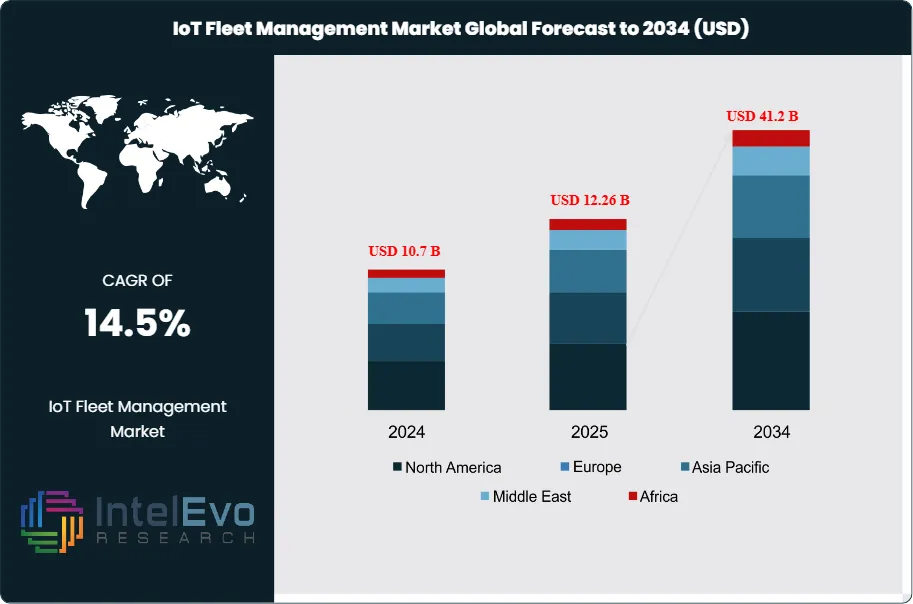
The IoT fleet management market encompasses a comprehensive ecosystem of connected devices, software platforms, and services that enable real-time monitoring, optimization, and automation of vehicle fleets across industries. This market includes telematics devices, sensors, GPS tracking, fleet management software, predictive maintenance solutions, and data analytics platforms designed to serve diverse transportation and logistics needs. The market serves multiple end-user segments, including logistics providers, public transportation, delivery services, and construction, oil & gas, and government fleets, creating a multifaceted industry with varying requirements for scalability, security, and operational efficiency.
The market is experiencing robust growth driven by the increasing adoption of connected vehicle technologies, rising demand for operational efficiency, and the need for regulatory compliance in fleet operations. Key growth catalysts include advancements in AI-powered analytics, 5G connectivity, and cloud-based fleet management platforms that enhance real-time decision-making and reduce operational costs. The market benefits from growing e-commerce activity, urbanization, and the expansion of last-mile delivery services, which are increasing the demand for intelligent fleet solutions. Additionally, government mandates for vehicle safety, emissions monitoring, and electronic logging are accelerating IoT adoption in fleet management.
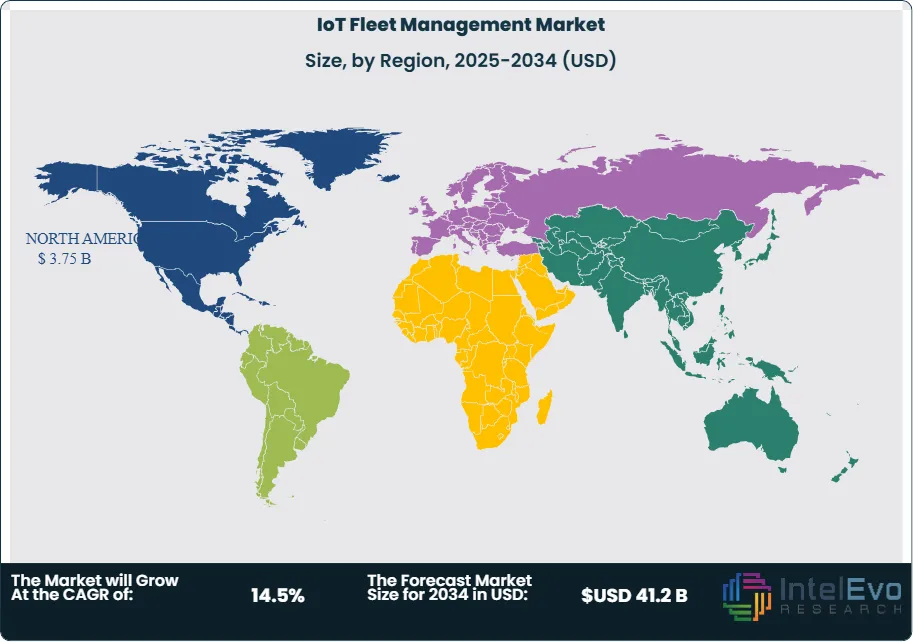
North America leads the global IoT fleet management market, supported by a mature logistics sector, high technology adoption rates, and stringent regulatory frameworks. The Asia-Pacific region is the fastest-growing market, driven by rapid urbanization, expanding transportation networks, and government initiatives to modernize logistics infrastructure. Europe maintains a significant market presence due to established automotive industries, strong regulatory compliance, and a focus on sustainability and green logistics.
The COVID-19 pandemic initially disrupted supply chains and reduced transportation demand, but it ultimately accelerated digital transformation in fleet management. The crisis highlighted the importance of real-time visibility, remote diagnostics, and contactless operations, driving investment in IoT-enabled solutions for fleet safety and efficiency.
Rising fuel costs, driver shortages, and increasing pressure for sustainability are significantly influencing market dynamics. International trade growth and cross-border logistics are creating opportunities for global IoT fleet management providers, while data privacy and cybersecurity concerns present ongoing challenges. The market is also witnessing increased demand for electric vehicle (EV) fleet management and integration with smart city infrastructure.
Market Growth: The IoT Fleet Management Market is expected to reach USD 41.2 Billion by 2034, fueled by the proliferation of connected vehicles, regulatory mandates, and the need for operational efficiency.
Product Type Dominance: Telematics Devices lead the segment, primarily due to their critical role in real-time vehicle tracking, diagnostics, and driver behavior monitoring.
Application Type Dominance: Logistics & Transportation holds the largest share, driven by the need for route optimization, asset tracking, and delivery efficiency.
Driver: Key drivers include the surge in e-commerce, rising demand for real-time fleet visibility, and regulatory requirements for safety and emissions compliance.
Restraint: Growth is hindered by high initial investment costs, data privacy concerns, and integration complexity with legacy systems.
Opportunity: The market is poised for expansion through opportunities such as the adoption of electric and autonomous vehicles, integration with smart city platforms, and the development of AI-driven predictive analytics.
Trend: Emerging trends include the adoption of 5G connectivity, AI-powered fleet analytics, and the integration of IoT with blockchain for secure data sharing.
Regional Analysis: North America leads due to advanced logistics infrastructure and regulatory support. Asia-Pacific shows high growth potential due to rapid urbanization and government investments in smart transportation.
Product Type Analysis
Telematics devices are the most important and widely used products in the IoT fleet management market. These are electronic devices installed in vehicles that collect and transmit data about the vehicle’s location, health, and how it’s being driven. Fleet operators (companies that manage groups of vehicles) rely on telematics to: track vehicles in real time, so they always know where their assets are., monitor vehicle health and performance, which helps with maintenance and reduces breakdowns. Telematics devices are popular because they can connect with many other sensors and software, making them useful for things like planning better routes and predicting when a vehicle will need repairs. They’re also affordable and can be used by both small companies and large enterprises, making them the go-to solution for most fleet management needs.
Application Type Analysis
Logistics & Transportation Leads With Over 45% Market Share. The logistics and transportation sector dominates the IoT fleet management market, reflecting the critical need for efficient asset tracking, route planning, and delivery optimization in a highly competitive environment. This segment drives demand for advanced telematics, real-time analytics, and automated compliance reporting. The sector’s leadership is sustained by the growth of e-commerce, the expansion of last-mile delivery networks, and the increasing complexity of global supply chains.
Region Analysis
North America Leads with More Than 35% Market Share. North America holds a commanding position in the global IoT fleet management market, supported by a mature logistics industry, high adoption of connected vehicle technologies, and robust regulatory frameworks. The region benefits from advanced infrastructure, a strong presence of leading technology providers, and significant investment in digital transformation initiatives.
The Asia-Pacific region is the fastest-growing market, driven by rapid urbanization, expanding transportation networks, and government initiatives to modernize logistics and public transportation. Countries such as China, India, and Japan are investing heavily in smart transportation and fleet digitization. Europe maintains a significant market share due to its established automotive sector, focus on sustainability, and stringent regulatory requirements for fleet safety and emissions.
Customization for segments, region/country-level will be provided. Moreover, additional customization can be done based on the requirements.
Pricing and Purchase Options
Avail customized purchase options to meet your exact research needs. We have three licenses to opt for: Single User License, Multi-User License (Up to 5 Users), Corporate Use License (Unlimited User and Printable PDF).
TABLE OF CONTENTS
1. EXECUTIVE SUMMARY
1.1. MARKET SNAPSHOT
1.2. KEY FINDINGS & INSIGHTS
1.3. ANALYST RECOMMENDATIONS
1.4. FUTURE OUTLOOK
2. RESEARCH METHODOLOGY
2.1. MARKET DEFINITION & SCOPE
2.2. RESEARCH OBJECTIVES: PRIMARY & SECONDARY DATA SOURCES
2.3. DATA COLLECTION SOURCES
2.3.1. COVERAGE OF 100+ PRIMARY RESEARCH/CONSULTATION CALLS WITH INDUSTRY STAKEHOLDERS
FIGURE 17 NORTH AMERICA IOT FLEET MANAGEMENT CURRENT AND FUTURE TYPE ANALYSIS, 2025–2034, (USD MILLION)
FIGURE 18 NORTH AMERICA IOT FLEET MANAGEMENT CURRENT AND FUTURE END USER ANALYSIS, 2025–2034, (USD MILLION)
FIGURE 19 MARKET SHARE BY COUNTRY
FIGURE 20 LATIN AMERICA IOT FLEET MANAGEMENT CURRENT AND FUTURE TYPE ANALYSIS, 2025–2034, (USD MILLION)
FIGURE 21 LATIN AMERICA IOT FLEET MANAGEMENT CURRENT AND FUTURE END USER ANALYSIS, 2025–2034, (USD MILLION)
FIGURE 22 MARKET SHARE BY COUNTRY
FIGURE 23 EASTERN EUROPE IOT FLEET MANAGEMENT CURRENT AND FUTURE TYPE ANALYSIS, 2025–2034, (USD MILLION)
FIGURE 24 EASTERN EUROPE IOT FLEET MANAGEMENT CURRENT AND FUTURE END USER ANALYSIS, 2025–2034, (USD MILLION)
FIGURE 25 MARKET SHARE BY COUNTRY
FIGURE 26 WESTERN EUROPE IOT FLEET MANAGEMENT CURRENT AND FUTURE TYPE ANALYSIS, 2025–2034, (USD MILLION)
FIGURE 27 WESTERN EUROPE IOT FLEET MANAGEMENT CURRENT AND FUTURE END USER ANALYSIS, 2025–2034, (USD MILLION)
FIGURE 28 MARKET SHARE BY COUNTRY
FIGURE 29 EAST ASIA AND PACIFIC IOT FLEET MANAGEMENT CURRENT AND FUTURE TYPE ANALYSIS, 2025–2034, (USD MILLION)
FIGURE 30 EAST ASIA AND PACIFIC IOT FLEET MANAGEMENT CURRENT AND FUTURE END USER ANALYSIS, 2025–2034, (USD MILLION)
FIGURE 31 MARKET SHARE BY COUNTRY
FIGURE 32 SEA AND SOUTH ASIA IOT FLEET MANAGEMENT CURRENT AND FUTURE TYPE ANALYSIS, 2025–2034, (USD MILLION)
FIGURE 33 SEA AND SOUTH ASIA IOT FLEET MANAGEMENT CURRENT AND FUTURE END USER ANALYSIS, 2025–2034, (USD MILLION)
FIGURE 34 MARKET SHARE BY COUNTRY
FIGURE 35 MIDDLE EAST AND AFRICA IOT FLEET MANAGEMENT CURRENT AND FUTURE TYPE ANALYSIS, 2025–2034, (USD MILLION)
FIGURE 36 MIDDLE EAST AND AFRICA IOT FLEET MANAGEMENT CURRENT AND FUTURE END USER ANALYSIS, 2025–2034, (USD MILLION)
FIGURE 37 NORTH AMERICA IOT FLEET MANAGEMENT CURRENT AND FUTURE MARKET VOLUME SHARE REGIONAL ANALYSIS, 2025–2034, (USD MILLION)
FIGURE 38 U.S. IOT FLEET MANAGEMENT CURRENT AND FUTURE TYPE ANALYSIS, 2025–2034, (USD MILLION)
FIGURE 39 U.S. IOT FLEET MANAGEMENT CURRENT AND FUTURE END USER ANALYSIS, 2025–2034, (USD MILLION)
FIGURE 40 CANADA IOT FLEET MANAGEMENT CURRENT AND FUTURE TYPE ANALYSIS, 2025–2034, (USD MILLION)
FIGURE 41 CANADA IOT FLEET MANAGEMENT CURRENT AND FUTURE END USER ANALYSIS, 2025–2034, (USD MILLION)
FIGURE 42 LATIN AMERICA IOT FLEET MANAGEMENT CURRENT AND FUTURE MARKET VOLUME SHARE REGIONAL ANALYSIS, 2025–2034, (USD MILLION)
FIGURE 43 MEXICO IOT FLEET MANAGEMENT CURRENT AND FUTURE TYPE ANALYSIS, 2025–2034, (USD MILLION)
FIGURE 44 MEXICO IOT FLEET MANAGEMENT CURRENT AND FUTURE END USER ANALYSIS, 2025–2034, (USD MILLION)
FIGURE 45 BRAZIL IOT FLEET MANAGEMENT CURRENT AND FUTURE TYPE ANALYSIS, 2025–2034, (USD MILLION)
FIGURE 46 BRAZIL IOT FLEET MANAGEMENT CURRENT AND FUTURE END USER ANALYSIS, 2025–2034, (USD MILLION)
FIGURE 47 ARGENTINA IOT FLEET MANAGEMENT CURRENT AND FUTURE TYPE ANALYSIS, 2025–2034, (USD MILLION)
FIGURE 48 ARGENTINA IOT FLEET MANAGEMENT CURRENT AND FUTURE END USER ANALYSIS, 2025–2034, (USD MILLION)
FIGURE 49 COLUMBIA IOT FLEET MANAGEMENT CURRENT AND FUTURE TYPE ANALYSIS, 2025–2034, (USD MILLION)
FIGURE 50 COLUMBIA IOT FLEET MANAGEMENT CURRENT AND FUTURE END USER ANALYSIS, 2025–2034, (USD MILLION)
FIGURE 51 REST OF LATIN AMERICA IOT FLEET MANAGEMENT CURRENT AND FUTURE TYPE ANALYSIS, 2025–2034, (USD MILLION)
FIGURE 52 REST OF LATIN AMERICA IOT FLEET MANAGEMENT CURRENT AND FUTURE END USER ANALYSIS, 2025–2034, (USD MILLION)
FIGURE 53 EASTERN EUROPE IOT FLEET MANAGEMENT CURRENT AND FUTURE MARKET VOLUME SHARE REGIONAL ANALYSIS, 2025–2034, (USD MILLION)
FIGURE 54 POLAND IOT FLEET MANAGEMENT CURRENT AND FUTURE TYPE ANALYSIS, 2025–2034, (USD MILLION)
FIGURE 55 POLAND IOT FLEET MANAGEMENT CURRENT AND FUTURE END USER ANALYSIS, 2025–2034, (USD MILLION)
FIGURE 56 RUSSIA IOT FLEET MANAGEMENT CURRENT AND FUTURE TYPE ANALYSIS, 2025–2034, (USD MILLION)
FIGURE 57 RUSSIA IOT FLEET MANAGEMENT CURRENT AND FUTURE END USER ANALYSIS, 2025–2034, (USD MILLION)
FIGURE 58 CZECH REPUBLIC IOT FLEET MANAGEMENT CURRENT AND FUTURE TYPE ANALYSIS, 2025–2034, (USD MILLION)
FIGURE 59 CZECH REPUBLIC IOT FLEET MANAGEMENT CURRENT AND FUTURE END USER ANALYSIS, 2025–2034, (USD MILLION)
FIGURE 60 ROMANIA IOT FLEET MANAGEMENT CURRENT AND FUTURE TYPE ANALYSIS, 2025–2034, (USD MILLION)
FIGURE 61 ROMANIA IOT FLEET MANAGEMENT CURRENT AND FUTURE END USER ANALYSIS, 2025–2034, (USD MILLION)
FIGURE 62 REST OF EASTERN EUROPE IOT FLEET MANAGEMENT CURRENT AND FUTURE TYPE ANALYSIS, 2025–2034, (USD MILLION)
FIGURE 63 REST OF EASTERN EUROPE IOT FLEET MANAGEMENT CURRENT AND FUTURE END USER ANALYSIS, 2025–2034, (USD MILLION)
FIGURE 64 WESTERN EUROPE IOT FLEET MANAGEMENT CURRENT AND FUTURE MARKET VOLUME SHARE REGIONAL ANALYSIS, 2025–2034, (USD MILLION)
FIGURE 65 GERMANY IOT FLEET MANAGEMENT CURRENT AND FUTURE TYPE ANALYSIS, 2025–2034, (USD MILLION)
FIGURE 66 GERMANY IOT FLEET MANAGEMENT CURRENT AND FUTURE END USER ANALYSIS, 2025–2034, (USD MILLION)
FIGURE 67 FRANCE IOT FLEET MANAGEMENT CURRENT AND FUTURE TYPE ANALYSIS, 2025–2034, (USD MILLION)
FIGURE 68 FRANCE IOT FLEET MANAGEMENT CURRENT AND FUTURE END USER ANALYSIS, 2025–2034, (USD MILLION)
FIGURE 69 UK IOT FLEET MANAGEMENT CURRENT AND FUTURE TYPE ANALYSIS, 2025–2034, (USD MILLION)
FIGURE 70 UK IOT FLEET MANAGEMENT CURRENT AND FUTURE END USER ANALYSIS, 2025–2034, (USD MILLION)
FIGURE 71 SPAIN IOT FLEET MANAGEMENT CURRENT AND FUTURE TYPE ANALYSIS, 2025–2034, (USD MILLION)
FIGURE 72 SPAIN IOT FLEET MANAGEMENT CURRENT AND FUTURE END USER ANALYSIS, 2025–2034, (USD MILLION)
FIGURE 73 ITALY IOT FLEET MANAGEMENT CURRENT AND FUTURE TYPE ANALYSIS, 2025–2034, (USD MILLION)
FIGURE 74 ITALY IOT FLEET MANAGEMENT CURRENT AND FUTURE END USER ANALYSIS, 2025–2034, (USD MILLION)
FIGURE 75 REST OF WESTERN EUROPE IOT FLEET MANAGEMENT CURRENT AND FUTURE TYPE ANALYSIS, 2025–2034, (USD MILLION)
FIGURE 76 REST OF WESTERN EUROPE IOT FLEET MANAGEMENT CURRENT AND FUTURE END USER ANALYSIS, 2025–2034, (USD MILLION)
FIGURE 77 EAST ASIA AND PACIFIC IOT FLEET MANAGEMENT CURRENT AND FUTURE MARKET VOLUME SHARE REGIONAL ANALYSIS, 2025–2034, (USD MILLION)
FIGURE 78 CHINA IOT FLEET MANAGEMENT CURRENT AND FUTURE TYPE ANALYSIS, 2025–2034, (USD MILLION)
FIGURE 79 CHINA IOT FLEET MANAGEMENT CURRENT AND FUTURE END USER ANALYSIS, 2025–2034, (USD MILLION)
FIGURE 80 JAPAN IOT FLEET MANAGEMENT CURRENT AND FUTURE TYPE ANALYSIS, 2025–2034, (USD MILLION)
FIGURE 81 JAPAN IOT FLEET MANAGEMENT CURRENT AND FUTURE END USER ANALYSIS, 2025–2034, (USD MILLION)
FIGURE 82 AUSTRALIA IOT FLEET MANAGEMENT CURRENT AND FUTURE TYPE ANALYSIS, 2025–2034, (USD MILLION)
FIGURE 83 AUSTRALIA IOT FLEET MANAGEMENT CURRENT AND FUTURE END USER ANALYSIS, 2025–2034, (USD MILLION)
FIGURE 84 CAMBODIA IOT FLEET MANAGEMENT CURRENT AND FUTURE TYPE ANALYSIS, 2025–2034, (USD MILLION)
FIGURE 85 CAMBODIA IOT FLEET MANAGEMENT CURRENT AND FUTURE END USER ANALYSIS, 2025–2034, (USD MILLION)
FIGURE 86 FIJI IOT FLEET MANAGEMENT CURRENT AND FUTURE TYPE ANALYSIS, 2025–2034, (USD MILLION)
FIGURE 87 FIJI IOT FLEET MANAGEMENT CURRENT AND FUTURE END USER ANALYSIS, 2025–2034, (USD MILLION)
FIGURE 88 INDONESIA IOT FLEET MANAGEMENT CURRENT AND FUTURE TYPE ANALYSIS, 2025–2034, (USD MILLION)
FIGURE 89 INDONESIA IOT FLEET MANAGEMENT CURRENT AND FUTURE END USER ANALYSIS, 2025–2034, (USD MILLION)
FIGURE 90 SOUTH KOREA IOT FLEET MANAGEMENT CURRENT AND FUTURE TYPE ANALYSIS, 2025–2034, (USD MILLION)
FIGURE 91 SOUTH KOREA IOT FLEET MANAGEMENT CURRENT AND FUTURE END USER ANALYSIS, 2025–2034, (USD MILLION)
FIGURE 92 REST OF EAST ASIA AND PACIFIC IOT FLEET MANAGEMENT CURRENT AND FUTURE TYPE ANALYSIS, 2025–2034, (USD MILLION)
FIGURE 93 REST OF EAST ASIA AND PACIFIC IOT FLEET MANAGEMENT CURRENT AND FUTURE END USER ANALYSIS, 2025–2034, (USD MILLION)
FIGURE 94 SEA AND SOUTH ASIA IOT FLEET MANAGEMENT CURRENT AND FUTURE MARKET VOLUME SHARE REGIONAL ANALYSIS, 2025–2034, (USD MILLION)
FIGURE 95 BANGLADESH IOT FLEET MANAGEMENT CURRENT AND FUTURE TYPE ANALYSIS, 2025–2034, (USD MILLION)
FIGURE 96 BANGLADESH IOT FLEET MANAGEMENT CURRENT AND FUTURE END USER ANALYSIS, 2025–2034, (USD MILLION)
FIGURE 97 NEW ZEALAND IOT FLEET MANAGEMENT CURRENT AND FUTURE TYPE ANALYSIS, 2025–2034, (USD MILLION)
FIGURE 98 NEW ZEALAND IOT FLEET MANAGEMENT CURRENT AND FUTURE END USER ANALYSIS, 2025–2034, (USD MILLION)
FIGURE 99 INDIA IOT FLEET MANAGEMENT CURRENT AND FUTURE TYPE ANALYSIS, 2025–2034, (USD MILLION)
FIGURE 100 INDIA IOT FLEET MANAGEMENT CURRENT AND FUTURE END USER ANALYSIS, 2025–2034, (USD MILLION)
FIGURE 101 SINGAPORE IOT FLEET MANAGEMENT CURRENT AND FUTURE TYPE ANALYSIS, 2025–2034, (USD MILLION)
FIGURE 102 SINGAPORE IOT FLEET MANAGEMENT CURRENT AND FUTURE END USER ANALYSIS, 2025–2034, (USD MILLION)
FIGURE 103 THAILAND IOT FLEET MANAGEMENT CURRENT AND FUTURE TYPE ANALYSIS, 2025–2034, (USD MILLION)
FIGURE 104 THAILAND IOT FLEET MANAGEMENT CURRENT AND FUTURE END USER ANALYSIS, 2025–2034, (USD MILLION)
FIGURE 105 TAIWAN IOT FLEET MANAGEMENT CURRENT AND FUTURE TYPE ANALYSIS, 2025–2034, (USD MILLION)
FIGURE 106 TAIWAN IOT FLEET MANAGEMENT CURRENT AND FUTURE END USER ANALYSIS, 2025–2034, (USD MILLION)
FIGURE 107 MALAYSIA IOT FLEET MANAGEMENT CURRENT AND FUTURE TYPE ANALYSIS, 2025–2034, (USD MILLION)
FIGURE 108 MALAYSIA IOT FLEET MANAGEMENT CURRENT AND FUTURE END USER ANALYSIS, 2025–2034, (USD MILLION)
FIGURE 109 REST OF SEA AND SOUTH ASIA IOT FLEET MANAGEMENT CURRENT AND FUTURE TYPE ANALYSIS, 2025–2034, (USD MILLION)
FIGURE 110 REST OF SEA AND SOUTH ASIA IOT FLEET MANAGEMENT CURRENT AND FUTURE END USER ANALYSIS, 2025–2034, (USD MILLION)
FIGURE 111 MIDDLE EAST AND AFRICA IOT FLEET MANAGEMENT CURRENT AND FUTURE MARKET VOLUME SHARE REGIONAL ANALYSIS, 2025–2034, (USD MILLION)
FIGURE 112 GCC COUNTRIES IOT FLEET MANAGEMENT CURRENT AND FUTURE TYPE ANALYSIS, 2025–2034, (USD MILLION)
FIGURE 113 GCC COUNTRIES IOT FLEET MANAGEMENT CURRENT AND FUTURE END USER ANALYSIS, 2025–2034, (USD MILLION)
FIGURE 114 SAUDI ARABIA IOT FLEET MANAGEMENT CURRENT AND FUTURE TYPE ANALYSIS, 2025–2034, (USD MILLION)
FIGURE 115 SAUDI ARABIA IOT FLEET MANAGEMENT CURRENT AND FUTURE END USER ANALYSIS, 2025–2034, (USD MILLION)
FIGURE 116 UAE IOT FLEET MANAGEMENT CURRENT AND FUTURE TYPE ANALYSIS, 2025–2034, (USD MILLION)
FIGURE 117 UAE IOT FLEET MANAGEMENT CURRENT AND FUTURE END USER ANALYSIS, 2025–2034, (USD MILLION)
FIGURE 118 BAHRAIN IOT FLEET MANAGEMENT CURRENT AND FUTURE TYPE ANALYSIS, 2025–2034, (USD MILLION)
FIGURE 119 BAHRAIN IOT FLEET MANAGEMENT CURRENT AND FUTURE END USER ANALYSIS, 2025–2034, (USD MILLION)
FIGURE 120 KUWAIT IOT FLEET MANAGEMENT CURRENT AND FUTURE TYPE ANALYSIS, 2025–2034, (USD MILLION)
FIGURE 121 KUWAIT IOT FLEET MANAGEMENT CURRENT AND FUTURE END USER ANALYSIS, 2025–2034, (USD MILLION)
FIGURE 122 OMAN IOT FLEET MANAGEMENT CURRENT AND FUTURE TYPE ANALYSIS, 2025–2034, (USD MILLION)
FIGURE 123 OMAN IOT FLEET MANAGEMENT CURRENT AND FUTURE END USER ANALYSIS, 2025–2034, (USD MILLION)
FIGURE 124 QATAR IOT FLEET MANAGEMENT CURRENT AND FUTURE TYPE ANALYSIS, 2025–2034, (USD MILLION)
FIGURE 125 QATAR IOT FLEET MANAGEMENT CURRENT AND FUTURE END USER ANALYSIS, 2025–2034, (USD MILLION)
FIGURE 126 EGYPT IOT FLEET MANAGEMENT CURRENT AND FUTURE TYPE ANALYSIS, 2025–2034, (USD MILLION)
FIGURE 127 EGYPT IOT FLEET MANAGEMENT CURRENT AND FUTURE END USER ANALYSIS, 2025–2034, (USD MILLION)
FIGURE 128 NIGERIA IOT FLEET MANAGEMENT CURRENT AND FUTURE TYPE ANALYSIS, 2025–2034, (USD MILLION)
FIGURE 129 NIGERIA IOT FLEET MANAGEMENT CURRENT AND FUTURE END USER ANALYSIS, 2025–2034, (USD MILLION)
FIGURE 130 SOUTH AFRICA IOT FLEET MANAGEMENT CURRENT AND FUTURE TYPE ANALYSIS, 2025–2034, (USD MILLION)
FIGURE 131 SOUTH AFRICA IOT FLEET MANAGEMENT CURRENT AND FUTURE END USER ANALYSIS, 2025–2034, (USD MILLION)
FIGURE 132 ISRAEL IOT FLEET MANAGEMENT CURRENT AND FUTURE TYPE ANALYSIS, 2025–2034, (USD MILLION)
FIGURE 133 ISRAEL IOT FLEET MANAGEMENT CURRENT AND FUTURE END USER ANALYSIS, 2025–2034, (USD MILLION)
FIGURE 134 REST OF MEA IOT FLEET MANAGEMENT CURRENT AND FUTURE TYPE ANALYSIS, 2025–2034, (USD MILLION)
FIGURE 135 REST OF MEA IOT FLEET MANAGEMENT CURRENT AND FUTURE END USER ANALYSIS, 2025–2034, (USD MILLION)
FIGURE 136 U. S. MARKET SHARE ANALYSIS BY TYPE (2024)
FIGURE 137 U. S. MARKET SHARE ANALYSIS BY END USER (2024)
FIGURE 138 CANADA MARKET SHARE ANALYSIS BY TYPE (2024)
FIGURE 139 CANADA MARKET SHARE ANALYSIS BY END USER (2024)
FIGURE 140 MEXICO MARKET SHARE ANALYSIS BY TYPE (2024)
FIGURE 141 MEXICO MARKET SHARE ANALYSIS BY END USER (2024)
FIGURE 142 CHINA MARKET SHARE ANALYSIS BY TYPE (2024)
FIGURE 143 CHINA MARKET SHARE ANALYSIS BY END USER (2024)
FIGURE 144 JAPAN MARKET SHARE ANALYSIS BY TYPE (2024)
FIGURE 145 JAPAN MARKET SHARE ANALYSIS BY END USER (2024)
FIGURE 146 INDIA MARKET SHARE ANALYSIS BY TYPE (2024)
FIGURE 147 INDIA MARKET SHARE ANALYSIS BY END USER (2024)
FIGURE 148 SOUTH KOREA MARKET SHARE ANALYSIS BY TYPE (2024)
FIGURE 149 SOUTH KOREA MARKET SHARE ANALYSIS BY END USER (2024)
FIGURE 150 SAUDI ARABIA MARKET SHARE ANALYSIS BY TYPE (2024)
FIGURE 151 SAUDI ARABIA MARKET SHARE ANALYSIS BY END USER (2024)
FIGURE 152 UAE MARKET SHARE ANALYSIS BY TYPE (2024)
FIGURE 153 UAE MARKET SHARE ANALYSIS BY END USER (2024)
FIGURE 154 EGYPT MARKET SHARE ANALYSIS BY TYPE (2024)
FIGURE 155 EGYPT MARKET SHARE ANALYSIS BY END USER (2024)
FIGURE 156 NIGERIA MARKET SHARE ANALYSIS BY TYPE (2024)
FIGURE 157 NIGERIA MARKET SHARE ANALYSIS BY END USER (2024)
FIGURE 158 SOUTH AFRICA MARKET SHARE ANALYSIS BY TYPE (2024)
FIGURE 159 SOUTH AFRICA MARKET SHARE ANALYSIS BY END USER (2024)
FIGURE 160 GERMANY MARKET SHARE ANALYSIS BY TYPE (2024)
FIGURE 161 GERMANY MARKET SHARE ANALYSIS BY END USER (2024)
FIGURE 162 FRANCE MARKET SHARE ANALYSIS BY TYPE (2024)
FIGURE 163 FRANCE MARKET SHARE ANALYSIS BY END USER (2024)
FIGURE 164 UK MARKET SHARE ANALYSIS BY TYPE (2024)
FIGURE 165 UK MARKET SHARE ANALYSIS BY END USER (2024)
FIGURE 166 SPAIN MARKET SHARE ANALYSIS BY TYPE (2024)
FIGURE 167 SPAIN MARKET SHARE ANALYSIS BY END USER (2024)
FIGURE 168 ITALY MARKET SHARE ANALYSIS BY TYPE (2024)
FIGURE 169 ITALY MARKET SHARE ANALYSIS BY END USER (2024)
FIGURE 170 BRAZIL MARKET SHARE ANALYSIS BY TYPE (2024)
FIGURE 171 BRAZIL MARKET SHARE ANALYSIS BY END USER (2024)
FIGURE 172 ARGENTINA MARKET SHARE ANALYSIS BY TYPE (2024)
FIGURE 173 ARGENTINA MARKET SHARE ANALYSIS BY END USER (2024)
FIGURE 174 COLUMBIA MARKET SHARE ANALYSIS BY TYPE (2024)
FIGURE 175 COLUMBIA MARKET SHARE ANALYSIS BY END USER (2024)
FIGURE 176 GLOBAL IOT FLEET MANAGEMENT CURRENT AND FUTURE MARKET KEY COUNTRY LEVEL ANALYSIS, 2024–2034, (USD MILLION)
FIGURE 177 FINANCIAL OVERVIEW:
Key Players Analysis
Geotab Inc.: Geotab is recognized as a leader in the telematics and fleet management industry, largely due to its comprehensive and highly scalable solutions. The company offers a robust telematics platform that enables real-time vehicle tracking, diagnostics, driver behavior monitoring, and advanced data analytics. One of Geotab’s key competitive advantages is its open platform approach, which allows customers to customize and extend their fleet management capabilities by integrating third-party applications and devices. This flexibility is supported by a vast integration ecosystem, including partnerships with software providers, hardware manufacturers, and industry-specific solution developers.
Verizon Connect: Verizon Connect stands out in the connected fleet solutions market with its comprehensive suite of telematics, asset tracking, and compliance management services. The company’s end-to-end offerings cover everything from vehicle tracking and driver performance monitoring to automated compliance reporting and maintenance scheduling. Verizon Connect’s global presence gives it a significant advantage, enabling it to serve enterprise customers across multiple regions and industries. The company is known for its continuous innovation, regularly updating its platforms with new features and technologies to address evolving customer needs.
Trimble Inc.: Trimble is a specialist in advanced fleet management and telematics, with a particular focus on route optimization, driver safety, and regulatory compliance. The company’s deep industry expertise allows it to develop solutions tailored to the unique challenges of various sectors, such as transportation, construction, and agriculture. Trimble’s modular product portfolio enables customers to select and combine features that best suit their operational needs, providing flexibility and scalability. The company is committed to innovation, continually enhancing its offerings with the latest technologies in GPS tracking, data analytics, and automation.
Market Key Players
Geotab Inc.
Verizon Connect
Trimble Inc.
Omnitracs LLC
Fleet Complete
Teletrac Navman
TomTom Telematics
AT&T Fleet Complete
MiX Telematics
Samsara Inc.
Driver
Surge in E-commerce Driving Fleet Digitalization
The fast growth of e-commerce has changed logistics and transportation. It has increased the demand for quick, reliable, and clear delivery services. As online shopping increases, fleet operators feel more pressure to meet shorter delivery times and higher service expectations. Real-time fleet visibility is now crucial. It helps operators track vehicles, monitor deliveries, and quickly address issues while keeping customers satisfied.
Real-Time Visibility and Data-Driven Fleet Optimization
To meet these needs, fleet operators are turning to IoT-enabled telematics and analytics platforms. These tools gather real-time data on vehicle location, fuel use, speed, and driver behavior. They help fleet managers spot inefficiencies and adjust routes on the fly. Integrated analytics lead to better decision-making, like rerouting vehicles during traffic jams or informing customers about updated delivery times. This improves operational flexibility and service reliability.
Restraint
High Upfront Investment and Cost Sensitivity
A major barrier to IoT fleet management adoption is the high initial cost. Expenses for telematics hardware installation, software licenses, system integration, and training can be significant. While larger companies can often handle these costs, small and mid-sized fleet operators may find the financial strain too much, slowing growth in their segment.
Data Privacy and Cybersecurity Challenges
Beyond costs, data privacy and cybersecurity issues present real challenges. IoT fleet management systems produce and send a lot of sensitive operational and driver data, raising risks of cyber threats and regulatory concerns. Staying compliant with data protection laws and protecting systems from breaches requires ongoing investment in security, which can further hinder adoption.
Opportunity
Growing Demand for EV Fleet Management Solutions
The shift to electric vehicles (EVs) offers a big chance for IoT fleet management providers. EV fleets need special monitoring of battery health, charging schedules, vehicle range, and energy use. IoT platforms help operators optimize charging, predict maintenance needs, and plan routes based on charging station availability. This improves fleet uptime and sustainability.
Integration with Smart City Infrastructure
In addition to managing EVs, connecting fleet platforms with smart city systems is opening up new growth possibilities. Connected traffic systems, smart parking solutions, and public charging networks can help reduce congestion and downtime. As urban areas invest in smart mobility projects, IoT fleet management solutions are becoming essential to efficient, sustainable, and connected transportation networks.
Trends
Adoption of 5G-Enabled Fleet Connectivity
The rollout of 5G networks is changing IoT fleet management with faster, low-latency data transmission. This improved connectivity enhances real-time vehicle tracking, live video monitoring, immediate alerts, and reliable communication even in busy urban areas or remote locations. This connection boosts fleet visibility and allows for advanced applications that were limited by previous network constraints.
AI Analytics and Blockchain for Secure Fleet Ecosystems
AI-driven analytics are being used more to process large amounts of fleet data, predict maintenance issues, optimize routes, and increase driver safety. At the same time, blockchain technology is becoming popular for secure and clear data sharing in the fleet ecosystem. By creating tamper-proof records of vehicle activity and maintenance logs, blockchain builds trust, ensures compliance, and improves accountability. This sets new standards for efficiency and security in fleet management.
Recent Development
In June 2025: Geotab Inc. announced the launch of its next-generation AI-powered fleet analytics platform, enabling predictive maintenance, real-time driver coaching, and advanced sustainability reporting. The platform leverages 5G connectivity and edge computing to deliver actionable insights and reduce operational costs for global fleet operators.
In November 2024: Verizon Connect completed the acquisition of a leading European telematics provider, expanding its presence in the EMEA region and enhancing its portfolio of compliance and safety solutions for cross-border logistics.
