
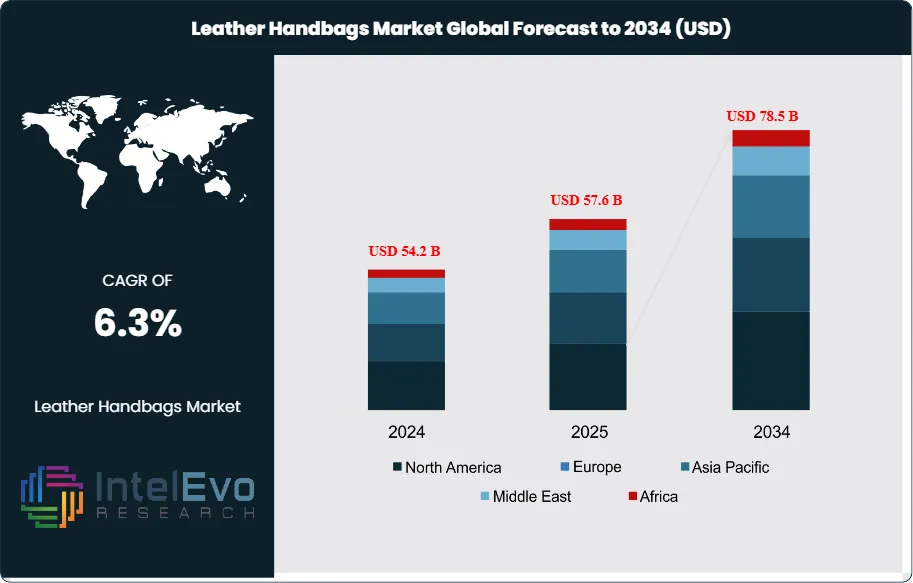
The Global leather handbags market is changing, showing a clear trend toward higher-value purchases and brand differentiation. Valued at USD 54.2 billion in 2024, the market is expected to grow to USD 78.5 billion by 2034, with a compound annual growth rate of 6.3% during this time. The demand remains strong due to increased spending in emerging economies and a lasting interest in traditional craftsmanship in mature markets. By early 2026, the competitive landscape reveals a split strategy. Global luxury brands are strengthening their positions with limited-edition, high-margin items that serve as "investment pieces." In contrast, nimble contemporary brands focus on sustainability, accessibility, and online-first distribution methods.
Product categories are varied and strategically diverse, including Tote Bags, Shoulder Bags, Satchels, Clutches, and Backpacks. This variety helps brands meet both practical and occasion-driven needs. Tote and shoulder bags lead revenue contributions because of their versatility and usefulness, especially for working women in urban settings. At the same time, clutches and mini satchels benefit from purchases driven by events and fashion trends. Premium leather backpacks are becoming popular among younger consumers who want a mix of luxury and practicality. This wide range of products lowers the risk within categories and allows brands to improve their profit margins through seasonal collections and limited releases.
A key theme in the industry is the rise of a "Dual-Track" growth model. Established luxury companies are boosting brand value through scarcity in pricing, artisanal appeal, and controlled distribution. Meanwhile, online-first brands are appealing to Gen Z and millennials with clear sourcing, circular fashion systems, resale options, and plant-based or eco-friendly leather substitutes. Social commerce platforms, especially in China and Southeast Asia, have become vital for accelerating demand. They facilitate product discovery led by influencers and achieve high conversion rates. This integration of digital commerce has shortened product lifecycles and increased competition across both premium and mid-tier markets.
On the supply side, the market faces challenges due to unstable raw hide prices, costs related to environmental regulations, and changing trade rules. Stricter global enforcement against counterfeiting has bolstered brand protection but raised compliance costs. After the pandemic, retail operations have largely stabilized, but geopolitical tensions and shipping delays have prompted near-shoring strategies in Europe and North America. These strategies aim to reduce lead times and manage logistics risks. Looking ahead, operational flexibility, alignment with environmental and social governance, and integrated sales channels will be vital for gaining a competitive edge in a market that increasingly merges traditional luxury with sustainable practices.
Key Takeaways
Market Growth: The market is projected to reach USD 78.5 billion by 2034, as consumers increasingly view handbags as both functional accessories and status symbols.
Type Dominance: Tote bags and satchels account for 38% of the market in 2024, followed by shoulder bags (XX%), clutches (XX%), and backpacks (XX%).
Platform Dominance: E-commerce and online retail channels represent over 32% of global sales, with department stores and specialty boutiques maintaining a strong presence.
End-User Dominance: Women represent 82% of the market, with men’s leather handbags and unisex styles gaining traction.
Driver: Rising disposable incomes, urbanization, and the influence of fashion media are fueling demand.
Restraint: High prices of premium leather, counterfeit products, and growing competition from synthetic alternatives.
Opportunity: Sustainable and vegan leather, customization, and expansion into emerging markets.
Trend: Eco-friendly materials, limited-edition collaborations, and digital marketing campaigns are shaping consumer preferences.
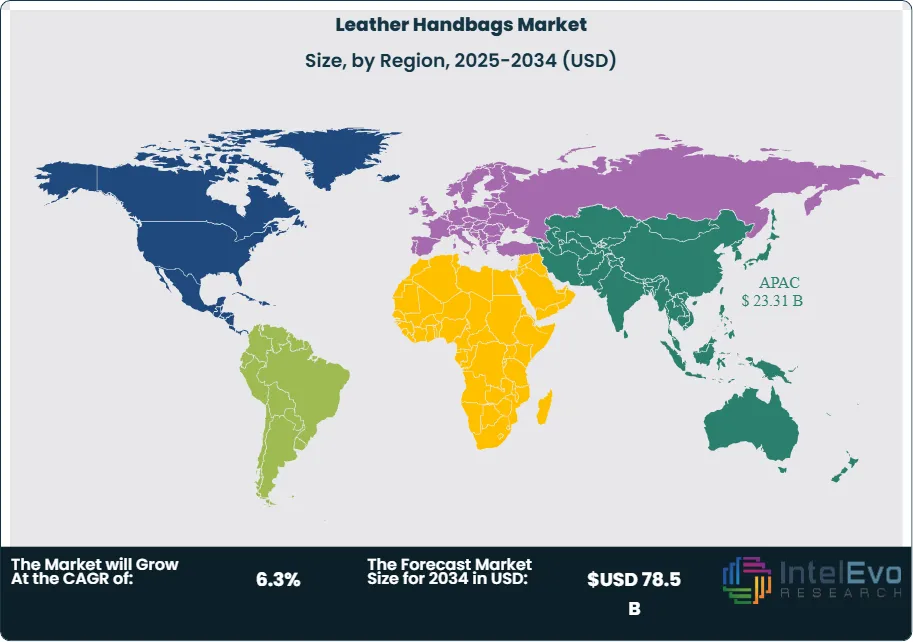
Regional Analysis: Asia Pacific leads with 36% market share in 2024, followed by Europe (XX%) and North America (XX%). Latin America and the Middle East & Africa are emerging markets with rising luxury consumption.
Type Analysis
Tote and shoulder bags are the functional core of the market, making up over 60% of total volume in 2026. These bags have gained popularity due to the return to office and hybrid work trends. Consumers now need durable, spacious bags that can carry technology and personal items. In the premium segment, designers are creating bags with hidden compartments for devices, using high-quality, vegetable-tanned leathers that develop a unique patina over time. This appeals to consumers who value longevity.
On the other hand, mini bags and clutches are experiencing a resurgence in 2026, thanks to the micro-trend cycle on social media. Although these items are less practical, they are marketed as entry-level luxury or wearable jewelry. Brands like Jacquemus and Prada have introduced these styles to attract a younger customer base. For the 2024-2034 period, the East-West (elongated rectangular) shape is emerging as a popular sub-type, combining the elegance of a clutch with the practicality of a shoulder bag.
Platform Analysis
Offline retail remains the main driver of the leather handbag market, especially for luxury items. In 2026, the in-store experience has transformed into experiential retail. Flagship stores in cities like Paris, Shanghai, and New York now offer customization ateliers and VIP lounges where customers can choose specific leather grains and hardware. This physical experience is vital for assessing the quality and feel of genuine leather, which influences high-value purchases.
Online platforms are the fastest-growing segment and are projected to make up nearly 50% of total sales by 2034. The use of AI-powered virtual try-ons and high-fidelity 3D rendering has built trust in online leather goods. Additionally, social commerce platforms like TikTok Shop and Little Red Book (Xiaohongshu) allow brands to sell directly to consumers, bypassing traditional retailers. In 2026, many brands are offering online-exclusive limited-edition leather colors to increase digital traffic and urgency.
End-User Analysis
The women's segment leads the leather handbag market. In 2026, buying habits are increasingly driven by financial empowerment in emerging economies such as India and Vietnam. Women are shifting from seasonal it-bags to heritage investments, favoring styles like the Hermès Birkin or Chanel Classic Flap, viewed as safeguards against inflation. This move towards investment-grade fashion contributes to a strong CAGR despite economic fluctuations.
The men's segment, though smaller, is the growth wildcard from 2025 to 2034. The bags for men category has expanded beyond briefcases to include crossbody tech pouches, leather backpacks, and oversized totes. Influenced by gorpcore and high-fashion streetwear trends, men are becoming more comfortable with leather accessories. Brands like Louis Vuitton, under Pharrell Williams, are targeting this demographic with bold leather designs that challenge traditional masculine norms, creating a significant revenue opportunity.
Regional Analysis
Asia-Pacific is the global leader of the leather handbag market in 2026, holding over 43% of the market share. While China is the main driver, India is emerging as a key growth region, fueled by a growing middle class and a passion for leather craftsmanship. The region's growth is supported by a large young population, heavily influenced by K-Pop and C-Drama celebrity endorsements, which can lead specific handbag styles to sell out worldwide shortly after a social media post.
Europe and North America focus on quality and value. While volume growth is slower than in Asia-Pacific, the average unit value is higher. European consumers, especially in France and Italy, prefer artisanal, locally-made products and are early adopters of sustainable, circular leather initiatives. In the United States, the market benefits from high disposable income and a vibrant resale market, normalizing the perception of high-end leather bags as both depreciable and liquid assets.
Type (Tote Bags & Satchels, Shoulder Bags, Clutches, Backpacks, Others), By Platform (E-commerce & Online Retail, Department Stores & Boutiques, Direct-to-Consumer), By End-User (Women, Men & Unisex)
Research Methodology
Primary Research- 100 Interviews of Stakeholders
Secondary Research
Desk Research
Regional scope
North America (United States, Canada, Mexico)
Latin America (Brazil, Argentina, Columbia)
East Asia And Pacific (China, Japan, South Korea, Australia, Cambodia, Fiji, Indonesia)
Sea And South Asia (India, Singapore, Thailand, Taiwan, Malaysia)
Eastern Europe (Poland, Russia, Czech Republic, Romania)
Western Europe (Germany, U.K., France, Spain, Itlay)
Middle East & Africa (GCC Countries, Egypt, Nigeria, South Africa, Israel)
Competitive Landscape
LVMH Moët Hennessy Louis Vuitton SE, Kering SA (Gucci, Saint Laurent), Prada Group, Coach (Tapestry, Inc.), Michael Kors (Capri Holdings), Hermès International S.A., Burberry Group PLC, Fossil Group, Inc., Kate Spade, Tory Burch LLC, Longchamp, Furla, Samsonite International S.A., Hidesign, Charles & Keith
Customization Scope
Customization for segments, region/country-level will be provided. Moreover, additional customization can be done based on the requirements.
Pricing and Purchase Options
Avail customized purchase options to meet your exact research needs. We have three licenses to opt for: Single User License, Multi-User License (Up to 5 Users), Corporate Use License (Unlimited User and Printable PDF).
TABLE OF CONTENTS
1. EXECUTIVE SUMMARY
1.1. MARKET SNAPSHOT
1.2. KEY FINDINGS & INSIGHTS
1.3. ANALYST RECOMMENDATIONS
1.4. FUTURE OUTLOOK
2. RESEARCH METHODOLOGY
2.1. MARKET DEFINITION & SCOPE
2.2. RESEARCH OBJECTIVES: PRIMARY & SECONDARY DATA SOURCES
2.3. DATA COLLECTION SOURCES
2.3.1. COVERAGE OF 100+ PRIMARY RESEARCH/CONSULTATION CALLS WITH INDUSTRY STAKEHOLDERS
FIGURE 17 NORTH AMERICA LEATHER HANDBAGS CURRENT AND FUTURE TYPE ANALYSIS, 2025–2034, (USD MILLION)
FIGURE 18 NORTH AMERICA LEATHER HANDBAGS CURRENT AND FUTURE END USER ANALYSIS, 2025–2034, (USD MILLION)
FIGURE 19 MARKET SHARE BY COUNTRY
FIGURE 20 LATIN AMERICA LEATHER HANDBAGS CURRENT AND FUTURE TYPE ANALYSIS, 2025–2034, (USD MILLION)
FIGURE 21 LATIN AMERICA LEATHER HANDBAGS CURRENT AND FUTURE END USER ANALYSIS, 2025–2034, (USD MILLION)
FIGURE 22 MARKET SHARE BY COUNTRY
FIGURE 23 EASTERN EUROPE LEATHER HANDBAGS CURRENT AND FUTURE TYPE ANALYSIS, 2025–2034, (USD MILLION)
FIGURE 24 EASTERN EUROPE LEATHER HANDBAGS CURRENT AND FUTURE END USER ANALYSIS, 2025–2034, (USD MILLION)
FIGURE 25 MARKET SHARE BY COUNTRY
FIGURE 26 WESTERN EUROPE LEATHER HANDBAGS CURRENT AND FUTURE TYPE ANALYSIS, 2025–2034, (USD MILLION)
FIGURE 27 WESTERN EUROPE LEATHER HANDBAGS CURRENT AND FUTURE END USER ANALYSIS, 2025–2034, (USD MILLION)
FIGURE 28 MARKET SHARE BY COUNTRY
FIGURE 29 EAST ASIA AND PACIFIC LEATHER HANDBAGS CURRENT AND FUTURE TYPE ANALYSIS, 2025–2034, (USD MILLION)
FIGURE 30 EAST ASIA AND PACIFIC LEATHER HANDBAGS CURRENT AND FUTURE END USER ANALYSIS, 2025–2034, (USD MILLION)
FIGURE 31 MARKET SHARE BY COUNTRY
FIGURE 32 SEA AND SOUTH ASIA LEATHER HANDBAGS CURRENT AND FUTURE TYPE ANALYSIS, 2025–2034, (USD MILLION)
FIGURE 33 SEA AND SOUTH ASIA LEATHER HANDBAGS CURRENT AND FUTURE END USER ANALYSIS, 2025–2034, (USD MILLION)
FIGURE 34 MARKET SHARE BY COUNTRY
FIGURE 35 MIDDLE EAST AND AFRICA LEATHER HANDBAGS CURRENT AND FUTURE TYPE ANALYSIS, 2025–2034, (USD MILLION)
FIGURE 36 MIDDLE EAST AND AFRICA LEATHER HANDBAGS CURRENT AND FUTURE END USER ANALYSIS, 2025–2034, (USD MILLION)
FIGURE 37 NORTH AMERICA LEATHER HANDBAGS CURRENT AND FUTURE MARKET VOLUME SHARE REGIONAL ANALYSIS, 2025–2034, (USD MILLION)
FIGURE 38 U.S. LEATHER HANDBAGS CURRENT AND FUTURE TYPE ANALYSIS, 2025–2034, (USD MILLION)
FIGURE 39 U.S. LEATHER HANDBAGS CURRENT AND FUTURE END USER ANALYSIS, 2025–2034, (USD MILLION)
FIGURE 40 CANADA LEATHER HANDBAGS CURRENT AND FUTURE TYPE ANALYSIS, 2025–2034, (USD MILLION)
FIGURE 41 CANADA LEATHER HANDBAGS CURRENT AND FUTURE END USER ANALYSIS, 2025–2034, (USD MILLION)
FIGURE 42 LATIN AMERICA LEATHER HANDBAGS CURRENT AND FUTURE MARKET VOLUME SHARE REGIONAL ANALYSIS, 2025–2034, (USD MILLION)
FIGURE 43 MEXICO LEATHER HANDBAGS CURRENT AND FUTURE TYPE ANALYSIS, 2025–2034, (USD MILLION)
FIGURE 44 MEXICO LEATHER HANDBAGS CURRENT AND FUTURE END USER ANALYSIS, 2025–2034, (USD MILLION)
FIGURE 45 BRAZIL LEATHER HANDBAGS CURRENT AND FUTURE TYPE ANALYSIS, 2025–2034, (USD MILLION)
FIGURE 46 BRAZIL LEATHER HANDBAGS CURRENT AND FUTURE END USER ANALYSIS, 2025–2034, (USD MILLION)
FIGURE 47 ARGENTINA LEATHER HANDBAGS CURRENT AND FUTURE TYPE ANALYSIS, 2025–2034, (USD MILLION)
FIGURE 48 ARGENTINA LEATHER HANDBAGS CURRENT AND FUTURE END USER ANALYSIS, 2025–2034, (USD MILLION)
FIGURE 49 COLUMBIA LEATHER HANDBAGS CURRENT AND FUTURE TYPE ANALYSIS, 2025–2034, (USD MILLION)
FIGURE 50 COLUMBIA LEATHER HANDBAGS CURRENT AND FUTURE END USER ANALYSIS, 2025–2034, (USD MILLION)
FIGURE 51 REST OF LATIN AMERICA LEATHER HANDBAGS CURRENT AND FUTURE TYPE ANALYSIS, 2025–2034, (USD MILLION)
FIGURE 52 REST OF LATIN AMERICA LEATHER HANDBAGS CURRENT AND FUTURE END USER ANALYSIS, 2025–2034, (USD MILLION)
FIGURE 53 EASTERN EUROPE LEATHER HANDBAGS CURRENT AND FUTURE MARKET VOLUME SHARE REGIONAL ANALYSIS, 2025–2034, (USD MILLION)
FIGURE 54 POLAND LEATHER HANDBAGS CURRENT AND FUTURE TYPE ANALYSIS, 2025–2034, (USD MILLION)
FIGURE 55 POLAND LEATHER HANDBAGS CURRENT AND FUTURE END USER ANALYSIS, 2025–2034, (USD MILLION)
FIGURE 56 RUSSIA LEATHER HANDBAGS CURRENT AND FUTURE TYPE ANALYSIS, 2025–2034, (USD MILLION)
FIGURE 57 RUSSIA LEATHER HANDBAGS CURRENT AND FUTURE END USER ANALYSIS, 2025–2034, (USD MILLION)
FIGURE 58 CZECH REPUBLIC LEATHER HANDBAGS CURRENT AND FUTURE TYPE ANALYSIS, 2025–2034, (USD MILLION)
FIGURE 59 CZECH REPUBLIC LEATHER HANDBAGS CURRENT AND FUTURE END USER ANALYSIS, 2025–2034, (USD MILLION)
FIGURE 60 ROMANIA LEATHER HANDBAGS CURRENT AND FUTURE TYPE ANALYSIS, 2025–2034, (USD MILLION)
FIGURE 61 ROMANIA LEATHER HANDBAGS CURRENT AND FUTURE END USER ANALYSIS, 2025–2034, (USD MILLION)
FIGURE 62 REST OF EASTERN EUROPE LEATHER HANDBAGS CURRENT AND FUTURE TYPE ANALYSIS, 2025–2034, (USD MILLION)
FIGURE 63 REST OF EASTERN EUROPE LEATHER HANDBAGS CURRENT AND FUTURE END USER ANALYSIS, 2025–2034, (USD MILLION)
FIGURE 64 WESTERN EUROPE LEATHER HANDBAGS CURRENT AND FUTURE MARKET VOLUME SHARE REGIONAL ANALYSIS, 2025–2034, (USD MILLION)
FIGURE 65 GERMANY LEATHER HANDBAGS CURRENT AND FUTURE TYPE ANALYSIS, 2025–2034, (USD MILLION)
FIGURE 66 GERMANY LEATHER HANDBAGS CURRENT AND FUTURE END USER ANALYSIS, 2025–2034, (USD MILLION)
FIGURE 67 FRANCE LEATHER HANDBAGS CURRENT AND FUTURE TYPE ANALYSIS, 2025–2034, (USD MILLION)
FIGURE 68 FRANCE LEATHER HANDBAGS CURRENT AND FUTURE END USER ANALYSIS, 2025–2034, (USD MILLION)
FIGURE 69 UK LEATHER HANDBAGS CURRENT AND FUTURE TYPE ANALYSIS, 2025–2034, (USD MILLION)
FIGURE 70 UK LEATHER HANDBAGS CURRENT AND FUTURE END USER ANALYSIS, 2025–2034, (USD MILLION)
FIGURE 71 SPAIN LEATHER HANDBAGS CURRENT AND FUTURE TYPE ANALYSIS, 2025–2034, (USD MILLION)
FIGURE 72 SPAIN LEATHER HANDBAGS CURRENT AND FUTURE END USER ANALYSIS, 2025–2034, (USD MILLION)
FIGURE 73 ITALY LEATHER HANDBAGS CURRENT AND FUTURE TYPE ANALYSIS, 2025–2034, (USD MILLION)
FIGURE 74 ITALY LEATHER HANDBAGS CURRENT AND FUTURE END USER ANALYSIS, 2025–2034, (USD MILLION)
FIGURE 75 REST OF WESTERN EUROPE LEATHER HANDBAGS CURRENT AND FUTURE TYPE ANALYSIS, 2025–2034, (USD MILLION)
FIGURE 76 REST OF WESTERN EUROPE LEATHER HANDBAGS CURRENT AND FUTURE END USER ANALYSIS, 2025–2034, (USD MILLION)
FIGURE 77 EAST ASIA AND PACIFIC LEATHER HANDBAGS CURRENT AND FUTURE MARKET VOLUME SHARE REGIONAL ANALYSIS, 2025–2034, (USD MILLION)
FIGURE 78 CHINA LEATHER HANDBAGS CURRENT AND FUTURE TYPE ANALYSIS, 2025–2034, (USD MILLION)
FIGURE 79 CHINA LEATHER HANDBAGS CURRENT AND FUTURE END USER ANALYSIS, 2025–2034, (USD MILLION)
FIGURE 80 JAPAN LEATHER HANDBAGS CURRENT AND FUTURE TYPE ANALYSIS, 2025–2034, (USD MILLION)
FIGURE 81 JAPAN LEATHER HANDBAGS CURRENT AND FUTURE END USER ANALYSIS, 2025–2034, (USD MILLION)
FIGURE 82 AUSTRALIA LEATHER HANDBAGS CURRENT AND FUTURE TYPE ANALYSIS, 2025–2034, (USD MILLION)
FIGURE 83 AUSTRALIA LEATHER HANDBAGS CURRENT AND FUTURE END USER ANALYSIS, 2025–2034, (USD MILLION)
FIGURE 84 CAMBODIA LEATHER HANDBAGS CURRENT AND FUTURE TYPE ANALYSIS, 2025–2034, (USD MILLION)
FIGURE 85 CAMBODIA LEATHER HANDBAGS CURRENT AND FUTURE END USER ANALYSIS, 2025–2034, (USD MILLION)
FIGURE 86 FIJI LEATHER HANDBAGS CURRENT AND FUTURE TYPE ANALYSIS, 2025–2034, (USD MILLION)
FIGURE 87 FIJI LEATHER HANDBAGS CURRENT AND FUTURE END USER ANALYSIS, 2025–2034, (USD MILLION)
FIGURE 88 INDONESIA LEATHER HANDBAGS CURRENT AND FUTURE TYPE ANALYSIS, 2025–2034, (USD MILLION)
FIGURE 89 INDONESIA LEATHER HANDBAGS CURRENT AND FUTURE END USER ANALYSIS, 2025–2034, (USD MILLION)
FIGURE 90 SOUTH KOREA LEATHER HANDBAGS CURRENT AND FUTURE TYPE ANALYSIS, 2025–2034, (USD MILLION)
FIGURE 91 SOUTH KOREA LEATHER HANDBAGS CURRENT AND FUTURE END USER ANALYSIS, 2025–2034, (USD MILLION)
FIGURE 92 REST OF EAST ASIA AND PACIFIC LEATHER HANDBAGS CURRENT AND FUTURE TYPE ANALYSIS, 2025–2034, (USD MILLION)
FIGURE 93 REST OF EAST ASIA AND PACIFIC LEATHER HANDBAGS CURRENT AND FUTURE END USER ANALYSIS, 2025–2034, (USD MILLION)
FIGURE 94 SEA AND SOUTH ASIA LEATHER HANDBAGS CURRENT AND FUTURE MARKET VOLUME SHARE REGIONAL ANALYSIS, 2025–2034, (USD MILLION)
FIGURE 95 BANGLADESH LEATHER HANDBAGS CURRENT AND FUTURE TYPE ANALYSIS, 2025–2034, (USD MILLION)
FIGURE 96 BANGLADESH LEATHER HANDBAGS CURRENT AND FUTURE END USER ANALYSIS, 2025–2034, (USD MILLION)
FIGURE 97 NEW ZEALAND LEATHER HANDBAGS CURRENT AND FUTURE TYPE ANALYSIS, 2025–2034, (USD MILLION)
FIGURE 98 NEW ZEALAND LEATHER HANDBAGS CURRENT AND FUTURE END USER ANALYSIS, 2025–2034, (USD MILLION)
FIGURE 99 INDIA LEATHER HANDBAGS CURRENT AND FUTURE TYPE ANALYSIS, 2025–2034, (USD MILLION)
FIGURE 100 INDIA LEATHER HANDBAGS CURRENT AND FUTURE END USER ANALYSIS, 2025–2034, (USD MILLION)
FIGURE 101 SINGAPORE LEATHER HANDBAGS CURRENT AND FUTURE TYPE ANALYSIS, 2025–2034, (USD MILLION)
FIGURE 102 SINGAPORE LEATHER HANDBAGS CURRENT AND FUTURE END USER ANALYSIS, 2025–2034, (USD MILLION)
FIGURE 103 THAILAND LEATHER HANDBAGS CURRENT AND FUTURE TYPE ANALYSIS, 2025–2034, (USD MILLION)
FIGURE 104 THAILAND LEATHER HANDBAGS CURRENT AND FUTURE END USER ANALYSIS, 2025–2034, (USD MILLION)
FIGURE 105 TAIWAN LEATHER HANDBAGS CURRENT AND FUTURE TYPE ANALYSIS, 2025–2034, (USD MILLION)
FIGURE 106 TAIWAN LEATHER HANDBAGS CURRENT AND FUTURE END USER ANALYSIS, 2025–2034, (USD MILLION)
FIGURE 107 MALAYSIA LEATHER HANDBAGS CURRENT AND FUTURE TYPE ANALYSIS, 2025–2034, (USD MILLION)
FIGURE 108 MALAYSIA LEATHER HANDBAGS CURRENT AND FUTURE END USER ANALYSIS, 2025–2034, (USD MILLION)
FIGURE 109 REST OF SEA AND SOUTH ASIA LEATHER HANDBAGS CURRENT AND FUTURE TYPE ANALYSIS, 2025–2034, (USD MILLION)
FIGURE 110 REST OF SEA AND SOUTH ASIA LEATHER HANDBAGS CURRENT AND FUTURE END USER ANALYSIS, 2025–2034, (USD MILLION)
FIGURE 111 MIDDLE EAST AND AFRICA LEATHER HANDBAGS CURRENT AND FUTURE MARKET VOLUME SHARE REGIONAL ANALYSIS, 2025–2034, (USD MILLION)
FIGURE 112 GCC COUNTRIES LEATHER HANDBAGS CURRENT AND FUTURE TYPE ANALYSIS, 2025–2034, (USD MILLION)
FIGURE 113 GCC COUNTRIES LEATHER HANDBAGS CURRENT AND FUTURE END USER ANALYSIS, 2025–2034, (USD MILLION)
FIGURE 114 SAUDI ARABIA LEATHER HANDBAGS CURRENT AND FUTURE TYPE ANALYSIS, 2025–2034, (USD MILLION)
FIGURE 115 SAUDI ARABIA LEATHER HANDBAGS CURRENT AND FUTURE END USER ANALYSIS, 2025–2034, (USD MILLION)
FIGURE 116 UAE LEATHER HANDBAGS CURRENT AND FUTURE TYPE ANALYSIS, 2025–2034, (USD MILLION)
FIGURE 117 UAE LEATHER HANDBAGS CURRENT AND FUTURE END USER ANALYSIS, 2025–2034, (USD MILLION)
FIGURE 118 BAHRAIN LEATHER HANDBAGS CURRENT AND FUTURE TYPE ANALYSIS, 2025–2034, (USD MILLION)
FIGURE 119 BAHRAIN LEATHER HANDBAGS CURRENT AND FUTURE END USER ANALYSIS, 2025–2034, (USD MILLION)
FIGURE 120 KUWAIT LEATHER HANDBAGS CURRENT AND FUTURE TYPE ANALYSIS, 2025–2034, (USD MILLION)
FIGURE 121 KUWAIT LEATHER HANDBAGS CURRENT AND FUTURE END USER ANALYSIS, 2025–2034, (USD MILLION)
FIGURE 122 OMAN LEATHER HANDBAGS CURRENT AND FUTURE TYPE ANALYSIS, 2025–2034, (USD MILLION)
FIGURE 123 OMAN LEATHER HANDBAGS CURRENT AND FUTURE END USER ANALYSIS, 2025–2034, (USD MILLION)
FIGURE 124 QATAR LEATHER HANDBAGS CURRENT AND FUTURE TYPE ANALYSIS, 2025–2034, (USD MILLION)
FIGURE 125 QATAR LEATHER HANDBAGS CURRENT AND FUTURE END USER ANALYSIS, 2025–2034, (USD MILLION)
FIGURE 126 EGYPT LEATHER HANDBAGS CURRENT AND FUTURE TYPE ANALYSIS, 2025–2034, (USD MILLION)
FIGURE 127 EGYPT LEATHER HANDBAGS CURRENT AND FUTURE END USER ANALYSIS, 2025–2034, (USD MILLION)
FIGURE 128 NIGERIA LEATHER HANDBAGS CURRENT AND FUTURE TYPE ANALYSIS, 2025–2034, (USD MILLION)
FIGURE 129 NIGERIA LEATHER HANDBAGS CURRENT AND FUTURE END USER ANALYSIS, 2025–2034, (USD MILLION)
FIGURE 130 SOUTH AFRICA LEATHER HANDBAGS CURRENT AND FUTURE TYPE ANALYSIS, 2025–2034, (USD MILLION)
FIGURE 131 SOUTH AFRICA LEATHER HANDBAGS CURRENT AND FUTURE END USER ANALYSIS, 2025–2034, (USD MILLION)
FIGURE 132 ISRAEL LEATHER HANDBAGS CURRENT AND FUTURE TYPE ANALYSIS, 2025–2034, (USD MILLION)
FIGURE 133 ISRAEL LEATHER HANDBAGS CURRENT AND FUTURE END USER ANALYSIS, 2025–2034, (USD MILLION)
FIGURE 134 REST OF MEA LEATHER HANDBAGS CURRENT AND FUTURE TYPE ANALYSIS, 2025–2034, (USD MILLION)
FIGURE 135 REST OF MEA LEATHER HANDBAGS CURRENT AND FUTURE END USER ANALYSIS, 2025–2034, (USD MILLION)
FIGURE 136 U. S. MARKET SHARE ANALYSIS BY TYPE (2024)
FIGURE 137 U. S. MARKET SHARE ANALYSIS BY END USER (2024)
FIGURE 138 CANADA MARKET SHARE ANALYSIS BY TYPE (2024)
FIGURE 139 CANADA MARKET SHARE ANALYSIS BY END USER (2024)
FIGURE 140 MEXICO MARKET SHARE ANALYSIS BY TYPE (2024)
FIGURE 141 MEXICO MARKET SHARE ANALYSIS BY END USER (2024)
FIGURE 142 CHINA MARKET SHARE ANALYSIS BY TYPE (2024)
FIGURE 143 CHINA MARKET SHARE ANALYSIS BY END USER (2024)
FIGURE 144 JAPAN MARKET SHARE ANALYSIS BY TYPE (2024)
FIGURE 145 JAPAN MARKET SHARE ANALYSIS BY END USER (2024)
FIGURE 146 INDIA MARKET SHARE ANALYSIS BY TYPE (2024)
FIGURE 147 INDIA MARKET SHARE ANALYSIS BY END USER (2024)
FIGURE 148 SOUTH KOREA MARKET SHARE ANALYSIS BY TYPE (2024)
FIGURE 149 SOUTH KOREA MARKET SHARE ANALYSIS BY END USER (2024)
FIGURE 150 SAUDI ARABIA MARKET SHARE ANALYSIS BY TYPE (2024)
FIGURE 151 SAUDI ARABIA MARKET SHARE ANALYSIS BY END USER (2024)
FIGURE 152 UAE MARKET SHARE ANALYSIS BY TYPE (2024)
FIGURE 153 UAE MARKET SHARE ANALYSIS BY END USER (2024)
FIGURE 154 EGYPT MARKET SHARE ANALYSIS BY TYPE (2024)
FIGURE 155 EGYPT MARKET SHARE ANALYSIS BY END USER (2024)
FIGURE 156 NIGERIA MARKET SHARE ANALYSIS BY TYPE (2024)
FIGURE 157 NIGERIA MARKET SHARE ANALYSIS BY END USER (2024)
FIGURE 158 SOUTH AFRICA MARKET SHARE ANALYSIS BY TYPE (2024)
FIGURE 159 SOUTH AFRICA MARKET SHARE ANALYSIS BY END USER (2024)
FIGURE 160 GERMANY MARKET SHARE ANALYSIS BY TYPE (2024)
FIGURE 161 GERMANY MARKET SHARE ANALYSIS BY END USER (2024)
FIGURE 162 FRANCE MARKET SHARE ANALYSIS BY TYPE (2024)
FIGURE 163 FRANCE MARKET SHARE ANALYSIS BY END USER (2024)
FIGURE 164 UK MARKET SHARE ANALYSIS BY TYPE (2024)
FIGURE 165 UK MARKET SHARE ANALYSIS BY END USER (2024)
FIGURE 166 SPAIN MARKET SHARE ANALYSIS BY TYPE (2024)
FIGURE 167 SPAIN MARKET SHARE ANALYSIS BY END USER (2024)
FIGURE 168 ITALY MARKET SHARE ANALYSIS BY TYPE (2024)
FIGURE 169 ITALY MARKET SHARE ANALYSIS BY END USER (2024)
FIGURE 170 BRAZIL MARKET SHARE ANALYSIS BY TYPE (2024)
FIGURE 171 BRAZIL MARKET SHARE ANALYSIS BY END USER (2024)
FIGURE 172 ARGENTINA MARKET SHARE ANALYSIS BY TYPE (2024)
FIGURE 173 ARGENTINA MARKET SHARE ANALYSIS BY END USER (2024)
FIGURE 174 COLUMBIA MARKET SHARE ANALYSIS BY TYPE (2024)
FIGURE 175 COLUMBIA MARKET SHARE ANALYSIS BY END USER (2024)
FIGURE 176 GLOBAL LEATHER HANDBAGS CURRENT AND FUTURE MARKET KEY COUNTRY LEVEL ANALYSIS, 2024–2034, (USD MILLION)
FIGURE 177 FINANCIAL OVERVIEW:
Key Players Analysis
LVMH (Louis Vuitton, Dior, Fendi, Celine) LVMH is the clear market leader in 2026. Their strategy focuses on managing their brand portfolio, balancing classic items like the Speedy with trendy collections from Pharrell Williams and Nicolas Ghesquière. Their large scale lets them control their supply chain by owning tanneries and logistics. This protects them from the raw material issues that smaller competitors face. They are also leading the industry in digital product passports to combat counterfeiting.
Hermès International S.A. Hermès stands at the top of the ultra-luxury market. In 2026, their strategy centers on creating scarcity. By limiting production and keeping waitlists for the Birkin and Kelly, they ensure demand always exceeds supply. This approach creates a safety net for the entire leather handbag market. In 2026, Hermès has reported record revenues as they expand their Saddle Luxe eco-leather lines and introduce new Hobo designs to attract a younger, more casual elite.
Kering (Gucci, Saint Laurent, Bottega Veneta) Kering is in a phase of strategic change as of early 2026. With new creative direction at Gucci, the brand has shifted from maximalism back to Italian heritage and craftsmanship. They are focusing on the Jackie 1961 and Bamboo lines. Kering also leads the industry in sustainability, committing to a completely carbon-neutral leather supply chain by 2030, which appeals to ESG-focused investors.
Prada Group (Prada, Miu Miu) Prada is one of the most culturally relevant players in 2026. Their Spring/Summer 2026 collection highlights juxtaposition, mixing classic nappa leather with Re-Nylon and high-tech buckles. Prada has effectively used nylon to transition young customers from accessible fabric bags to lifelong leather collectors. Their Miu Miu brand is currently the fastest-growing label in luxury, boosted by viral mini trends.
Tapestry, Inc. (Coach, Kate Spade, Stuart Weitzman) Tapestry leads in the accessible luxury segment. In 2026, Coach has seen significant success by appealing to Gen Z with its Coachtopia sub-brand, which uses manufacturing scraps to create upcycled leather bags. Tapestry's focus on digital personalization and AI-driven inventory management has enabled them to maintain a 31% operating margin, showing that high-end leather can be a profitable business model even at lower price points than European brands.
Key Players
LVMH Moët Hennessy Louis Vuitton SE
Kering SA (Gucci, Saint Laurent)
Prada Group
Coach (Tapestry, Inc.)
Michael Kors (Capri Holdings)
Hermès International S.A.
Burberry Group PLC
Fossil Group, Inc.
Kate Spade
Tory Burch LLC
Longchamp
Furla
Samsonite International S.A.
Hidesign
Charles & Keith
Drivers
Rising Global Affluence and Female Empowerment
The biggest driver from 2025 to 2034 is the increase in women's purchasing power, especially in the Global South. As more women enter the workforce and delay marriage, spending on high-status items like leather handbags has surged. A leather bag is now more than just a practical item; it signifies professional success and personal freedom. This demographic shift creates continued demand throughout the year, reducing dependence on typical holiday sales.
Transition to Investment-Grade Fashion
After 2024, consumers have shifted away from fast fashion to a philosophy of fewer, better items. People now view leather handbags as assets that can be resold, changing the industry. Buyers are willing to pay over USD 3,000 for bags because they retain 60-110% of their value on the secondary market. This investment mindset allows luxury brands to raise prices consistently, often by 5-10% each year, without losing their main customers, thus increasing the overall market value.
Restraints
Raw Material Volatility and ESG Compliance
The leather industry faces challenges from environmental regulations and fluctuating hide prices. In 2026, the EU’s Deforestation Regulation (EUDR) has made sourcing leather more costly, requiring complete traceability of hides back to the farm. These compliance costs, along with rising prices for high-quality, blemish-free leather, are squeezing the profit margins for mid-market brands. For many, the expense of responsible leather sourcing is becoming a barrier to entry, potentially leading to a more consolidated luxury market.
Proliferation of Super-Fakes and Counterfeits
The growing sophistication of counterfeit products poses a major challenge. In 2026, super-fakes—high-quality counterfeit leather bags that closely resemble the originals—are undermining brand exclusivity. This leads not only to direct revenue loss but also dilutes brand value. Consequently, luxury brands are compelled to invest heavily in blockchain-based digital passports and NFC chips embedded in their leather, increasing production costs.
Opportunities
Next-Gen and Circular Leather Solutions
The rise of eco-conscious luxury offers a multi-billion dollar opportunity. Brands that integrate recycled leather, like Coach’s Coachtopia, or lab-grown leathers into their premium lines can tap into the Gen Z market. By 2034, alternative leathers are expected to comprise a significant share of the leather-look market. Early adopters who combine traditional leather durability with modern ethics will experience the most growth.
Market Penetration in Tier-3 and Tier-4 Cities
While tier-1 cities like Shanghai and London are saturated, the next growth frontier for 2026-2034 is tier-3 and tier-4 cities in Asia and South America. These areas are witnessing rapid infrastructure development and the arrival of luxury malls. By securing first-mover status in these emerging urban centers, brands can reach a new luxury audience that is just beginning to explore high-end leather goods, providing long-term revenue potential.
Trends
Quiet Luxury and Minimalist Branding
A major trend in early 2026 is the shift away from logomania towards quiet luxury. Consumers are focusing on leather quality, stitching precision, and unique designs rather than conspicuous logos. This trend favors brands like The Row, Bottega Veneta, and Loro Piana. Handbags with subtle branding yet recognizable design features, like specific weaves or hardware styles, are becoming the most sought-after items for the 2025/26 season.
Personalization and Hyper-Customization
In 2026, standard luxury bags are no longer enough; uniqueness is essential. Trends like bag charms and handbag jewelry have gained popularity. Brands are responding by offering modular designs, including removable straps, interchangeable flaps, and customizable colors. This hyper-personalization not only raises the average order value but also fosters a stronger emotional connection between consumers and products, reducing resale and encouraging long-term loyalty.
Recent Developments
January 2026: Hermès unveils its "SS26 Mediterranean Collection," featuring the "Inside-Out Birkin" in sand-beige suede and the new "So Kelly Hobo," signaling a shift toward softer, relaxed silhouettes.
December 2025: Coach (Tapestry) announces a 3-year deal to purchase 40 million square feet of recycled leather fiber from Gen Phoenix, the largest ever commitment to sustainable leather in the luxury sector.
September 2025: LVMH completes the full rollout of its Aura Blockchain Consortium digital passports for all leather goods, allowing customers to track the provenance of the hide and verify authenticity via smartphone.
July 2025: Prada reports a 15% surge in "Men’s Leather Accessories" for H1 2025, driven by the global success of their "Prada Dada" and "Bonnie" bag lines during the Milan and Paris fashion weeks.
June 2025: Gucci launched a new line of handbags made from plant-based vegan leather, targeting eco-conscious consumers in Asia and Europe.
May 2025: Louis Vuitton introduced a limited-edition collaboration with a renowned digital artist, selling out within hours via online channels.
April 2025: Coach expanded its direct-to-consumer e-commerce platform in India and Southeast Asia, offering virtual try-on and customization features.
March 2025: Hermès announced a new sustainability initiative, investing in traceable leather sourcing and circular economy practices.
February 2025: Michael Kors partnered with a leading influencer for a global digital marketing campaign, driving record online engagement.
