

- Home
- Industries
 Aerospace And Defence
 Agriculture
 Automotive And Transportation
 Banking And Finance
 Business
 Chemicals And Materials
 Consumer And Retail
 Electronics And Semiconductors
 Food And Beverages
 Machinery & Equipments
 Manufacturing And Construction
 Medical Devices
 Others
 Pharmaceuticals And Healthcare
 Power And Energy
 Sports
 Technology
- Services
- News Room
- About us
- Contact Us
-
Metaverse Media Consumption Market Growth & Trends 2024–2034 | CAGR 17.1%
Global Metaverse-Driven Media Consumption Market Size, Share, Analysis Report By Technology (Virtual Reality, Augmented Reality, Mixed Reality), Component (Hardware, Software, Services), Content Type (Gaming, Social Media, Entertainment, Education and Training), User Type (Individual Users, Enterprises), End-User (Media and Entertainment, Education, Retail, Healthcare), Region and Key Players - Industry Segment Overview, Market Dynamics, Competitive Strategies, Trends and Forecast 2025-2034

Report Overview:
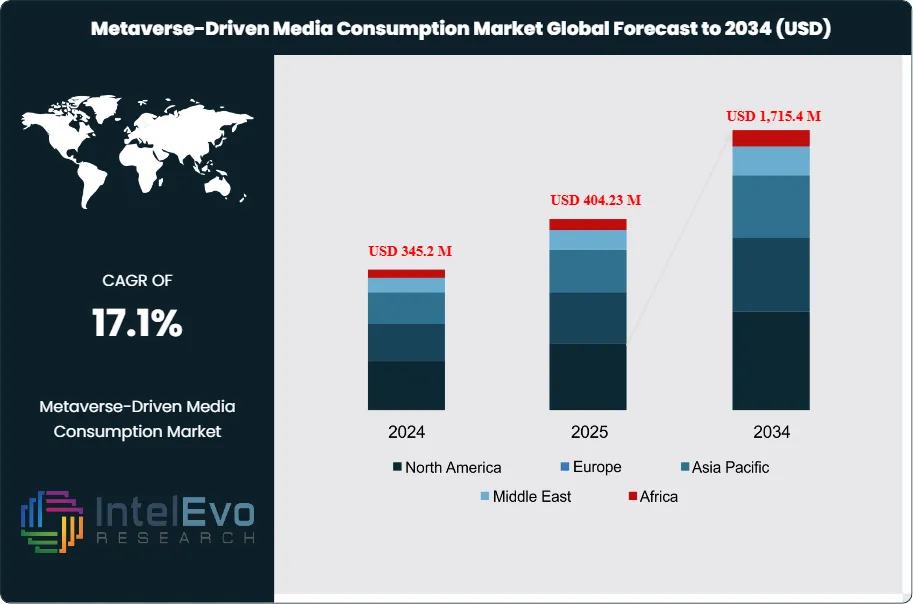
The Metaverse-Driven Media Consumption Market is projected to reach approximately USD 1,715.4 million by 2034, up from USD 345.2 million in 2024, growing at a CAGR of 17.1% during the forecast period from 2025 to 2034. The surge is fueled by immersive technologies such as VR, AR, and blockchain that are revolutionizing how audiences engage with films, music, gaming, and live events. With the rise of virtual social platforms and interactive content, media consumption is shifting toward more personalized, experiential, and decentralized models. This transformation positions the metaverse as the next frontier for digital entertainment and global content monetization.
Get More Information about this report -
Request Free Sample ReportThe Metaverse-Driven Media Consumption Market encompasses a range of immersive media experiences utilizing virtual and augmented reality technologies. This market is characterized by rapid evolution, as businesses and consumers increasingly adopt virtual environments for social interaction, entertainment, and content consumption. Current market dynamics indicate a significant shift towards experiences that blur the line between physical and digital interactions, with platforms facilitating virtual concerts, interactive gaming, and social media integration. As users demand more engaging and personalized experiences, this sector has witnessed notable growth, transforming traditional media consumption paradigms.
Growth dynamics in this market are driven by several factors, including advancements in technology, increased internet penetration, and changing consumer behavior. The desire for more interactive and engaging content, particularly in gaming and entertainment, is propelling the demand for metaverse platforms. Major players are investing heavily in infrastructure and technology to enhance user experience, providing opportunities for new content creators and businesses. Furthermore, social media integration is pivotal, as companies aim to create virtual spaces for community engagement. As a result, the market is projected to grow at a robust CAGR of 17.1% from 2024 to 2034, reaching approximately USD 1,715.4 million by 2034.
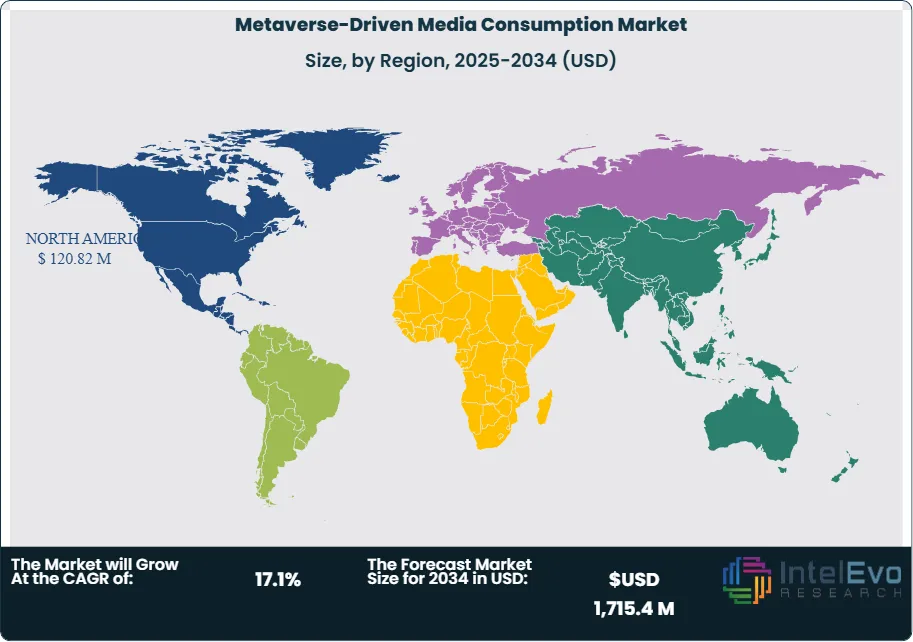
Regionally, North America currently dominates the Metaverse-Driven Media Consumption Market, driven by a strong technology base, high internet penetration, and significant investment in virtual reality (VR) and augmented reality (AR) technologies. The United States leads in adopting these immersive technologies, with many major tech companies headquartered in the region. Meanwhile, the Asia-Pacific region is expected to experience the fastest growth, fueled by increasing digital adoption, a growing gaming population, and rising investments in VR/AR infrastructure. Countries like China, Japan, and India are at the forefront of this growth, contributing significantly to the market expansion.
The COVID-19 pandemic has significantly impacted the Metaverse-Driven Media Consumption Market, accelerating the shift towards digital interactions and virtual experiences. With physical events and gatherings limited during lockdowns, users turned to virtual environments for entertainment, socialization, and work. This shift has prompted businesses to innovate and enhance their virtual offerings, creating a lasting change in consumer behavior. As a result, the market is poised for continued growth, with more consumers embracing the metaverse as a viable alternative for media consumption and interaction.

Key Takeaways:
- Market Growth: The Metaverse-Driven Media Consumption Market is expected to reach USD 1,715.4 million by 2034, growing at a robust CAGR of 17.1%, indicating strong market expansion.
- Technology Segment Analysis: The virtual reality (VR) segment is anticipated to dominate the market due to its immersive capabilities, accounting for a significant share as consumers increasingly seek interactive and engaging media experiences.
- Content Type Segment Analysis: The gaming sector is projected to hold the largest share of the market, driven by rising popularity and advancements in game development, which enhance the overall user experience in the metaverse.
- Driver: Increasing demand for immersive and interactive experiences in entertainment, social media, and gaming is driving growth. This shift is fueled by technological advancements and changing consumer preferences for personalized content.
- Restraint: High costs associated with VR and AR technologies, along with the need for advanced hardware, may limit access for some users. Additionally, concerns about data privacy and security can hinder market growth.
- Opportunity: The growing adoption of metaverse technologies in emerging markets, especially in Asia-Pacific, presents significant growth opportunities. Expanding applications in sectors such as education and healthcare can further drive market expansion.
- Trend: The integration of social media platforms within the metaverse is becoming a significant trend, as users seek to connect and interact in virtual environments.
- Regional Analysis: North America leads the market due to high technological adoption and investment, while the Asia-Pacific region is expected to experience the fastest growth, driven by increasing digital consumption and gaming popularity.
Technology:
The technology segment of the Metaverse-Driven Media Consumption Market is primarily divided into Virtual Reality (VR), Augmented Reality (AR), and Mixed Reality (MR). VR offers immersive experiences, creating fully digital environments that engage users' senses, making it a popular choice for gaming and entertainment. AR enhances the real world by overlaying digital content, which is increasingly utilized in educational applications and marketing campaigns. MR combines elements of both VR and AR, allowing users to interact with real and virtual objects simultaneously. As advancements in technology continue, these segments are expected to evolve, offering more sophisticated tools and platforms that enhance user engagement and interactivity. The rapid development in hardware, such as VR headsets and AR glasses, is also fueling this growth.
Component:
The component segment of the market encompasses hardware, software, and services that support metaverse experiences. Hardware includes devices such as VR headsets, AR glasses, and motion tracking equipment, which are essential for immersive interactions. Software solutions range from platforms for content creation to applications that facilitate social interaction and gaming experiences within the metaverse. Additionally, services encompass a variety of offerings, including consulting, design, and technical support, necessary for businesses looking to implement metaverse technologies. As organizations increasingly invest in metaverse capabilities, the demand for these components will grow. Companies are focusing on creating comprehensive ecosystems that provide users with seamless experiences, leading to enhanced satisfaction and engagement in virtual environments.
Content Type:
The content type segment is crucial in defining how users engage with the metaverse, with key categories including gaming, social media, entertainment, and education. Gaming remains the most prominent content type, leveraging the immersive nature of the metaverse to deliver engaging experiences. Social media platforms are increasingly integrating metaverse features, allowing users to interact in virtual spaces. In entertainment, virtual concerts and events are gaining popularity, providing new avenues for artists to reach their audiences. Education is also emerging as a significant area, with institutions using metaverse environments for virtual classrooms and training simulations. This diverse content landscape drives user adoption and engagement, making it essential for content creators to innovate continuously and enhance the user experience in the metaverse.
User Type:
The user type segment distinguishes between individual users and enterprises engaging with the metaverse. Individual users are primarily consumers seeking entertainment, social interaction, and immersive experiences, particularly in gaming and virtual reality applications. This group drives significant demand for content and platforms that cater to their preferences and interests. On the other hand, enterprises leverage the metaverse for various purposes, including marketing, training, and collaboration. Businesses are increasingly utilizing virtual environments for team-building activities, product launches, and customer engagement initiatives. As the metaverse evolves, both user types will play a crucial role in shaping its development, leading to increased investment and innovation across the market.
End-User:
The end-user segment encompasses various industries that leverage metaverse technologies, including media and entertainment, education, retail, and healthcare. In the media and entertainment sector, companies are using the metaverse to create interactive content and virtual events, attracting large audiences. Educational institutions are adopting metaverse solutions for enhanced learning experiences, allowing students to engage in immersive simulations and virtual classrooms. The retail industry is also exploring the metaverse for virtual shopping experiences, enabling customers to browse and purchase products in an interactive environment. Healthcare organizations are leveraging virtual environments for training and telemedicine, providing innovative solutions for patient care. This diverse end-user landscape highlights the widespread applicability of metaverse technologies across different sectors.
Region Analysis:
North America Leads With 35% Market Share In the Metaverse-Driven Media Consumption Market: North America holds the largest market share in the Metaverse-Driven Media Consumption Market, accounting for approximately 35% of the global revenue. This dominance can be attributed to several factors, including the presence of major technology companies like Meta, Microsoft, and Google, which are at the forefront of metaverse innovation. High internet penetration rates, advanced technological infrastructure, and a strong consumer base eager to adopt immersive experiences further bolster this region's position. Additionally, the growing demand for gaming and entertainment solutions among millennials and Gen Z populations drives significant revenue. Furthermore, the region benefits from substantial investments in VR and AR technologies, facilitating the development of advanced content and platforms that enhance user engagement and interactivity.
Asia-Pacific is poised to be the fastest-growing region in the Metaverse-Driven Media Consumption Market, driven by a burgeoning digital economy and increasing smartphone penetration. Countries like China, India, and Japan are leading this surge, with substantial investments in gaming and VR technologies. The gaming industry is a significant driver, with a large population of gamers seeking interactive experiences, particularly in mobile gaming. Moreover, the region's young demographic and increasing disposable incomes contribute to the rapid adoption of metaverse technologies. Additionally, governments in countries like Singapore and South Korea are actively promoting digital innovation, providing incentives for startups in the metaverse space. Meanwhile, Europe, Latin America, and the Middle East and Africa are also showing growth, albeit at a slower pace, as they explore the integration of metaverse solutions across various sectors.
Get More Information about this report -
Request Free Sample ReportKey Market Segment
By Content Type
- Gaming
- Films & TV Shows
- Music & Concerts
- Live Sports & Events
- News & Journalism
- Social & Interactive Content
By Technology
- Virtual Reality (VR)
- Augmented Reality (AR)
- Mixed Reality (MR)
- Artificial Intelligence (AI) & Machine Learning
- Blockchain & NFTs
By Component
- Hardware
- Software
- Services
By Device Type
- VR Headsets
- AR Glasses
- Smartphones & Tablets
- PCs & Laptops
- Other Wearables
By Business Model
- Subscription-Based
- Pay-Per-View
- Ad-Supported Models
- NFT/Blockchain-Based Monetization
- Hybrid Models
By Distribution Channel
- Metaverse Platforms
- Streaming Platforms
- Social Media Networks
- Gaming Ecosystems
- Others
By End User
- Individual Consumers
- Enterprises (Media & Entertainment, Gaming, Events)
- Educational Institutions
- Government & Public Sector
By Region
- North America
- Latin America
- East Asia And Pacific
- Sea And South Asia
- Eastern Europe
- Western Europe
- Middle East & Africa
| Report Attribute | Details |
| Market size (2025) | USD 404.23 M |
| Forecast Revenue (2034) | USD 1,715.4 M |
| CAGR (2025-2034) | 17.1% |
| Historical data | 2018-2023 |
| Base Year For Estimation | 2024 |
| Forecast Period | 2025-2034 |
| Report coverage | Revenue Forecast, Competitive Landscape, Market Dynamics, Growth Factors, Trends and Recent Developments |
| Segments covered | By Content Type (Gaming, Films & TV Shows, Music & Concerts, Live Sports & Events, News & Journalism, Social & Interactive Content), By Technology (Virtual Reality (VR), Augmented Reality (AR), Mixed Reality (MR), Artificial Intelligence (AI) & Machine Learning, Blockchain & NFTs), Component (Hardware, Software, Services), By Device Type (VR Headsets, AR Glasses, Smartphones & Tablets, PCs & Laptops, Other Wearables), By Business Model (Subscription-Based, Pay-Per-View, Ad-Supported Models, NFT/Blockchain-Based Monetization, Hybrid Models), By Distribution Channel (Metaverse Platforms, Streaming Platforms, Social Media Networks, Gaming Ecosystems, Others), By End User (Individual Consumers, Enterprises (Media & Entertainment, Gaming, Events), Educational Institutions, Government & Public Sector) |
| Research Methodology |
|
| Regional scope |
|
| Competitive Landscape | Meta Platforms Inc., Microsoft Corporation, Roblox Corporation, Epic Games Inc., NVIDIA Corporation, Unity Technologies Inc., Tencent Holdings Limited, Decentraland, Sandbox, Amazon Web Services Inc., Apple Inc., Google LLC, Alibaba Group, Sony Interactive Entertainment, Snap Inc., HTC Corporation, Valve Corporation, Bitmain Technologies Ltd., Cryptovoxels, High Fidelity |
| Customization Scope | Customization for segments, region/country-level will be provided. Moreover, additional customization can be done based on the requirements. |
| Pricing and Purchase Options | Avail customized purchase options to meet your exact research needs. We have three licenses to opt for: Single User License, Multi-User License (Up to 5 Users), Corporate Use License (Unlimited User and Printable PDF). |


Frequently Asked Questions
How big is the Metaverse-Driven Media Consumption Market?
The Metaverse-Driven Media Consumption Market will hit USD 1.7 Bn by 2034, driven by VR, AR, and immersive platforms shaping the future of digital entertainment.
Who are the major players in the Metaverse-Driven Media Consumption Market?
Meta Platforms Inc., Microsoft Corporation, Roblox Corporation, Epic Games Inc., NVIDIA Corporation, Unity Technologies Inc., Tencent Holdings Limited, Decentraland, Sandbox, Amazon Web Services Inc., Apple Inc., Google LLC, Alibaba Group, Sony Interactive Entertainment, Snap Inc., HTC Corporation, Valve Corporation, Bitmain Technologies Ltd., Cryptovoxels, High Fidelity
Which segments covered the Metaverse-Driven Media Consumption Market?
By Content Type (Gaming, Films & TV Shows, Music & Concerts, Live Sports & Events, News & Journalism, Social & Interactive Content), By Technology (Virtual Reality (VR), Augmented Reality (AR), Mixed Reality (MR), Artificial Intelligence (AI) & Machine Learning, Blockchain & NFTs), Component (Hardware, Software, Services), By Device Type (VR Headsets, AR Glasses, Smartphones & Tablets, PCs & Laptops, Other Wearables), By Business Model (Subscription-Based, Pay-Per-View, Ad-Supported Models, NFT/Blockchain-Based Monetization, Hybrid Models), By Distribution Channel (Metaverse Platforms, Streaming Platforms, Social Media Networks, Gaming Ecosystems, Others), By End User (Individual Consumers, Enterprises (Media & Entertainment, Gaming, Events), Educational Institutions, Government & Public Sector)
How can this market research report help my business make strategic decisions?
Our market research reports provide actionable intelligence, including verified market size data, CAGR projections, competitive benchmarking, and segment-level opportunity analysis. These insights support strategic planning, investment decisions, product development, and market entry strategies for enterprises and startups alike.
How frequently is the data updated?
We continuously monitor industry developments and update our reports to reflect regulatory changes, technological advancements, and macroeconomic shifts. Updated editions ensure you receive the latest market intelligence.

Select Licence Type
Connect with our sales team

Metaverse-Driven Media Consumption Market
Published Date : 17 Dec 2024 | Formats :Why IntelEvoResearch
100%
Customer
Satisfaction
24x7+
Availability - we are always
there when you need us
200+
Fortune 50 Companies trust
IntelEvoResearch
80%
of our reports are exclusive
and first in the industry
100%
more data
and analysis
1000+
reports published
till date
