
The Global Potato Chips Market size is expected to reach USD 55.2 billion by 2034, up from USD 33.5 billion in 2024, growing at a CAGR of 5.0% during the forecast period from 2025 to 2034. The market growth is fueled by the rising demand for convenient and ready-to-eat snack foods, driven by changing lifestyles, urbanization, and increasing disposable incomes worldwide. Consumers are increasingly seeking flavored, low-fat, and health-conscious variants, which is encouraging innovation and product diversification in the sector. Moreover, the expansion of modern retail chains and e-commerce platforms is improving accessibility, further boosting market penetration across regions.
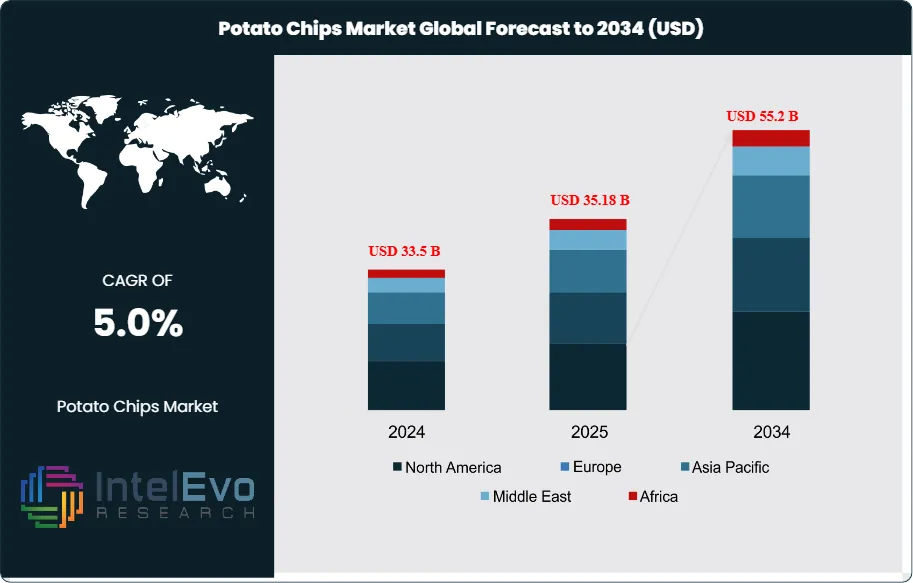
Potato chips are thinly sliced potatoes that are either deep-fried or baked until they become crispy. These snacks are widely consumed across the globe due to their convenience, taste, and availability in various flavors. As one of the most popular ready-to-eat snacks, the potato chips market has witnessed steady growth over the years. Increasing urbanization, rising disposable incomes, and fast-paced lifestyles have led to greater demand for on-the-go snacking options. Additionally, the growth of modern retail formats such as supermarkets and convenience stores has enhanced accessibility to a wide range of snack options, further boosting market demand.
Several key factors influence the potato chips market. Product innovation remains central to driving consumer interest, with brands frequently introducing unique flavors, organic variants, and healthier alternatives such as baked or low-fat chips. Consumers are increasingly health-conscious and seek snacks with reduced sodium, trans fats, and artificial additives, encouraging manufacturers to adopt clean-label ingredients. Moreover, rising global internet penetration and mobile device usage have fueled the growth of e-commerce platforms, making snacks like potato chips easily accessible for online purchase. Packaging innovations, improved shelf life, and product personalization are also contributing to the market’s sustained expansion.
North America remains the largest consumer of potato chips due to the region’s long-established snacking culture and the presence of several key players such as PepsiCo (Lay’s). The region benefits from a high standard of living and consumer willingness to spend on convenient foods. Europe also holds a significant market share, particularly due to its demand for premium and artisanal products. Meanwhile, Asia-Pacific is experiencing the fastest growth, driven by increasing urban populations, evolving taste preferences, and higher disposable incomes in countries like China, India, and Indonesia. This region presents strong growth potential, especially with local players launching regional flavor variants.
The COVID-19 pandemic had a varied impact on the global potato chips market. Initially, supply chain disruptions, lockdowns, and panic buying led to inconsistent product availability in retail stores. However, as people adapted to stay-at-home lifestyles, consumption of comfort and convenience foods, including potato chips, surged significantly. This led to a rise in bulk purchases and home snacking, especially in developed markets. The pandemic also accelerated digital transformation, with consumers turning to online platforms to buy groceries and snacks. Many manufacturers responded by strengthening their online presence and expanding direct-to-consumer sales channels. Although the foodservice sector temporarily declined, at-home consumption compensated for this loss, keeping the market relatively stable. Post-pandemic, the focus on health and wellness continues to shape product offerings, with a growing demand for healthier chip variants and sustainable packaging solutions.
Key Takeaways:
Market Growth: The Potato Chips Market is expected to reach USD 55.2 billion by 2034, growing at a robust CAGR of 5.0%, rising demand for convenience foods, and evolving retail landscapes.
Type Dominance: Fried chips holding the dominant market share due to their widespread popularity and taste appeal. However, baked and dried chips are gaining traction as consumers seek healthier snacking alternatives driven by increasing health consciousness.
Category Dominance: Conventional chips currently dominating due to their affordability, widespread availability, and strong brand presence. However, organic potato chips are gaining momentum as consumer preferences shift toward healthier, clean-label, and environmentally sustainable products.
Flavour Dominance: Regular segment leads due to its broad consumer appeal, brand familiarity, and consistent demand. While Regular dominates, the Blended Flavor segment is emerging as a fast-growing category, fueled by consumer interest in adventurous and global taste profiles.
End-User Dominance: The Retail/Household segment currently dominates the potato chips market, driven by strong at-home snacking trends and easy product accessibility through supermarkets, convenience stores, and e-commerce.
Distribution Channel Dominance: Supermarkets & Hypermarkets segment leads the potato chips market due to its extensive reach, wide product variety, and consumer trust in in-store purchases.
Driver: Primarily driven by rising urbanization, fast-paced lifestyles, and the increasing demand for convenient and ready-to-eat snack options. Innovations in flavors and healthier alternatives further propel consumer interest and drive repeat purchases.
Restraint: Health concerns over high fat, sodium, and calorie content in potato chips are major market restraints. Additionally, rising awareness around obesity and non-communicable diseases has prompted consumers to shift toward healthier snack alternatives.
Opportunity: Emerging markets and increasing online retail channels present lucrative growth opportunities for the potato chips market. There's also a significant opportunity in expanding healthier product lines to meet evolving consumer demands.
Trend: The potato chips market is witnessing a rise in demand for premium, clean-label, and sustainable products. Consumers are also gravitating toward personalized snacking experiences and region-specific flavors, driven by social media and experiential marketing.
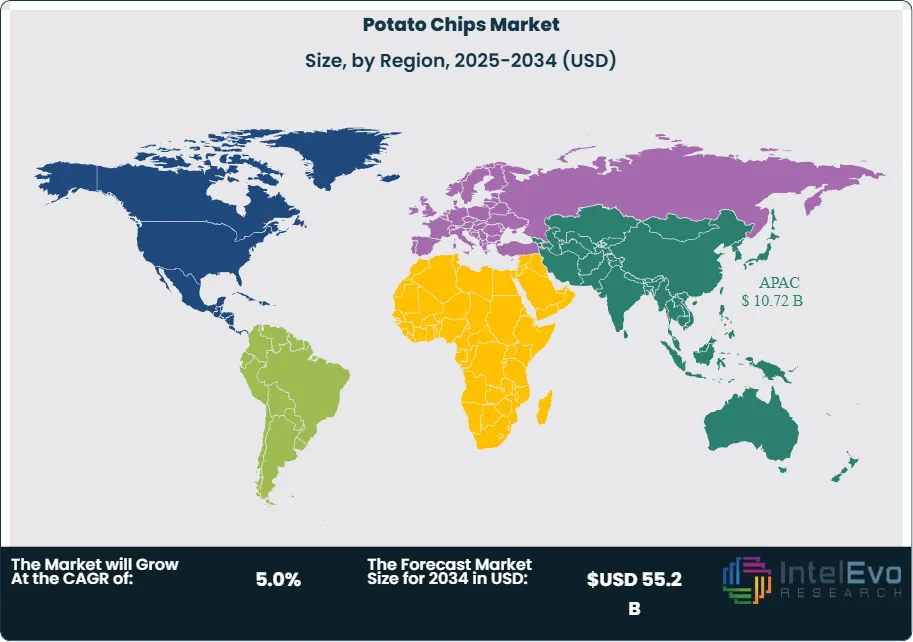
Regional Analysis: Asia-Pacific leads the global potato chips market due to its large population, rising disposable incomes, and increasing demand for convenient snacks. While North America and Europe maintain strong market presence, the rapid expansion of retail networks and changing food habits in Asia-Pacific are fueling accelerated growth.
Type Analysis:
Fried Leads With more than 65% of Market Share in Potato Chips Market: Fried potato chips remain the most consumed type globally, largely because of their strong taste, availability, and long-standing consumer loyalty. Major brands like Lay’s and Pringles dominate this segment with wide-ranging flavor innovations. Despite rising health concerns over oil content, fried chips continue to hold a commanding lead due to aggressive marketing, attractive packaging, and affordable pricing. This segment is also deeply embedded in fast food and retail snacking culture, contributing to sustained demand.
The baked and dried segments are witnessing a steady rise, fueled by the global shift toward low-fat, low-calorie snacks. Baked chips, in particular, offer a healthier alternative without compromising too much on taste, making them popular among urban, health-conscious consumers.
Category Analysis:
Conventional potato chips hold the largest share of the market, largely due to their low production costs, extensive distribution networks, and established consumer base. These chips are easily accessible across convenience stores, supermarkets, and foodservice outlets, making them a go-to snack for most consumers. Additionally, their lower price point compared to organic options makes them attractive to a wider demographic, especially in price-sensitive markets.
The organic segment is emerging as a high-growth area, driven by increasing health awareness, demand for non-GMO ingredients, and sustainability concerns. Consumers are increasingly scrutinizing product labels and leaning toward chips made from organically grown potatoes without synthetic fertilizers or pesticides.
Product Analysis:
The Regular flavor segment holds the largest share in the potato chips market, driven by its classic taste, high consumer familiarity, and deep-rooted presence in retail shelves globally. These chips often serve as the “default” choice for consumers, especially during social events, gatherings, or snacking moments where universally liked flavors are preferred. Its simplicity appeals across age groups and geographies, making it the most stable and trusted segment in terms of volume and revenue generation.
Blended Flavor potato chips are showing the fastest growth potential as consumers increasingly seek unique, multi-dimensional taste experiences. This segment caters especially to younger demographics and urban consumers with a preference for novel and bold snack options.
End-User Analysis:
The Retail/Household segment leads the potato chips market due to its direct alignment with consumer snacking habits at home, which surged further post-COVID-19. The convenience of ready-to-eat chips and their availability in various pack sizes make them a staple item in shopping carts. The rising culture of remote work and streaming entertainment has further enhanced at-home snacking, reinforcing this segment’s dominance.
The Food Service Sector is set to grow steadily due to increasing snack demand in quick-service restaurants (QSRs), hotels, cinemas, and cafeterias. Many establishments are incorporating premium and customized chip options into their menus to elevate the consumer experience.
Distribution Channel Analysis:
Supermarkets and Hypermarkets Leads With over 50% of Market Share in Potato Chips Market: Supermarkets and hypermarkets dominate the potato chips distribution landscape due to their strategic physical presence, product visibility, and broad assortment of brands and flavors. Consumers prefer this channel for its ability to offer value packs, promotional deals, and the opportunity to physically inspect products before purchase. This segment continues to thrive in both urban and semi-urban areas, where consumers enjoy the one-stop shopping experience and immediate product availability.
The online distribution channel is poised for significant growth due to shifting consumer behavior favoring digital shopping. Increased internet penetration, mobile commerce, and evolving consumer preferences for convenience have accelerated the adoption of platforms like Amazon, Instacart, and direct-to-consumer brand websites.
Region Analysis:
The Asia-Pacific region has emerged as the dominant force in the global potato chips market, fueled by a combination of factors including a growing urban population, rising middle-class incomes, and evolving snacking behaviors. Countries like India, China, Japan, and Indonesia are experiencing a significant increase in demand for packaged and ready-to-eat snacks, especially potato chips, driven by youth preferences and expanding retail infrastructure. The introduction of region-specific flavors and affordable pricing has further accelerated market penetration. In addition, the rise of e-commerce and quick-commerce platforms is making chips more accessible across urban and semi-urban areas.
While North America and Europe continue to be mature markets characterized by high per capita consumption and product innovation, growth in these regions is relatively stable. On the other hand, Asia-Pacific is expected to lead future market expansion, especially in the baked and organic chip segments, due to increasing health awareness. Manufacturers are leveraging this momentum by launching new products tailored to local tastes and investing in distribution channels across the region.
By Type (Fried, Baked, Dried, Others), By Product Type (Conventional/Classic Potato Chips, Flavored Potato Chips, Baked & Low-Fat Potato Chips, Organic & Specialty Potato Chips), By Flavor (Salted, Cheese, Barbecue, Sour Cream & Onion, Others), By Packaging Type (Small Pack (Individual Serving), Medium Pack (Family Size), Large Pack (Bulk)), By Distribution Channel (Supermarkets & Hypermarkets, Convenience Stores, Online Retail / E-commerce, Others (Specialty Stores, Vending Machines)), By End-User (Food Service Sector, Retail/Household)
Research Methodology
Primary Research- 100 Interviews of Stakeholders
Secondary Research
Desk Research
Regional scope
North America (United States, Canada, Mexico)
Latin America (Brazil, Argentina, Columbia)
East Asia And Pacific (China, Japan, South Korea, Australia, Cambodia, Fiji, Indonesia)
Sea And South Asia (India, Singapore, Thailand, Taiwan, Malaysia)
Eastern Europe (Poland, Russia, Czech Republic, Romania)
Western Europe (Germany, U.K., France, Spain, Itlay)
Middle East & Africa (GCC Countries, Egypt, Nigeria, South Africa, Israel)
Competitive Landscape
PepsiCo, Great Lakes Potato Chips, The Campbell Soup Company, EuropeSnacks, The Kraft Heinz Company, Nestlé , LaSalle Capital, KP Snacks, Calbee Inc., The Lorenz Bahlsen Snack-World GmbH & Co KG, Old Dutch Foods, Kellanova, Burts Potato Chips Ltd, Utz Brands Inc., Bikaji Foods International Ltd., Kettle Brand
Customization Scope
Customization for segments, region/country-level will be provided. Moreover, additional customization can be done based on the requirements.
Pricing and Purchase Options
Avail customized purchase options to meet your exact research needs. We have three licenses to opt for: Single User License, Multi-User License (Up to 5 Users), Corporate Use License (Unlimited User and Printable PDF).
TABLE OF CONTENTS
1. EXECUTIVE SUMMARY
1.1. MARKET SNAPSHOT
1.2. KEY FINDINGS & INSIGHTS
1.3. ANALYST RECOMMENDATIONS
1.4. FUTURE OUTLOOK
2. RESEARCH METHODOLOGY
2.1. MARKET DEFINITION & SCOPE
2.2. RESEARCH OBJECTIVES: PRIMARY & SECONDARY DATA SOURCES
2.3. DATA COLLECTION SOURCES
2.3.1. COVERAGE OF 100+ PRIMARY RESEARCH/CONSULTATION CALLS WITH INDUSTRY STAKEHOLDERS
FIGURE 17 NORTH AMERICA POTATO CHIPS CURRENT AND FUTURE TYPE ANALYSIS, 2025–2034, (USD MILLION)
FIGURE 18 NORTH AMERICA POTATO CHIPS CURRENT AND FUTURE END USER ANALYSIS, 2025–2034, (USD MILLION)
FIGURE 19 MARKET SHARE BY COUNTRY
FIGURE 20 LATIN AMERICA POTATO CHIPS CURRENT AND FUTURE TYPE ANALYSIS, 2025–2034, (USD MILLION)
FIGURE 21 LATIN AMERICA POTATO CHIPS CURRENT AND FUTURE END USER ANALYSIS, 2025–2034, (USD MILLION)
FIGURE 22 MARKET SHARE BY COUNTRY
FIGURE 23 EASTERN EUROPE POTATO CHIPS CURRENT AND FUTURE TYPE ANALYSIS, 2025–2034, (USD MILLION)
FIGURE 24 EASTERN EUROPE POTATO CHIPS CURRENT AND FUTURE END USER ANALYSIS, 2025–2034, (USD MILLION)
FIGURE 25 MARKET SHARE BY COUNTRY
FIGURE 26 WESTERN EUROPE POTATO CHIPS CURRENT AND FUTURE TYPE ANALYSIS, 2025–2034, (USD MILLION)
FIGURE 27 WESTERN EUROPE POTATO CHIPS CURRENT AND FUTURE END USER ANALYSIS, 2025–2034, (USD MILLION)
FIGURE 28 MARKET SHARE BY COUNTRY
FIGURE 29 EAST ASIA AND PACIFIC POTATO CHIPS CURRENT AND FUTURE TYPE ANALYSIS, 2025–2034, (USD MILLION)
FIGURE 30 EAST ASIA AND PACIFIC POTATO CHIPS CURRENT AND FUTURE END USER ANALYSIS, 2025–2034, (USD MILLION)
FIGURE 31 MARKET SHARE BY COUNTRY
FIGURE 32 SEA AND SOUTH ASIA POTATO CHIPS CURRENT AND FUTURE TYPE ANALYSIS, 2025–2034, (USD MILLION)
FIGURE 33 SEA AND SOUTH ASIA POTATO CHIPS CURRENT AND FUTURE END USER ANALYSIS, 2025–2034, (USD MILLION)
FIGURE 34 MARKET SHARE BY COUNTRY
FIGURE 35 MIDDLE EAST AND AFRICA POTATO CHIPS CURRENT AND FUTURE TYPE ANALYSIS, 2025–2034, (USD MILLION)
FIGURE 36 MIDDLE EAST AND AFRICA POTATO CHIPS CURRENT AND FUTURE END USER ANALYSIS, 2025–2034, (USD MILLION)
FIGURE 37 NORTH AMERICA POTATO CHIPS CURRENT AND FUTURE MARKET VOLUME SHARE REGIONAL ANALYSIS, 2025–2034, (USD MILLION)
FIGURE 38 U.S. POTATO CHIPS CURRENT AND FUTURE TYPE ANALYSIS, 2025–2034, (USD MILLION)
FIGURE 39 U.S. POTATO CHIPS CURRENT AND FUTURE END USER ANALYSIS, 2025–2034, (USD MILLION)
FIGURE 40 CANADA POTATO CHIPS CURRENT AND FUTURE TYPE ANALYSIS, 2025–2034, (USD MILLION)
FIGURE 41 CANADA POTATO CHIPS CURRENT AND FUTURE END USER ANALYSIS, 2025–2034, (USD MILLION)
FIGURE 42 LATIN AMERICA POTATO CHIPS CURRENT AND FUTURE MARKET VOLUME SHARE REGIONAL ANALYSIS, 2025–2034, (USD MILLION)
FIGURE 43 MEXICO POTATO CHIPS CURRENT AND FUTURE TYPE ANALYSIS, 2025–2034, (USD MILLION)
FIGURE 44 MEXICO POTATO CHIPS CURRENT AND FUTURE END USER ANALYSIS, 2025–2034, (USD MILLION)
FIGURE 45 BRAZIL POTATO CHIPS CURRENT AND FUTURE TYPE ANALYSIS, 2025–2034, (USD MILLION)
FIGURE 46 BRAZIL POTATO CHIPS CURRENT AND FUTURE END USER ANALYSIS, 2025–2034, (USD MILLION)
FIGURE 47 ARGENTINA POTATO CHIPS CURRENT AND FUTURE TYPE ANALYSIS, 2025–2034, (USD MILLION)
FIGURE 48 ARGENTINA POTATO CHIPS CURRENT AND FUTURE END USER ANALYSIS, 2025–2034, (USD MILLION)
FIGURE 49 COLUMBIA POTATO CHIPS CURRENT AND FUTURE TYPE ANALYSIS, 2025–2034, (USD MILLION)
FIGURE 50 COLUMBIA POTATO CHIPS CURRENT AND FUTURE END USER ANALYSIS, 2025–2034, (USD MILLION)
FIGURE 51 REST OF LATIN AMERICA POTATO CHIPS CURRENT AND FUTURE TYPE ANALYSIS, 2025–2034, (USD MILLION)
FIGURE 52 REST OF LATIN AMERICA POTATO CHIPS CURRENT AND FUTURE END USER ANALYSIS, 2025–2034, (USD MILLION)
FIGURE 53 EASTERN EUROPE POTATO CHIPS CURRENT AND FUTURE MARKET VOLUME SHARE REGIONAL ANALYSIS, 2025–2034, (USD MILLION)
FIGURE 54 POLAND POTATO CHIPS CURRENT AND FUTURE TYPE ANALYSIS, 2025–2034, (USD MILLION)
FIGURE 55 POLAND POTATO CHIPS CURRENT AND FUTURE END USER ANALYSIS, 2025–2034, (USD MILLION)
FIGURE 56 RUSSIA POTATO CHIPS CURRENT AND FUTURE TYPE ANALYSIS, 2025–2034, (USD MILLION)
FIGURE 57 RUSSIA POTATO CHIPS CURRENT AND FUTURE END USER ANALYSIS, 2025–2034, (USD MILLION)
FIGURE 58 CZECH REPUBLIC POTATO CHIPS CURRENT AND FUTURE TYPE ANALYSIS, 2025–2034, (USD MILLION)
FIGURE 59 CZECH REPUBLIC POTATO CHIPS CURRENT AND FUTURE END USER ANALYSIS, 2025–2034, (USD MILLION)
FIGURE 60 ROMANIA POTATO CHIPS CURRENT AND FUTURE TYPE ANALYSIS, 2025–2034, (USD MILLION)
FIGURE 61 ROMANIA POTATO CHIPS CURRENT AND FUTURE END USER ANALYSIS, 2025–2034, (USD MILLION)
FIGURE 62 REST OF EASTERN EUROPE POTATO CHIPS CURRENT AND FUTURE TYPE ANALYSIS, 2025–2034, (USD MILLION)
FIGURE 63 REST OF EASTERN EUROPE POTATO CHIPS CURRENT AND FUTURE END USER ANALYSIS, 2025–2034, (USD MILLION)
FIGURE 64 WESTERN EUROPE POTATO CHIPS CURRENT AND FUTURE MARKET VOLUME SHARE REGIONAL ANALYSIS, 2025–2034, (USD MILLION)
FIGURE 65 GERMANY POTATO CHIPS CURRENT AND FUTURE TYPE ANALYSIS, 2025–2034, (USD MILLION)
FIGURE 66 GERMANY POTATO CHIPS CURRENT AND FUTURE END USER ANALYSIS, 2025–2034, (USD MILLION)
FIGURE 67 FRANCE POTATO CHIPS CURRENT AND FUTURE TYPE ANALYSIS, 2025–2034, (USD MILLION)
FIGURE 68 FRANCE POTATO CHIPS CURRENT AND FUTURE END USER ANALYSIS, 2025–2034, (USD MILLION)
FIGURE 69 UK POTATO CHIPS CURRENT AND FUTURE TYPE ANALYSIS, 2025–2034, (USD MILLION)
FIGURE 70 UK POTATO CHIPS CURRENT AND FUTURE END USER ANALYSIS, 2025–2034, (USD MILLION)
FIGURE 71 SPAIN POTATO CHIPS CURRENT AND FUTURE TYPE ANALYSIS, 2025–2034, (USD MILLION)
FIGURE 72 SPAIN POTATO CHIPS CURRENT AND FUTURE END USER ANALYSIS, 2025–2034, (USD MILLION)
FIGURE 73 ITALY POTATO CHIPS CURRENT AND FUTURE TYPE ANALYSIS, 2025–2034, (USD MILLION)
FIGURE 74 ITALY POTATO CHIPS CURRENT AND FUTURE END USER ANALYSIS, 2025–2034, (USD MILLION)
FIGURE 75 REST OF WESTERN EUROPE POTATO CHIPS CURRENT AND FUTURE TYPE ANALYSIS, 2025–2034, (USD MILLION)
FIGURE 76 REST OF WESTERN EUROPE POTATO CHIPS CURRENT AND FUTURE END USER ANALYSIS, 2025–2034, (USD MILLION)
FIGURE 77 EAST ASIA AND PACIFIC POTATO CHIPS CURRENT AND FUTURE MARKET VOLUME SHARE REGIONAL ANALYSIS, 2025–2034, (USD MILLION)
FIGURE 78 CHINA POTATO CHIPS CURRENT AND FUTURE TYPE ANALYSIS, 2025–2034, (USD MILLION)
FIGURE 79 CHINA POTATO CHIPS CURRENT AND FUTURE END USER ANALYSIS, 2025–2034, (USD MILLION)
FIGURE 80 JAPAN POTATO CHIPS CURRENT AND FUTURE TYPE ANALYSIS, 2025–2034, (USD MILLION)
FIGURE 81 JAPAN POTATO CHIPS CURRENT AND FUTURE END USER ANALYSIS, 2025–2034, (USD MILLION)
FIGURE 82 AUSTRALIA POTATO CHIPS CURRENT AND FUTURE TYPE ANALYSIS, 2025–2034, (USD MILLION)
FIGURE 83 AUSTRALIA POTATO CHIPS CURRENT AND FUTURE END USER ANALYSIS, 2025–2034, (USD MILLION)
FIGURE 84 CAMBODIA POTATO CHIPS CURRENT AND FUTURE TYPE ANALYSIS, 2025–2034, (USD MILLION)
FIGURE 85 CAMBODIA POTATO CHIPS CURRENT AND FUTURE END USER ANALYSIS, 2025–2034, (USD MILLION)
FIGURE 86 FIJI POTATO CHIPS CURRENT AND FUTURE TYPE ANALYSIS, 2025–2034, (USD MILLION)
FIGURE 87 FIJI POTATO CHIPS CURRENT AND FUTURE END USER ANALYSIS, 2025–2034, (USD MILLION)
FIGURE 88 INDONESIA POTATO CHIPS CURRENT AND FUTURE TYPE ANALYSIS, 2025–2034, (USD MILLION)
FIGURE 89 INDONESIA POTATO CHIPS CURRENT AND FUTURE END USER ANALYSIS, 2025–2034, (USD MILLION)
FIGURE 90 SOUTH KOREA POTATO CHIPS CURRENT AND FUTURE TYPE ANALYSIS, 2025–2034, (USD MILLION)
FIGURE 91 SOUTH KOREA POTATO CHIPS CURRENT AND FUTURE END USER ANALYSIS, 2025–2034, (USD MILLION)
FIGURE 92 REST OF EAST ASIA AND PACIFIC POTATO CHIPS CURRENT AND FUTURE TYPE ANALYSIS, 2025–2034, (USD MILLION)
FIGURE 93 REST OF EAST ASIA AND PACIFIC POTATO CHIPS CURRENT AND FUTURE END USER ANALYSIS, 2025–2034, (USD MILLION)
FIGURE 94 SEA AND SOUTH ASIA POTATO CHIPS CURRENT AND FUTURE MARKET VOLUME SHARE REGIONAL ANALYSIS, 2025–2034, (USD MILLION)
FIGURE 95 BANGLADESH POTATO CHIPS CURRENT AND FUTURE TYPE ANALYSIS, 2025–2034, (USD MILLION)
FIGURE 96 BANGLADESH POTATO CHIPS CURRENT AND FUTURE END USER ANALYSIS, 2025–2034, (USD MILLION)
FIGURE 97 NEW ZEALAND POTATO CHIPS CURRENT AND FUTURE TYPE ANALYSIS, 2025–2034, (USD MILLION)
FIGURE 98 NEW ZEALAND POTATO CHIPS CURRENT AND FUTURE END USER ANALYSIS, 2025–2034, (USD MILLION)
FIGURE 99 INDIA POTATO CHIPS CURRENT AND FUTURE TYPE ANALYSIS, 2025–2034, (USD MILLION)
FIGURE 100 INDIA POTATO CHIPS CURRENT AND FUTURE END USER ANALYSIS, 2025–2034, (USD MILLION)
FIGURE 101 SINGAPORE POTATO CHIPS CURRENT AND FUTURE TYPE ANALYSIS, 2025–2034, (USD MILLION)
FIGURE 102 SINGAPORE POTATO CHIPS CURRENT AND FUTURE END USER ANALYSIS, 2025–2034, (USD MILLION)
FIGURE 103 THAILAND POTATO CHIPS CURRENT AND FUTURE TYPE ANALYSIS, 2025–2034, (USD MILLION)
FIGURE 104 THAILAND POTATO CHIPS CURRENT AND FUTURE END USER ANALYSIS, 2025–2034, (USD MILLION)
FIGURE 105 TAIWAN POTATO CHIPS CURRENT AND FUTURE TYPE ANALYSIS, 2025–2034, (USD MILLION)
FIGURE 106 TAIWAN POTATO CHIPS CURRENT AND FUTURE END USER ANALYSIS, 2025–2034, (USD MILLION)
FIGURE 107 MALAYSIA POTATO CHIPS CURRENT AND FUTURE TYPE ANALYSIS, 2025–2034, (USD MILLION)
FIGURE 108 MALAYSIA POTATO CHIPS CURRENT AND FUTURE END USER ANALYSIS, 2025–2034, (USD MILLION)
FIGURE 109 REST OF SEA AND SOUTH ASIA POTATO CHIPS CURRENT AND FUTURE TYPE ANALYSIS, 2025–2034, (USD MILLION)
FIGURE 110 REST OF SEA AND SOUTH ASIA POTATO CHIPS CURRENT AND FUTURE END USER ANALYSIS, 2025–2034, (USD MILLION)
FIGURE 111 MIDDLE EAST AND AFRICA POTATO CHIPS CURRENT AND FUTURE MARKET VOLUME SHARE REGIONAL ANALYSIS, 2025–2034, (USD MILLION)
FIGURE 112 GCC COUNTRIES POTATO CHIPS CURRENT AND FUTURE TYPE ANALYSIS, 2025–2034, (USD MILLION)
FIGURE 113 GCC COUNTRIES POTATO CHIPS CURRENT AND FUTURE END USER ANALYSIS, 2025–2034, (USD MILLION)
FIGURE 114 SAUDI ARABIA POTATO CHIPS CURRENT AND FUTURE TYPE ANALYSIS, 2025–2034, (USD MILLION)
FIGURE 115 SAUDI ARABIA POTATO CHIPS CURRENT AND FUTURE END USER ANALYSIS, 2025–2034, (USD MILLION)
FIGURE 116 UAE POTATO CHIPS CURRENT AND FUTURE TYPE ANALYSIS, 2025–2034, (USD MILLION)
FIGURE 117 UAE POTATO CHIPS CURRENT AND FUTURE END USER ANALYSIS, 2025–2034, (USD MILLION)
FIGURE 118 BAHRAIN POTATO CHIPS CURRENT AND FUTURE TYPE ANALYSIS, 2025–2034, (USD MILLION)
FIGURE 119 BAHRAIN POTATO CHIPS CURRENT AND FUTURE END USER ANALYSIS, 2025–2034, (USD MILLION)
FIGURE 120 KUWAIT POTATO CHIPS CURRENT AND FUTURE TYPE ANALYSIS, 2025–2034, (USD MILLION)
FIGURE 121 KUWAIT POTATO CHIPS CURRENT AND FUTURE END USER ANALYSIS, 2025–2034, (USD MILLION)
FIGURE 122 OMAN POTATO CHIPS CURRENT AND FUTURE TYPE ANALYSIS, 2025–2034, (USD MILLION)
FIGURE 123 OMAN POTATO CHIPS CURRENT AND FUTURE END USER ANALYSIS, 2025–2034, (USD MILLION)
FIGURE 124 QATAR POTATO CHIPS CURRENT AND FUTURE TYPE ANALYSIS, 2025–2034, (USD MILLION)
FIGURE 125 QATAR POTATO CHIPS CURRENT AND FUTURE END USER ANALYSIS, 2025–2034, (USD MILLION)
FIGURE 126 EGYPT POTATO CHIPS CURRENT AND FUTURE TYPE ANALYSIS, 2025–2034, (USD MILLION)
FIGURE 127 EGYPT POTATO CHIPS CURRENT AND FUTURE END USER ANALYSIS, 2025–2034, (USD MILLION)
FIGURE 128 NIGERIA POTATO CHIPS CURRENT AND FUTURE TYPE ANALYSIS, 2025–2034, (USD MILLION)
FIGURE 129 NIGERIA POTATO CHIPS CURRENT AND FUTURE END USER ANALYSIS, 2025–2034, (USD MILLION)
FIGURE 130 SOUTH AFRICA POTATO CHIPS CURRENT AND FUTURE TYPE ANALYSIS, 2025–2034, (USD MILLION)
FIGURE 131 SOUTH AFRICA POTATO CHIPS CURRENT AND FUTURE END USER ANALYSIS, 2025–2034, (USD MILLION)
FIGURE 132 ISRAEL POTATO CHIPS CURRENT AND FUTURE TYPE ANALYSIS, 2025–2034, (USD MILLION)
FIGURE 133 ISRAEL POTATO CHIPS CURRENT AND FUTURE END USER ANALYSIS, 2025–2034, (USD MILLION)
FIGURE 134 REST OF MEA POTATO CHIPS CURRENT AND FUTURE TYPE ANALYSIS, 2025–2034, (USD MILLION)
FIGURE 135 REST OF MEA POTATO CHIPS CURRENT AND FUTURE END USER ANALYSIS, 2025–2034, (USD MILLION)
FIGURE 136 U. S. MARKET SHARE ANALYSIS BY TYPE (2024)
FIGURE 137 U. S. MARKET SHARE ANALYSIS BY END USER (2024)
FIGURE 138 CANADA MARKET SHARE ANALYSIS BY TYPE (2024)
FIGURE 139 CANADA MARKET SHARE ANALYSIS BY END USER (2024)
FIGURE 140 MEXICO MARKET SHARE ANALYSIS BY TYPE (2024)
FIGURE 141 MEXICO MARKET SHARE ANALYSIS BY END USER (2024)
FIGURE 142 CHINA MARKET SHARE ANALYSIS BY TYPE (2024)
FIGURE 143 CHINA MARKET SHARE ANALYSIS BY END USER (2024)
FIGURE 144 JAPAN MARKET SHARE ANALYSIS BY TYPE (2024)
FIGURE 145 JAPAN MARKET SHARE ANALYSIS BY END USER (2024)
FIGURE 146 INDIA MARKET SHARE ANALYSIS BY TYPE (2024)
FIGURE 147 INDIA MARKET SHARE ANALYSIS BY END USER (2024)
FIGURE 148 SOUTH KOREA MARKET SHARE ANALYSIS BY TYPE (2024)
FIGURE 149 SOUTH KOREA MARKET SHARE ANALYSIS BY END USER (2024)
FIGURE 150 SAUDI ARABIA MARKET SHARE ANALYSIS BY TYPE (2024)
FIGURE 151 SAUDI ARABIA MARKET SHARE ANALYSIS BY END USER (2024)
FIGURE 152 UAE MARKET SHARE ANALYSIS BY TYPE (2024)
FIGURE 153 UAE MARKET SHARE ANALYSIS BY END USER (2024)
FIGURE 154 EGYPT MARKET SHARE ANALYSIS BY TYPE (2024)
FIGURE 155 EGYPT MARKET SHARE ANALYSIS BY END USER (2024)
FIGURE 156 NIGERIA MARKET SHARE ANALYSIS BY TYPE (2024)
FIGURE 157 NIGERIA MARKET SHARE ANALYSIS BY END USER (2024)
FIGURE 158 SOUTH AFRICA MARKET SHARE ANALYSIS BY TYPE (2024)
FIGURE 159 SOUTH AFRICA MARKET SHARE ANALYSIS BY END USER (2024)
FIGURE 160 GERMANY MARKET SHARE ANALYSIS BY TYPE (2024)
FIGURE 161 GERMANY MARKET SHARE ANALYSIS BY END USER (2024)
FIGURE 162 FRANCE MARKET SHARE ANALYSIS BY TYPE (2024)
FIGURE 163 FRANCE MARKET SHARE ANALYSIS BY END USER (2024)
FIGURE 164 UK MARKET SHARE ANALYSIS BY TYPE (2024)
FIGURE 165 UK MARKET SHARE ANALYSIS BY END USER (2024)
FIGURE 166 SPAIN MARKET SHARE ANALYSIS BY TYPE (2024)
FIGURE 167 SPAIN MARKET SHARE ANALYSIS BY END USER (2024)
FIGURE 168 ITALY MARKET SHARE ANALYSIS BY TYPE (2024)
FIGURE 169 ITALY MARKET SHARE ANALYSIS BY END USER (2024)
FIGURE 170 BRAZIL MARKET SHARE ANALYSIS BY TYPE (2024)
FIGURE 171 BRAZIL MARKET SHARE ANALYSIS BY END USER (2024)
FIGURE 172 ARGENTINA MARKET SHARE ANALYSIS BY TYPE (2024)
FIGURE 173 ARGENTINA MARKET SHARE ANALYSIS BY END USER (2024)
FIGURE 174 COLUMBIA MARKET SHARE ANALYSIS BY TYPE (2024)
FIGURE 175 COLUMBIA MARKET SHARE ANALYSIS BY END USER (2024)
FIGURE 176 GLOBAL POTATO CHIPS CURRENT AND FUTURE MARKET KEY COUNTRY LEVEL ANALYSIS, 2024–2034, (USD MILLION)
FIGURE 177 FINANCIAL OVERVIEW:
Key Players Analysis:
PepsiCo: PepsiCo, through its subsidiary Frito-Lay, is the undisputed leader in the global potato chips market. Its brands like Lay’s, Ruffles, and Doritos dominate shelf space worldwide. The company leverages massive distribution networks, aggressive marketing strategies, and continuous flavor innovation to maintain market share. Its strong presence across all price segments and regions, along with investments in sustainable farming and healthier snacks, solidify its leadership position. The company’s scale and R&D strength allow it to quickly respond to shifting consumer trends such as low-fat, organic, and clean-label snacking.
Kellanova: Kellogg, recently rebranded as Kellanova for its snacking division, is a major force in the potato chips market through its popular Pringles brand. Known for its unique canister packaging and stackable chip format, Pringles has strong global recognition. The company focuses on global expansion, premium flavor launches, and health-oriented variants to meet consumer demand. With a balanced portfolio and growing investments in emerging markets, Kellogg maintains a strong position among snack food giants. Its acquisition strategies and retail partnerships further strengthen its international footprint.
The Kraft Heinz Company: Kraft Heinz owns several well-known snack brands and continues to expand in the potato chips space with targeted marketing and new product development. Though not the largest chip-only producer, its wide brand recognition and access to strong distribution channels give it a powerful market presence. The company leverages synergies between its condiment and snack lines for cross-promotion and bundling. Its focus on innovation and growing interest in health-conscious products also align well with changing consumer preferences in the snacking industry.
Nestlé: While Nestlé is primarily recognized for dairy, confectionery, and health products, it holds significant influence in the snacks category in certain international markets. Its regional investments and partnerships in Asia and Latin America have included salty snacks and potato chips, although it is not a chip specialist. Nestlé’s focus on nutrition and functional snacking may support future expansion into healthier chip variants. Its massive global presence and branding power make it a potential leader in any category it seriously targets.
Utz Brands Inc.: Utz Brands has emerged as one of the largest independent salty snack producers in the United States. Its acquisition strategy—including brands like Zapp’s and Golden Flake—has helped it expand its product line and geographic presence. Utz is known for its regional dominance, particularly in the Mid-Atlantic and Southern U.S., and continues to gain national attention. With a strong retail presence and a push into health-focused snacks, the company is positioning itself as a growing competitor to legacy brands like Lay’s and Pringles.
Market Key Players
PepsiCo
Great Lakes Potato Chips
The Campbell Soup Company
EuropeSnacks
The Kraft Heinz Company
Nestlé
LaSalle Capital
KP Snacks
Calbee Inc.
The Lorenz Bahlsen Snack-World GmbH & Co KG
Old Dutch Foods
Kellanova
Burts Potato Chips Ltd
Utz Brands Inc.
Bikaji Foods International Ltd.
Kettle Brand
Driver:
Convenience and Urban Lifestyle:
Modern consumers, particularly in urban areas, lead busier lives and often seek quick and easy food solutions. Potato chips have become a go-to snack for their availability, long shelf life, and no-prep requirement, making them ideal for on-the-go consumption. Furthermore, the widespread availability of chips in supermarkets, convenience stores, vending machines, and online platforms ensures continuous accessibility. The snack’s affordability and compatibility with social activities such as watching TV or gatherings also boost consumption frequency, thus sustaining market demand across age groups and regions.
Product Innovation and Flavor Diversification:
Manufacturers are consistently innovating to attract diverse customer preferences by offering unique and localized flavors, healthier cooking methods (like air-frying), and better packaging solutions. Flavor variants inspired by regional cuisines, such as spicy, cheesy, or barbecue styles, enhance appeal across demographics. Brands are also responding to health-conscious consumers by launching low-fat, low-sodium, and organic potato chips, helping to overcome the traditional junk food stigma. These innovations not only attract new consumers but also boost loyalty among existing ones by offering variety.
Restrain:
Rising Health Consciousness:
Consumers today are increasingly health-aware and mindful of their dietary intake. The high salt, oil, and calorie levels traditionally associated with potato chips raise concerns around obesity, hypertension, and other lifestyle diseases. As a result, a segment of the population is actively avoiding or limiting the consumption of fried and processed snacks. Regulatory efforts in many countries to promote healthy eating—such as warning labels or sugar/fat content restrictions—further challenge manufacturers. Brands failing to adapt may risk losing market share to healthier snacking alternatives such as baked chips, vegetable crisps, or protein-based options.
Price Volatility and Supply Chain Disruptions:
The potato chips industry relies heavily on a stable supply of raw potatoes and edible oils, which are subject to seasonal fluctuations and climate-related issues. Droughts, floods, or poor harvests can drive up input costs and reduce quality consistency. In addition, fluctuations in packaging material prices (such as plastic or biodegradable options) impact profit margins. These factors can limit smaller producers' competitiveness and strain manufacturers’ ability to offer stable pricing, affecting customer loyalty and affordability in price-sensitive markets.
Opportunities:
Expansion in Emerging Markets:
Countries in Asia-Pacific, Latin America, and Africa are witnessing rapid economic development, rising disposable incomes, and a growing middle class. These factors, coupled with increased exposure to Western snacking habits, are driving demand for potato chips in these regions. Urbanization and better retail infrastructure, such as modern supermarkets and e-commerce platforms, are making chips more accessible than ever. Companies that invest in local manufacturing and flavor localization can gain a competitive edge and build strong brand loyalty in these fast-growing markets.
Development of Healthy & Functional Snacks:
With consumers seeking snacks that are both indulgent and nutritious, there is a significant opportunity for developing chips with health benefits. Options such as baked, air-popped, or low-sodium chips, as well as chips made from organic potatoes or alternative bases (like sweet potato, beetroot, or lentils), cater to evolving consumer expectations. Brands can also experiment with value-added nutrients, such as fortified chips offering protein or fiber boosts. Companies investing in health-driven R&D and transparent marketing can tap into the growing segment of health-conscious consumers without sacrificing taste or satisfaction.
Trends:
Sustainability and Clean-Label Focus:
Environmental awareness is influencing consumer decisions, with many opting for brands that prioritize sustainability. In response, manufacturers are adopting eco-friendly packaging, sourcing non-GMO potatoes, and using fewer artificial ingredients. The clean-label movement—emphasizing transparency, simplicity, and health—is redefining ingredient lists. Certifications like organic, gluten-free, and vegan appeal to niche markets and expand the consumer base. Companies that can demonstrate traceability and ethical practices are well-positioned to differentiate themselves in a crowded marketplace and gain long-term customer loyalty.
Customization and Flavor Innovation:
As consumers seek personalized experiences, brands are embracing customization by offering mix-and-match flavor packs, limited-edition runs, and region-specific tastes. This trend is especially prominent among younger audiences who value novelty and cultural connection in their snacking choices. Leveraging AI and data analytics, some companies now design flavors based on consumer behavior and preference patterns. Social media also plays a significant role in promoting bold, unique, or exotic chip varieties, encouraging impulse purchases. As global palates evolve, continuous flavor experimentation and customer engagement through interactive campaigns will remain central to product success and market leadership.
Recent Development:
In August 2024 - Mars, Incorporated—a global, family-owned leader in pet care, snacking, and food—and Kellanova (NYSE: K), a prominent player in international snacks, cereals, noodles, plant-based foods, and frozen breakfast products in North America, have announced a definitive agreement. Under the terms, Mars will acquire Kellanova at a price of $83.50 per share in cash, bringing the total transaction value to approximately $35.9 billion, including assumed net debt.
In May 2024 - PepsiCo India is experimenting with a new blend of sunflower oil and palmolein for its popular Lay’s potato chips in response to growing concerns about the health implications of using palm oil—a cost-effective but less nutritious option. This initiative reflects the company’s efforts to meet healthier standards and address consumer expectations. Meanwhile, in the U.S., PepsiCo already uses heart-healthy oils such as sunflower, corn, and canola oil in the production of Lay’s. According to its U.S. website, these oils are rich in mono- and polyunsaturated fats, which can help reduce bad cholesterol (LDL) and support healthy levels of good cholesterol (HDL) when consumed as part of a balanced diet.
