
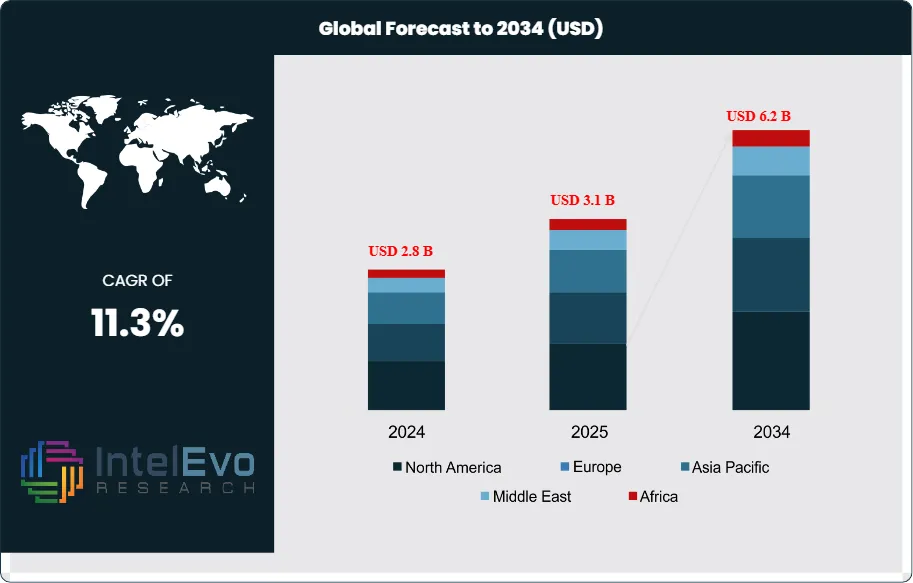
The Remotely Operated Vehicle (ROV) Market was valued at approximately USD 2.8 billion in 2024 and is projected to reach nearly USD 6.2 billion by 2034, reflecting strong expansion driven by offshore energy exploration, subsea infrastructure inspection, and defense applications. Based on the projected growth trajectory, the market size for 2025 is estimated at around USD 3.1 billion. Beginning in 2026, the market is expected to grow at a compound annual growth rate (CAGR) of about 11.3% from 2026 to 2034, ultimately reaching an estimated valuation of approximately USD 8.2 billion by 2034. This growth trajectory reflects the increasing dependence on highly capable subsea robotics for operations in deep-water and hazardous environments where human intervention is limited or impractical.
ROVs form a critical component of the broader underwater robotics ecosystem, supporting a wide spectrum of applications across commercial, military, scientific, and renewable energy domains. These systems, typically outfitted with high-resolution imaging, advanced sensors, and manipulator arms, enable operators to conduct precise underwater inspection, maintenance, repair, and data-gathering missions. Their role has become particularly essential as industries shift toward more complex subsea infrastructure and deeper offshore operations.
The oil and gas sector continues to represent the largest demand center for ROVs, deploying them extensively for subsea pipeline inspection, rig installation, asset integrity management, and decommissioning. Meanwhile, defense organizations leverage ROV platforms for mine detection, explosive ordnance disposal, reconnaissance, and salvage operations, driven by rising maritime security requirements. Scientific and environmental agencies also depend on ROVs for oceanographic studies, ecosystem monitoring, and deep-sea exploration, expanding their relevance in research and conservation initiatives.
Market expansion is underpinned by several structural drivers. Continued investment in offshore oil and gas exploration, along with the accelerated rollout of offshore wind farms, is significantly increasing the need for versatile subsea robotic systems. In parallel, global defense modernization programs are amplifying procurement of advanced unmanned underwater systems. Growing awareness of environmental risks and the need for real-time subsea data further reinforces market demand.
Rapid technological progress remains a defining catalyst for market growth. Innovations in autonomous navigation, machine vision, real-time data analytics, lightweight material engineering, and power management are enhancing the operational range, precision, and efficiency of modern ROVs. As these platforms continue to integrate greater automation and AI-enabled capabilities, they are expected to play an increasingly strategic role across mission-critical underwater operations.
Overall, the ROV market is positioned for strong and sustained expansion as industries worldwide adopt more sophisticated subsea technologies to support energy transition, security imperatives, and scientific discovery.
Key Takeaways
Market Growth: The global ROV market grows from 2.2 billion USD, 2023 to 8.2 billion USD, 2034, reflecting a robust 11.3% CAGR, 2026-2034.
Segment Dominance : Offshore oil and gas applications lead overall demand, contributing estimated: 40.0% revenue share, 2024. These operations deploy ROVs intensively for subsea pipeline inspection, infrastructure installation, and maintenance to safeguard production continuity.
Segment Dominance: Defense, scientific research, and offshore wind collectively form the next wave of demand, accounting for estimated: 60.0% deployment share, 2024 beyond the core oil and gas base. These segments require high-specification ROVs with advanced sensors, cameras, and manipulators for complex underwater missions.
Driver: Accelerating offshore exploration and production and rising investment in renewable energy assets drive ROV adoption, supported by an 11.0% market CAGR, 2023-2033. Advancements in robotics, sensing, and real-time data analytics further justify capital spending that exceeds estimated: 1.0 billion USD, 2024 across major operators.
Restraint: High acquisition and operating costs, complex subsea logistics, and stringent regulatory requirements restrain broader ROV penetration, with sophisticated work-class units reaching estimated: 15.0 million USD per unit, 2024. Limited availability of skilled pilots and maintenance specialists further constrains deployment scale and project throughput.
Opportunity: Expanding offshore wind farms and deep-sea environmental monitoring programs create new revenue streams, potentially adding estimated: 1.5 billion USD in incremental ROV-related spending, 2030. Vendors that align offerings with these high-growth use cases can capture significant share via specialized tooling, data services, and lifecycle support.
Trend: Technology roadmaps emphasize greater autonomy, AI-enabled navigation, and enhanced data analytics, with next-generation systems expected to represent estimated: 50.0% of new ROV deliveries, 2030. Operators increasingly integrate ROV platforms into digital twins and remote operation centers to optimize subsea asset performance and reduce human exposure.
Regional Analysis: North America and Europe currently lead ROV adoption, jointly contributing estimated: 55.0% revenue share, 2024 driven by mature offshore energy and defense programs. Asia-Pacific is poised to close the gap as offshore development and naval modernization accelerate toward an estimated: 2.0 billion USD market size, 2033.
By Type
Work-class ROVs continue to lead the market in 2025 as operators rely on their strength, stability, and tool-carrying capacity for high-risk offshore tasks. These systems account for the largest share of global deployments due to their role in drilling support, subsea construction, and complex intervention projects. Rising offshore activity in deep and ultra-deepwater fields reinforces demand as energy producers focus on asset reliability and operational safety.
Inspection-class ROVs hold a strong position as operators increase their use of compact, maneuverable vehicles for routine structural assessments. You will see sustained adoption as offshore platforms age and pipeline networks expand. The segment benefits from a steady shift toward planned inspection cycles and standardized maintenance protocols across major operators in North America, Europe, and Asia.
Observation-class ROVs attract interest from scientific agencies, universities, and environmental groups. Their lower acquisition costs and simple deployment procedures make them suitable for marine biology research, reef mapping, and coastal surveillance. Adoption expands further as governments increase funding for environmental monitoring and climate-impact studies.
Specialized ROVs fill niche requirements in defense, subsea mining, and advanced research. These vehicles often carry custom sensor packages or mission-specific tooling. Although they represent a smaller portion of global demand, they remain central to programs that require specialized underwater capabilities.
By Depth Rating
Shallow-water ROVs maintain broad usage as governments and commercial entities prioritize nearshore inspections and environmental assessments. You will find these units widely used in coastal infrastructure surveys, archaeological work, and habitat monitoring. Their lower cost of ownership appeals to small and mid-size service providers seeking reliable equipment for recurring nearshore assignments.
Midwater ROVs serve a balanced role for operators that require more capability than shallow-water systems but do not need the full specifications of deepwater vehicles. These units remain essential for pipeline inspections, asset integrity checks, and infrastructure repairs at intermediate depths. Their capacity to operate in variable current and pressure conditions keeps them relevant for diversified offshore portfolios.
Deepwater ROVs remain a high-value segment driven by continued activity in ultra-deepwater developments. These systems support drilling, completions, and production operations at depths beyond 2,000 meters. You will see rising demand as exploration programs return in Brazil, the Gulf of Mexico, and West Africa. High technical standards and advanced materials extend their operating limits, making them central to deep-sea research and commercial missions.
By Power
ROVs in the 100 to 200 HP range dominate global demand due to their balanced performance profile. These vehicles deliver enough thrust for moderate construction work, material handling, and salvage operations while maintaining maneuverability suitable for precision tasks. Offshore contractors favor this range as it supports a wide set of intervention requirements without significantly increasing operational costs.
ROVs up to 100 HP remain important for inspection work, environmental studies, and scientific missions. Their compact size supports entry into confined spaces and sensitive habitats. You will find these systems used by research organizations and smaller commercial fleets that prioritize accuracy and low operating expenses.
ROVs above 200 HP serve heavy-duty industrial needs, including drill support, high-load lifting, and construction at extreme depths. This category represents a critical asset for major offshore operators that require powerful equipment capable of managing difficult terrain and demanding tool packages. Rising investment in deepwater energy projects continues to support adoption.
By Application
The oil and gas industry continues to hold the largest share of ROV demand in 2025 as operators rely on subsea systems for inspection, drilling support, and pipeline integrity tasks. High levels of deepwater activity and strict safety compliance requirements reinforce the need for reliable robotic intervention. You will see sustained procurement as companies extend the life of aging fields and expand into frontier basins.
Offshore construction uses ROVs for cable laying, foundation installation, and seabed preparation. Growth in offshore wind projects in Europe, China, and the United States increases the number of construction missions that require reliable subsea robotics. Contractors depend on ROVs to verify installation accuracy and ensure compliance with engineering plans.
Scientific research programs rely on ROVs for sampling, quantitative habitat surveys, and long-term ecosystem monitoring. As governments increase ocean observation budgets, research groups expand their use of robotics to reach depths inaccessible to divers.
Defense and security agencies deploy ROVs for mine clearance, port surveillance, and underwater recovery. Rising maritime security concerns and modernization programs in Asia and Europe support stronger adoption. Other sectors, including aquaculture and water infrastructure, continue to expand their use of ROVs for routine inspection and maintenance.
By Region
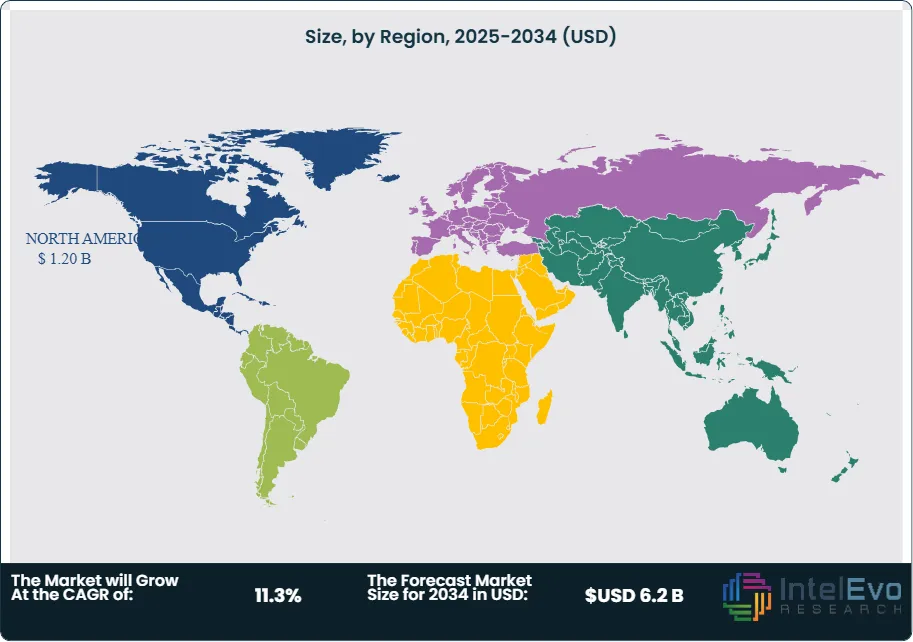
North America remains the largest regional market in 2025 due to its strong offshore energy base, mature defense sector, and extensive research activities. The United States accounts for most of the regional demand as operators maintain a large fleet of work-class ROVs for deepwater operations in the Gulf of Mexico. Canada contributes additional growth driven by Arctic research and coastal inspection programs.
Europe maintains a significant share supported by offshore wind expansion, subsea engineering expertise, and robust inspection requirements. The United Kingdom, Norway, and the Netherlands remain central hubs for ROV manufacturing and deployment. You will see consistent procurement tied to renewable energy development and subsea service contracts.
Asia Pacific emerges as the fastest-growing market. China, Japan, and South Korea expand R&D spending and increase maritime security investments. Offshore exploration in India and Southeast Asia adds further demand for work-class and inspection-class systems.
Latin America and the Middle East & Africa show steady adoption driven by offshore oil and gas projects in Brazil, Mexico, Saudi Arabia, and the UAE. Deepwater fields in Brazil and West Africa sustain long-term requirements for high-capacity ROV fleets.
By Type (Work-Class ROVs, Inspection-Class ROVs, Observation-Class ROVs, Others), By Depth Rating (Shallow Water ROVs, Midwater ROVs, Deepwater ROVs), By Power (Upto 100 HP, 100 – 200 HP, Above 200 HP), By Application (Oil and Gas Industry, Offshore Construction, Scientific Research, Defense and Security, Others)
Research Methodology
Primary Research- 100 Interviews of Stakeholders
Secondary Research
Desk Research
Regional scope
North America (United States, Canada, Mexico)
Latin America (Brazil, Argentina, Columbia)
East Asia And Pacific (China, Japan, South Korea, Australia, Cambodia, Fiji, Indonesia)
Sea And South Asia (India, Singapore, Thailand, Taiwan, Malaysia)
Eastern Europe (Poland, Russia, Czech Republic, Romania)
Western Europe (Germany, U.K., France, Spain, Itlay)
Middle East & Africa (GCC Countries, Egypt, Nigeria, South Africa, Israel)
Competitive Landscape
Oceaneering International, Inc., Deep Ocean Group, Aquabotix Technology Corporation, Forum Energy Technologies, Inc., Saab Seaeye Limited, Ocean Aero, Kongsberg Maritime AS, Ocean Infinity, Subsea 7 S.A., Atlas Elektronik GmbH, Blue Robotics, Inc., TechnipFMC plc, DOF Subsea AS, Fugro, ECA Group
Customization Scope
Customization for segments, region/country-level will be provided. Moreover, additional customization can be done based on the requirements.
Pricing and Purchase Options
Avail customized purchase options to meet your exact research needs. We have three licenses to opt for: Single User License, Multi-User License (Up to 5 Users), Corporate Use License (Unlimited User and Printable PDF).
TABLE OF CONTENTS
1. EXECUTIVE SUMMARY
1.1. MARKET SNAPSHOT
1.2. KEY FINDINGS & INSIGHTS
1.3. ANALYST RECOMMENDATIONS
1.4. FUTURE OUTLOOK
2. RESEARCH METHODOLOGY
2.1. MARKET DEFINITION & SCOPE
2.2. RESEARCH OBJECTIVES: PRIMARY & SECONDARY DATA SOURCES
2.3. DATA COLLECTION SOURCES
2.3.1. COVERAGE OF 100+ PRIMARY RESEARCH/CONSULTATION CALLS WITH INDUSTRY STAKEHOLDERS
FIGURE 17 NORTH AMERICA REMOTELY OPERATED VEHICLE (ROV)CURRENT AND FUTURE TYPE ANALYSIS, 2025–2034, (USD MILLION)
FIGURE 18 NORTH AMERICA REMOTELY OPERATED VEHICLE (ROV)CURRENT AND FUTURE END USER ANALYSIS, 2025–2034, (USD MILLION)
FIGURE 19 MARKET SHARE BY COUNTRY
FIGURE 20 LATIN AMERICA REMOTELY OPERATED VEHICLE (ROV)CURRENT AND FUTURE TYPE ANALYSIS, 2025–2034, (USD MILLION)
FIGURE 21 LATIN AMERICA REMOTELY OPERATED VEHICLE (ROV)CURRENT AND FUTURE END USER ANALYSIS, 2025–2034, (USD MILLION)
FIGURE 22 MARKET SHARE BY COUNTRY
FIGURE 23 EASTERN EUROPE REMOTELY OPERATED VEHICLE (ROV)CURRENT AND FUTURE TYPE ANALYSIS, 2025–2034, (USD MILLION)
FIGURE 24 EASTERN EUROPE REMOTELY OPERATED VEHICLE (ROV)CURRENT AND FUTURE END USER ANALYSIS, 2025–2034, (USD MILLION)
FIGURE 25 MARKET SHARE BY COUNTRY
FIGURE 26 WESTERN EUROPE REMOTELY OPERATED VEHICLE (ROV)CURRENT AND FUTURE TYPE ANALYSIS, 2025–2034, (USD MILLION)
FIGURE 27 WESTERN EUROPE REMOTELY OPERATED VEHICLE (ROV)CURRENT AND FUTURE END USER ANALYSIS, 2025–2034, (USD MILLION)
FIGURE 28 MARKET SHARE BY COUNTRY
FIGURE 29 EAST ASIA AND PACIFIC REMOTELY OPERATED VEHICLE (ROV)CURRENT AND FUTURE TYPE ANALYSIS, 2025–2034, (USD MILLION)
FIGURE 30 EAST ASIA AND PACIFIC REMOTELY OPERATED VEHICLE (ROV)CURRENT AND FUTURE END USER ANALYSIS, 2025–2034, (USD MILLION)
FIGURE 31 MARKET SHARE BY COUNTRY
FIGURE 32 SEA AND SOUTH ASIA REMOTELY OPERATED VEHICLE (ROV)CURRENT AND FUTURE TYPE ANALYSIS, 2025–2034, (USD MILLION)
FIGURE 33 SEA AND SOUTH ASIA REMOTELY OPERATED VEHICLE (ROV)CURRENT AND FUTURE END USER ANALYSIS, 2025–2034, (USD MILLION)
FIGURE 34 MARKET SHARE BY COUNTRY
FIGURE 35 MIDDLE EAST AND AFRICA REMOTELY OPERATED VEHICLE (ROV)CURRENT AND FUTURE TYPE ANALYSIS, 2025–2034, (USD MILLION)
FIGURE 36 MIDDLE EAST AND AFRICA REMOTELY OPERATED VEHICLE (ROV)CURRENT AND FUTURE END USER ANALYSIS, 2025–2034, (USD MILLION)
FIGURE 37 NORTH AMERICA REMOTELY OPERATED VEHICLE (ROV)CURRENT AND FUTURE MARKET VOLUME SHARE REGIONAL ANALYSIS, 2025–2034, (USD MILLION)
FIGURE 38 U.S. REMOTELY OPERATED VEHICLE (ROV)CURRENT AND FUTURE TYPE ANALYSIS, 2025–2034, (USD MILLION)
FIGURE 39 U.S. REMOTELY OPERATED VEHICLE (ROV)CURRENT AND FUTURE END USER ANALYSIS, 2025–2034, (USD MILLION)
FIGURE 40 CANADA REMOTELY OPERATED VEHICLE (ROV)CURRENT AND FUTURE TYPE ANALYSIS, 2025–2034, (USD MILLION)
FIGURE 41 CANADA REMOTELY OPERATED VEHICLE (ROV)CURRENT AND FUTURE END USER ANALYSIS, 2025–2034, (USD MILLION)
FIGURE 42 LATIN AMERICA REMOTELY OPERATED VEHICLE (ROV)CURRENT AND FUTURE MARKET VOLUME SHARE REGIONAL ANALYSIS, 2025–2034, (USD MILLION)
FIGURE 43 MEXICO REMOTELY OPERATED VEHICLE (ROV)CURRENT AND FUTURE TYPE ANALYSIS, 2025–2034, (USD MILLION)
FIGURE 44 MEXICO REMOTELY OPERATED VEHICLE (ROV)CURRENT AND FUTURE END USER ANALYSIS, 2025–2034, (USD MILLION)
FIGURE 45 BRAZIL REMOTELY OPERATED VEHICLE (ROV)CURRENT AND FUTURE TYPE ANALYSIS, 2025–2034, (USD MILLION)
FIGURE 46 BRAZIL REMOTELY OPERATED VEHICLE (ROV)CURRENT AND FUTURE END USER ANALYSIS, 2025–2034, (USD MILLION)
FIGURE 47 ARGENTINA REMOTELY OPERATED VEHICLE (ROV)CURRENT AND FUTURE TYPE ANALYSIS, 2025–2034, (USD MILLION)
FIGURE 48 ARGENTINA REMOTELY OPERATED VEHICLE (ROV)CURRENT AND FUTURE END USER ANALYSIS, 2025–2034, (USD MILLION)
FIGURE 49 COLUMBIA REMOTELY OPERATED VEHICLE (ROV)CURRENT AND FUTURE TYPE ANALYSIS, 2025–2034, (USD MILLION)
FIGURE 50 COLUMBIA REMOTELY OPERATED VEHICLE (ROV)CURRENT AND FUTURE END USER ANALYSIS, 2025–2034, (USD MILLION)
FIGURE 51 REST OF LATIN AMERICA REMOTELY OPERATED VEHICLE (ROV)CURRENT AND FUTURE TYPE ANALYSIS, 2025–2034, (USD MILLION)
FIGURE 52 REST OF LATIN AMERICA REMOTELY OPERATED VEHICLE (ROV)CURRENT AND FUTURE END USER ANALYSIS, 2025–2034, (USD MILLION)
FIGURE 53 EASTERN EUROPE REMOTELY OPERATED VEHICLE (ROV)CURRENT AND FUTURE MARKET VOLUME SHARE REGIONAL ANALYSIS, 2025–2034, (USD MILLION)
FIGURE 54 POLAND REMOTELY OPERATED VEHICLE (ROV)CURRENT AND FUTURE TYPE ANALYSIS, 2025–2034, (USD MILLION)
FIGURE 55 POLAND REMOTELY OPERATED VEHICLE (ROV)CURRENT AND FUTURE END USER ANALYSIS, 2025–2034, (USD MILLION)
FIGURE 56 RUSSIA REMOTELY OPERATED VEHICLE (ROV)CURRENT AND FUTURE TYPE ANALYSIS, 2025–2034, (USD MILLION)
FIGURE 57 RUSSIA REMOTELY OPERATED VEHICLE (ROV)CURRENT AND FUTURE END USER ANALYSIS, 2025–2034, (USD MILLION)
FIGURE 58 CZECH REPUBLIC REMOTELY OPERATED VEHICLE (ROV)CURRENT AND FUTURE TYPE ANALYSIS, 2025–2034, (USD MILLION)
FIGURE 59 CZECH REPUBLIC REMOTELY OPERATED VEHICLE (ROV)CURRENT AND FUTURE END USER ANALYSIS, 2025–2034, (USD MILLION)
FIGURE 60 ROMANIA REMOTELY OPERATED VEHICLE (ROV)CURRENT AND FUTURE TYPE ANALYSIS, 2025–2034, (USD MILLION)
FIGURE 61 ROMANIA REMOTELY OPERATED VEHICLE (ROV)CURRENT AND FUTURE END USER ANALYSIS, 2025–2034, (USD MILLION)
FIGURE 62 REST OF EASTERN EUROPE REMOTELY OPERATED VEHICLE (ROV)CURRENT AND FUTURE TYPE ANALYSIS, 2025–2034, (USD MILLION)
FIGURE 63 REST OF EASTERN EUROPE REMOTELY OPERATED VEHICLE (ROV)CURRENT AND FUTURE END USER ANALYSIS, 2025–2034, (USD MILLION)
FIGURE 64 WESTERN EUROPE REMOTELY OPERATED VEHICLE (ROV)CURRENT AND FUTURE MARKET VOLUME SHARE REGIONAL ANALYSIS, 2025–2034, (USD MILLION)
FIGURE 65 GERMANY REMOTELY OPERATED VEHICLE (ROV)CURRENT AND FUTURE TYPE ANALYSIS, 2025–2034, (USD MILLION)
FIGURE 66 GERMANY REMOTELY OPERATED VEHICLE (ROV)CURRENT AND FUTURE END USER ANALYSIS, 2025–2034, (USD MILLION)
FIGURE 67 FRANCE REMOTELY OPERATED VEHICLE (ROV)CURRENT AND FUTURE TYPE ANALYSIS, 2025–2034, (USD MILLION)
FIGURE 68 FRANCE REMOTELY OPERATED VEHICLE (ROV)CURRENT AND FUTURE END USER ANALYSIS, 2025–2034, (USD MILLION)
FIGURE 69 UK REMOTELY OPERATED VEHICLE (ROV)CURRENT AND FUTURE TYPE ANALYSIS, 2025–2034, (USD MILLION)
FIGURE 70 UK REMOTELY OPERATED VEHICLE (ROV)CURRENT AND FUTURE END USER ANALYSIS, 2025–2034, (USD MILLION)
FIGURE 71 SPAIN REMOTELY OPERATED VEHICLE (ROV)CURRENT AND FUTURE TYPE ANALYSIS, 2025–2034, (USD MILLION)
FIGURE 72 SPAIN REMOTELY OPERATED VEHICLE (ROV)CURRENT AND FUTURE END USER ANALYSIS, 2025–2034, (USD MILLION)
FIGURE 73 ITALY REMOTELY OPERATED VEHICLE (ROV)CURRENT AND FUTURE TYPE ANALYSIS, 2025–2034, (USD MILLION)
FIGURE 74 ITALY REMOTELY OPERATED VEHICLE (ROV)CURRENT AND FUTURE END USER ANALYSIS, 2025–2034, (USD MILLION)
FIGURE 75 REST OF WESTERN EUROPE REMOTELY OPERATED VEHICLE (ROV)CURRENT AND FUTURE TYPE ANALYSIS, 2025–2034, (USD MILLION)
FIGURE 76 REST OF WESTERN EUROPE REMOTELY OPERATED VEHICLE (ROV)CURRENT AND FUTURE END USER ANALYSIS, 2025–2034, (USD MILLION)
FIGURE 77 EAST ASIA AND PACIFIC REMOTELY OPERATED VEHICLE (ROV)CURRENT AND FUTURE MARKET VOLUME SHARE REGIONAL ANALYSIS, 2025–2034, (USD MILLION)
FIGURE 78 CHINA REMOTELY OPERATED VEHICLE (ROV)CURRENT AND FUTURE TYPE ANALYSIS, 2025–2034, (USD MILLION)
FIGURE 79 CHINA REMOTELY OPERATED VEHICLE (ROV)CURRENT AND FUTURE END USER ANALYSIS, 2025–2034, (USD MILLION)
FIGURE 80 JAPAN REMOTELY OPERATED VEHICLE (ROV)CURRENT AND FUTURE TYPE ANALYSIS, 2025–2034, (USD MILLION)
FIGURE 81 JAPAN REMOTELY OPERATED VEHICLE (ROV)CURRENT AND FUTURE END USER ANALYSIS, 2025–2034, (USD MILLION)
FIGURE 82 AUSTRALIA REMOTELY OPERATED VEHICLE (ROV)CURRENT AND FUTURE TYPE ANALYSIS, 2025–2034, (USD MILLION)
FIGURE 83 AUSTRALIA REMOTELY OPERATED VEHICLE (ROV)CURRENT AND FUTURE END USER ANALYSIS, 2025–2034, (USD MILLION)
FIGURE 84 CAMBODIA REMOTELY OPERATED VEHICLE (ROV)CURRENT AND FUTURE TYPE ANALYSIS, 2025–2034, (USD MILLION)
FIGURE 85 CAMBODIA REMOTELY OPERATED VEHICLE (ROV)CURRENT AND FUTURE END USER ANALYSIS, 2025–2034, (USD MILLION)
FIGURE 86 FIJI REMOTELY OPERATED VEHICLE (ROV)CURRENT AND FUTURE TYPE ANALYSIS, 2025–2034, (USD MILLION)
FIGURE 87 FIJI REMOTELY OPERATED VEHICLE (ROV)CURRENT AND FUTURE END USER ANALYSIS, 2025–2034, (USD MILLION)
FIGURE 88 INDONESIA REMOTELY OPERATED VEHICLE (ROV)CURRENT AND FUTURE TYPE ANALYSIS, 2025–2034, (USD MILLION)
FIGURE 89 INDONESIA REMOTELY OPERATED VEHICLE (ROV)CURRENT AND FUTURE END USER ANALYSIS, 2025–2034, (USD MILLION)
FIGURE 90 SOUTH KOREA REMOTELY OPERATED VEHICLE (ROV)CURRENT AND FUTURE TYPE ANALYSIS, 2025–2034, (USD MILLION)
FIGURE 91 SOUTH KOREA REMOTELY OPERATED VEHICLE (ROV)CURRENT AND FUTURE END USER ANALYSIS, 2025–2034, (USD MILLION)
FIGURE 92 REST OF EAST ASIA AND PACIFIC REMOTELY OPERATED VEHICLE (ROV)CURRENT AND FUTURE TYPE ANALYSIS, 2025–2034, (USD MILLION)
FIGURE 93 REST OF EAST ASIA AND PACIFIC REMOTELY OPERATED VEHICLE (ROV)CURRENT AND FUTURE END USER ANALYSIS, 2025–2034, (USD MILLION)
FIGURE 94 SEA AND SOUTH ASIA REMOTELY OPERATED VEHICLE (ROV)CURRENT AND FUTURE MARKET VOLUME SHARE REGIONAL ANALYSIS, 2025–2034, (USD MILLION)
FIGURE 95 BANGLADESH REMOTELY OPERATED VEHICLE (ROV)CURRENT AND FUTURE TYPE ANALYSIS, 2025–2034, (USD MILLION)
FIGURE 96 BANGLADESH REMOTELY OPERATED VEHICLE (ROV)CURRENT AND FUTURE END USER ANALYSIS, 2025–2034, (USD MILLION)
FIGURE 97 NEW ZEALAND REMOTELY OPERATED VEHICLE (ROV)CURRENT AND FUTURE TYPE ANALYSIS, 2025–2034, (USD MILLION)
FIGURE 98 NEW ZEALAND REMOTELY OPERATED VEHICLE (ROV)CURRENT AND FUTURE END USER ANALYSIS, 2025–2034, (USD MILLION)
FIGURE 99 INDIA REMOTELY OPERATED VEHICLE (ROV)CURRENT AND FUTURE TYPE ANALYSIS, 2025–2034, (USD MILLION)
FIGURE 100 INDIA REMOTELY OPERATED VEHICLE (ROV)CURRENT AND FUTURE END USER ANALYSIS, 2025–2034, (USD MILLION)
FIGURE 101 SINGAPORE REMOTELY OPERATED VEHICLE (ROV)CURRENT AND FUTURE TYPE ANALYSIS, 2025–2034, (USD MILLION)
FIGURE 102 SINGAPORE REMOTELY OPERATED VEHICLE (ROV)CURRENT AND FUTURE END USER ANALYSIS, 2025–2034, (USD MILLION)
FIGURE 103 THAILAND REMOTELY OPERATED VEHICLE (ROV)CURRENT AND FUTURE TYPE ANALYSIS, 2025–2034, (USD MILLION)
FIGURE 104 THAILAND REMOTELY OPERATED VEHICLE (ROV)CURRENT AND FUTURE END USER ANALYSIS, 2025–2034, (USD MILLION)
FIGURE 105 TAIWAN REMOTELY OPERATED VEHICLE (ROV)CURRENT AND FUTURE TYPE ANALYSIS, 2025–2034, (USD MILLION)
FIGURE 106 TAIWAN REMOTELY OPERATED VEHICLE (ROV)CURRENT AND FUTURE END USER ANALYSIS, 2025–2034, (USD MILLION)
FIGURE 107 MALAYSIA REMOTELY OPERATED VEHICLE (ROV)CURRENT AND FUTURE TYPE ANALYSIS, 2025–2034, (USD MILLION)
FIGURE 108 MALAYSIA REMOTELY OPERATED VEHICLE (ROV)CURRENT AND FUTURE END USER ANALYSIS, 2025–2034, (USD MILLION)
FIGURE 109 REST OF SEA AND SOUTH ASIA REMOTELY OPERATED VEHICLE (ROV)CURRENT AND FUTURE TYPE ANALYSIS, 2025–2034, (USD MILLION)
FIGURE 110 REST OF SEA AND SOUTH ASIA REMOTELY OPERATED VEHICLE (ROV)CURRENT AND FUTURE END USER ANALYSIS, 2025–2034, (USD MILLION)
FIGURE 111 MIDDLE EAST AND AFRICA REMOTELY OPERATED VEHICLE (ROV)CURRENT AND FUTURE MARKET VOLUME SHARE REGIONAL ANALYSIS, 2025–2034, (USD MILLION)
FIGURE 112 GCC COUNTRIES REMOTELY OPERATED VEHICLE (ROV)CURRENT AND FUTURE TYPE ANALYSIS, 2025–2034, (USD MILLION)
FIGURE 113 GCC COUNTRIES REMOTELY OPERATED VEHICLE (ROV)CURRENT AND FUTURE END USER ANALYSIS, 2025–2034, (USD MILLION)
FIGURE 114 SAUDI ARABIA REMOTELY OPERATED VEHICLE (ROV)CURRENT AND FUTURE TYPE ANALYSIS, 2025–2034, (USD MILLION)
FIGURE 115 SAUDI ARABIA REMOTELY OPERATED VEHICLE (ROV)CURRENT AND FUTURE END USER ANALYSIS, 2025–2034, (USD MILLION)
FIGURE 116 UAE REMOTELY OPERATED VEHICLE (ROV)CURRENT AND FUTURE TYPE ANALYSIS, 2025–2034, (USD MILLION)
FIGURE 117 UAE REMOTELY OPERATED VEHICLE (ROV)CURRENT AND FUTURE END USER ANALYSIS, 2025–2034, (USD MILLION)
FIGURE 118 BAHRAIN REMOTELY OPERATED VEHICLE (ROV)CURRENT AND FUTURE TYPE ANALYSIS, 2025–2034, (USD MILLION)
FIGURE 119 BAHRAIN REMOTELY OPERATED VEHICLE (ROV)CURRENT AND FUTURE END USER ANALYSIS, 2025–2034, (USD MILLION)
FIGURE 120 KUWAIT REMOTELY OPERATED VEHICLE (ROV)CURRENT AND FUTURE TYPE ANALYSIS, 2025–2034, (USD MILLION)
FIGURE 121 KUWAIT REMOTELY OPERATED VEHICLE (ROV)CURRENT AND FUTURE END USER ANALYSIS, 2025–2034, (USD MILLION)
FIGURE 122 OMAN REMOTELY OPERATED VEHICLE (ROV)CURRENT AND FUTURE TYPE ANALYSIS, 2025–2034, (USD MILLION)
FIGURE 123 OMAN REMOTELY OPERATED VEHICLE (ROV)CURRENT AND FUTURE END USER ANALYSIS, 2025–2034, (USD MILLION)
FIGURE 124 QATAR REMOTELY OPERATED VEHICLE (ROV)CURRENT AND FUTURE TYPE ANALYSIS, 2025–2034, (USD MILLION)
FIGURE 125 QATAR REMOTELY OPERATED VEHICLE (ROV)CURRENT AND FUTURE END USER ANALYSIS, 2025–2034, (USD MILLION)
FIGURE 126 EGYPT REMOTELY OPERATED VEHICLE (ROV)CURRENT AND FUTURE TYPE ANALYSIS, 2025–2034, (USD MILLION)
FIGURE 127 EGYPT REMOTELY OPERATED VEHICLE (ROV)CURRENT AND FUTURE END USER ANALYSIS, 2025–2034, (USD MILLION)
FIGURE 128 NIGERIA REMOTELY OPERATED VEHICLE (ROV)CURRENT AND FUTURE TYPE ANALYSIS, 2025–2034, (USD MILLION)
FIGURE 129 NIGERIA REMOTELY OPERATED VEHICLE (ROV)CURRENT AND FUTURE END USER ANALYSIS, 2025–2034, (USD MILLION)
FIGURE 130 SOUTH AFRICA REMOTELY OPERATED VEHICLE (ROV)CURRENT AND FUTURE TYPE ANALYSIS, 2025–2034, (USD MILLION)
FIGURE 131 SOUTH AFRICA REMOTELY OPERATED VEHICLE (ROV)CURRENT AND FUTURE END USER ANALYSIS, 2025–2034, (USD MILLION)
FIGURE 132 ISRAEL REMOTELY OPERATED VEHICLE (ROV)CURRENT AND FUTURE TYPE ANALYSIS, 2025–2034, (USD MILLION)
FIGURE 133 ISRAEL REMOTELY OPERATED VEHICLE (ROV)CURRENT AND FUTURE END USER ANALYSIS, 2025–2034, (USD MILLION)
FIGURE 134 REST OF MEA REMOTELY OPERATED VEHICLE (ROV)CURRENT AND FUTURE TYPE ANALYSIS, 2025–2034, (USD MILLION)
FIGURE 135 REST OF MEA REMOTELY OPERATED VEHICLE (ROV)CURRENT AND FUTURE END USER ANALYSIS, 2025–2034, (USD MILLION)
FIGURE 136 U. S. MARKET SHARE ANALYSIS BY TYPE (2024)
FIGURE 137 U. S. MARKET SHARE ANALYSIS BY END USER (2024)
FIGURE 138 CANADA MARKET SHARE ANALYSIS BY TYPE (2024)
FIGURE 139 CANADA MARKET SHARE ANALYSIS BY END USER (2024)
FIGURE 140 MEXICO MARKET SHARE ANALYSIS BY TYPE (2024)
FIGURE 141 MEXICO MARKET SHARE ANALYSIS BY END USER (2024)
FIGURE 142 CHINA MARKET SHARE ANALYSIS BY TYPE (2024)
FIGURE 143 CHINA MARKET SHARE ANALYSIS BY END USER (2024)
FIGURE 144 JAPAN MARKET SHARE ANALYSIS BY TYPE (2024)
FIGURE 145 JAPAN MARKET SHARE ANALYSIS BY END USER (2024)
FIGURE 146 INDIA MARKET SHARE ANALYSIS BY TYPE (2024)
FIGURE 147 INDIA MARKET SHARE ANALYSIS BY END USER (2024)
FIGURE 148 SOUTH KOREA MARKET SHARE ANALYSIS BY TYPE (2024)
FIGURE 149 SOUTH KOREA MARKET SHARE ANALYSIS BY END USER (2024)
FIGURE 150 SAUDI ARABIA MARKET SHARE ANALYSIS BY TYPE (2024)
FIGURE 151 SAUDI ARABIA MARKET SHARE ANALYSIS BY END USER (2024)
FIGURE 152 UAE MARKET SHARE ANALYSIS BY TYPE (2024)
FIGURE 153 UAE MARKET SHARE ANALYSIS BY END USER (2024)
FIGURE 154 EGYPT MARKET SHARE ANALYSIS BY TYPE (2024)
FIGURE 155 EGYPT MARKET SHARE ANALYSIS BY END USER (2024)
FIGURE 156 NIGERIA MARKET SHARE ANALYSIS BY TYPE (2024)
FIGURE 157 NIGERIA MARKET SHARE ANALYSIS BY END USER (2024)
FIGURE 158 SOUTH AFRICA MARKET SHARE ANALYSIS BY TYPE (2024)
FIGURE 159 SOUTH AFRICA MARKET SHARE ANALYSIS BY END USER (2024)
FIGURE 160 GERMANY MARKET SHARE ANALYSIS BY TYPE (2024)
FIGURE 161 GERMANY MARKET SHARE ANALYSIS BY END USER (2024)
FIGURE 162 FRANCE MARKET SHARE ANALYSIS BY TYPE (2024)
FIGURE 163 FRANCE MARKET SHARE ANALYSIS BY END USER (2024)
FIGURE 164 UK MARKET SHARE ANALYSIS BY TYPE (2024)
FIGURE 165 UK MARKET SHARE ANALYSIS BY END USER (2024)
FIGURE 166 SPAIN MARKET SHARE ANALYSIS BY TYPE (2024)
FIGURE 167 SPAIN MARKET SHARE ANALYSIS BY END USER (2024)
FIGURE 168 ITALY MARKET SHARE ANALYSIS BY TYPE (2024)
FIGURE 169 ITALY MARKET SHARE ANALYSIS BY END USER (2024)
FIGURE 170 BRAZIL MARKET SHARE ANALYSIS BY TYPE (2024)
FIGURE 171 BRAZIL MARKET SHARE ANALYSIS BY END USER (2024)
FIGURE 172 ARGENTINA MARKET SHARE ANALYSIS BY TYPE (2024)
FIGURE 173 ARGENTINA MARKET SHARE ANALYSIS BY END USER (2024)
FIGURE 174 COLUMBIA MARKET SHARE ANALYSIS BY TYPE (2024)
FIGURE 175 COLUMBIA MARKET SHARE ANALYSIS BY END USER (2024)
FIGURE 176 GLOBAL REMOTELY OPERATED VEHICLE (ROV)CURRENT AND FUTURE MARKET KEY COUNTRY LEVEL ANALYSIS, 2024–2034, (USD MILLION)
FIGURE 177 FINANCIAL OVERVIEW:
Key Player Analysis
Saab Seaeye Limited: Saab Seaeye positions itself as a leader in electric ROV technology with strong penetration across defense, offshore energy, and research markets. The company’s portfolio includes the Falcon, Cougar, and Sabertooth platforms, each designed for long-duration inspection and intervention tasks. In 2025, Saab Seaeye strengthens its position by expanding its hybrid AUV-ROV offerings to support autonomous inspection missions for offshore wind and subsea infrastructure. The company invests heavily in modular propulsion and AI-assisted control systems that reduce pilot workload and increase mission accuracy. Saab Seaeye benefits from strong adoption in Europe and the Asia Pacific due to its electric propulsion efficiency, which lowers vessel fuel consumption and supports sustainability mandates in high-regulation markets. Its service ecosystem and long-term maintenance programs remain key differentiators that appeal to large energy operators seeking predictable lifecycle costs.
TechnipFMC plc: TechnipFMC operates as a global leader with a vertically integrated approach across subsea engineering, equipment manufacturing, and robotics. The company uses its Schilling Robotics division to strengthen its ROV platform capabilities, providing heavy-duty work-class units that support construction, drilling, and intervention operations worldwide. In 2025, TechnipFMC continues expanding its robotic solutions portfolio to align with integrated subsea projects, which account for a growing share of its revenue. The company invests in remote operations centers that reduce offshore personnel requirements by up to 30 percent and improve uptime through predictive maintenance analytics. Its global footprint and long-term contracts with major oil and gas operators protect market share and ensure recurring demand. The combination of engineering expertise, advanced tooling systems, and project execution strength positions TechnipFMC as a preferred partner for complex deepwater developments.
Subsea 7 S.A.: Subsea 7 positions itself as a key challenger and service-focused operator with strong capabilities in ROV deployment, remote intervention, and subsea construction support. The company manages a large global ROV fleet integrated into its vessels and offshore operations, enabling efficient project delivery across deepwater oil and gas and offshore wind. In 2025, Subsea 7 continues expanding its renewables business, with ROV-assisted installation work supporting its strategy to diversify revenue. The company invests in digital inspection tools, autonomous docking systems, and improved real-time data platforms that support accurate seabed mapping and structural integrity assessments. Subsea 7 differentiates itself through its ability to integrate ROV operations into full EPCIC project scopes, giving clients a single point of accountability. Its presence in Europe, Brazil, and West Africa strengthens its ability to secure long-term subsea intervention contracts and maintain steady fleet utilization.
Market Key Players:
Oceaneering International, Inc.
Deep Ocean Group
Aquabotix Technology Corporation
Forum Energy Technologies, Inc.
Saab Seaeye Limited
Ocean Aero
Kongsberg Maritime AS
Ocean Infinity
Subsea 7 S.A.
Atlas Elektronik GmbH
Blue Robotics, Inc.
TechnipFMC plc
DOF Subsea AS
Fugro
ECA Group
Driver
Offshore Energy Expansion Sustains ROV Demand
By 2025, offshore energy projects will keep expanding as operators explore deeper waters and invest in large-scale renewable installations. This shift raises the need for remotely operated vehicles for subsea construction, drilling support, and inspections. The market is projected to grow at an estimated rate of 10 to 12 percent from now until 2030, driven by increased offshore wind capacity in Europe, China, and the United States. ROV deployment becomes key for installing foundations, laying cables, and inspecting turbine bases in these more complex marine environments.
Asset Integrity and Environmental Compliance Drive Utilization
Modern ROVs now include sensors, positioning systems, and precise tools that cut mission times and improve cost control in deepwater operations. Energy operators rely on these systems to maintain subsea asset integrity, reduce safety risks, and meet strict environmental regulations. Ongoing inspection programs for pipelines, risers, and subsea structures incorporate ROV services into long-term capital planning, highlighting their significance in offshore energy infrastructure.
Restraint
High Capital and Operating Expenditure Limit Adoption
High purchase and operating costs are still major obstacles to wider market entry. A work-class ROV system can cost over 3 million dollars when considering vessel support, specialized tools, and technical staff. Smaller operators, research institutions, and regional service providers often delay their purchasing decisions because project budgets can't handle these expenses. This pricing structure limits ownership to well-funded offshore contractors and large energy companies.
Technical Complexity and Communication Constraints Add Risk
Operational costs go beyond the initial purchase, as deepwater missions need ongoing upgrades, certified pilots, and components rated for high pressure. Maintenance cycles grow as depth and mission complexity increase, putting more pressure on financial resources. Communication delays and signal transmission issues at extreme depths create uncertainty, which can disrupt missions or affect data accuracy. These technical and financial challenges slow the adoption of ROVs in emerging offshore markets that lack infrastructure and funding.
Opportunity
Offshore Wind and Seabed Exploration Expand Revenue Streams
New subsea industries greatly expand the potential market. Global offshore wind capacity is expected to surpass 400 GW by 2035, driving ongoing demand for inspection, maintenance, and cable monitoring services. Each installed turbine and transmission line requires regular subsea surveys, leading to predictable yearly spending for ROV service providers. Seabed mineral exploration and marine environmental mapping further boost long-term usage rates.
Diversification Beyond Oil and Gas Cycles
Governments and private operators are increasingly using ROVs for seabed resource assessments, tracking marine conservation efforts, underwater archaeology, and search-and-recovery operations. Lower-cost observation-class systems enable use in tourism and scientific research. This diversification lessens dependence on oil and gas cycles, allowing manufacturers and service companies to build more balanced revenue streams across renewable energy, research, and commercial marine sectors.
Trend
Automation and AI Integration Transform Fleet Capabilities
ROV fleets are quickly adopting AI-driven navigation systems, real-time analytics, and advanced imaging tools. High-definition cameras, laser scanning devices, and 3D sonar make precise measurements possible, even in low-visibility underwater environments. Automated survey modes lower pilot workload and enhance consistency across inspection missions, promoting standardized asset management practices.
Remote Operations and Predictive Analytics Reshape Operations
Machine learning models in current systems can identify issues in pipelines, subsea cables, and structural welds with greater accuracy. Remote operation centers allow companies to oversee missions with fewer offshore staff, reducing operational risks and costs. This movement towards automation and centralized control increases mission efficiency and significantly alters long-term subsea asset management strategies across the energy and infrastructure industries.
Recent Developments
Dec 2024 – Fugro: Fugro secured a 175-day addendum to its inspection, repair, and maintenance contract with Petrobras to conduct fully remote subsea inspection surveys offshore Brazil using its Blue Essence USV and Blue Volta eROV, starting January 2025. This move extends Fugro’s remote ROV inspection model into the Americas and strengthens its role in low-carbon, uncrewed subsea operations for shallow-water assets.
Feb 2025 – Oceaneering International, Inc.: Oceaneering reported 2024 revenue of 2.7 billion USD, up 10 percent year on year, with adjusted consolidated EBITDA rising 20 percent to 347 million USD, and confirmed ownership of 250 work-class ROVs, one of the largest fleets globally. This financial performance and asset scale reinforce Oceaneering’s position as a core ROV capacity provider for multi-year deepwater and intervention campaigns.
Feb 2025 – Subsea 7 S.A.: Saipem and Subsea 7 announced plans to merge and create a combined offshore services group with a fleet of about 60 vessels focused on subsea construction, drilling support, and decommissioning. The proposed deal, targeted for completion in the second half of 2026, is set to increase scale in ROV-supported subsea services and intensify competition for large integrated offshore packages.
Mar 2025 – Saab Seaeye Limited: The Spanish Navy introduced the Seaeye Leopard intervention ROV into service for submarine rescue and deepwater defense operations, supported by NATO’s procurement and training framework. The deployment, with operational depth up to 1,500 meters and a 240 kg payload, strengthens Saab Seaeye’s position in high-specification defense ROV programs and broadens its reference base beyond commercial energy projects.
Sep 2025 – TechnipFMC plc: TechnipFMC received a “substantial” subsea contract, valued between 250 million and 500 million USD, from ExxonMobil Guyana to supply subsea production systems for the Hammerhead development in the Stabroek Block. The award, the company’s seventh greenfield project with ExxonMobil Guyana, underpins long-term demand for its Subsea 2.0 platform and associated ROV-intensive installation and life-of-field services.
Nov 2025 – Fugro: Fugro opened a new Remote Operations Centre in Kuala Lumpur to control offshore survey and inspection activities, including USV and ROV missions, across Asia Pacific. The facility expands Fugro’s global remote operations footprint and supports the shift toward centralized, onshore control of subsea inspection campaigns for regional energy and infrastructure clients.
