Smart Fabrics Market to Hit USD 46.9 Bn by 2034 | 15.9% CAGR
Global Smart Fabrics in Sportswear and Fashion Market Size, Share, Analysis Report By Product Type(Active Smart Fabrics, Passive Smart Fabrics, Ultra-smart Fabrics), Application(Sportswear, Fashion, Medical, Military), Distribution Channel(Online, Offline), Region and Key Players - Industry Segment Overview, Market Dynamics, Competitive Strategies, Emerging Trends, Historical Data and Forecast 2025-2034
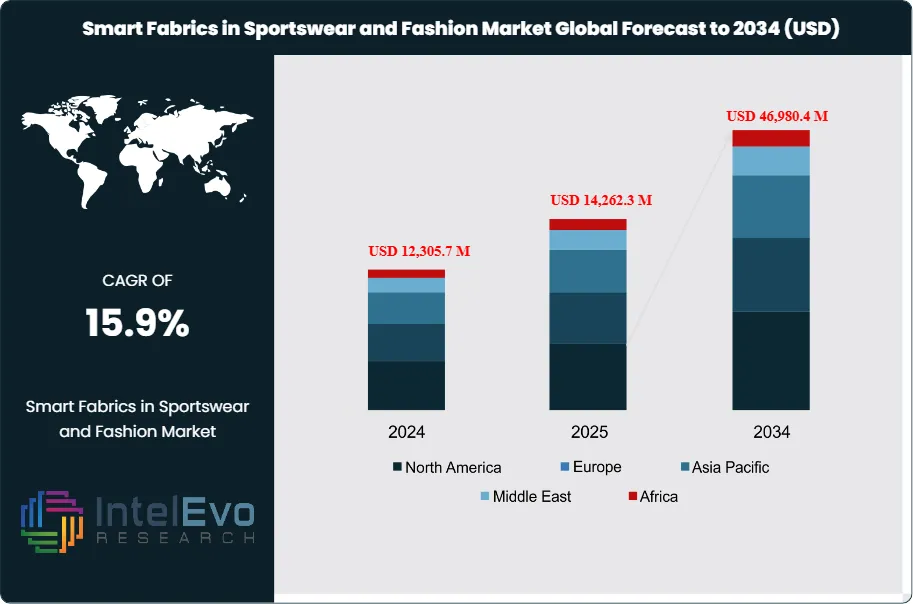
The Global Smart Fabrics in Sportswear and Fashion Market size is expected to reach approximately USD 46,980.4 million by 2034, up from USD 12,305.7 million in 2024, growing at a CAGR of 15.9% during the forecast period from 2025 to 2034. The growing integration of sensors, conductive materials, and AI-driven technologies into textiles is transforming the future of apparel. As consumers demand smarter, sustainable, and performance-oriented clothing, the convergence of fashion and technology is driving innovation across both sportswear and lifestyle segments. The market is poised to redefine comfort, performance tracking, and interactive fashion experiences worldwide.
The Global Smart Fabrics in Sportswear and Fashion Market refers to textiles embedded with advanced technology, enabling them to sense and respond to environmental changes. This market is characterized by the integration of sensors and actuators within fabrics, providing functionalities such as temperature regulation, moisture management, and health monitoring. The current market is thriving, with increasing consumer demand for innovative clothing that enhances performance and comfort in sports and everyday activities. Key market dynamics include the rise of e-commerce, advancements in textile technology, and growing awareness about the benefits of smart fabrics among consumers, which are collectively driving market expansion.
Various factors significantly influence the growth dynamics of this market. Key growth drivers include increasing health consciousness, the surge in demand for wearable technology, and advancements in manufacturing processes that reduce costs and improve product functionality. The sports and fitness sector is particularly driving growth, with consumers increasingly seeking apparel that enhances performance and tracks biometric data. Additionally, growing investments from key players in research and development are leading to the introduction of innovative products, further fueling market growth. The integration of IoT (Internet of Things) in smart fabrics is also expected to contribute significantly to the market's evolution, as these technologies enable real-time monitoring and data collection.
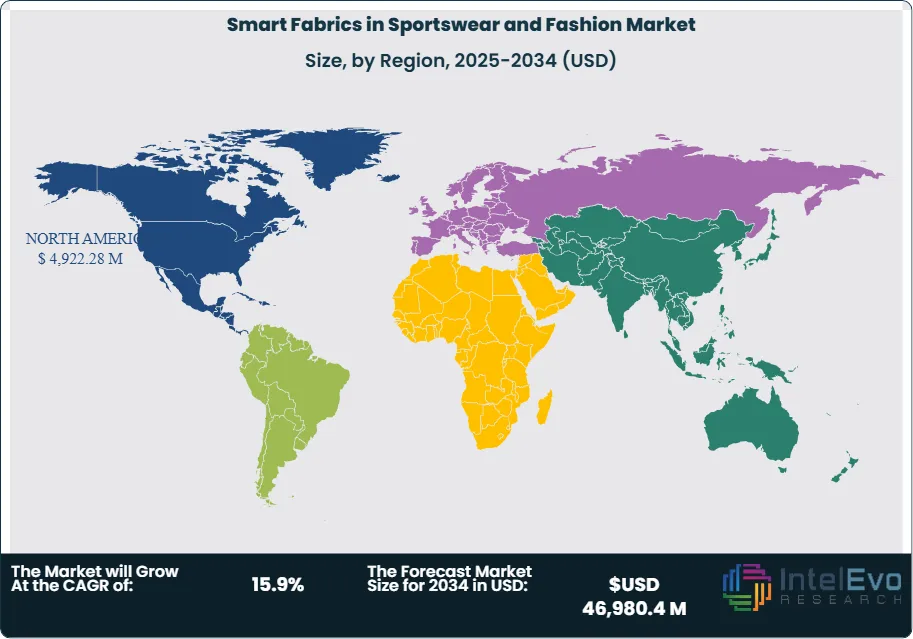
North America currently dominates the global smart fabrics market, accounting for a substantial market share, driven by high consumer awareness and advanced technological adoption. The United States is a major contributor, largely due to the presence of leading manufacturers and a strong market for performance-oriented apparel. Europe is also experiencing growth, spurred by increasing investments in smart textile technology and rising health and fitness trends. The Asia-Pacific region is expected to exhibit the fastest growth rate, attributed to rising disposable incomes, growing interest in sports, and an expanding middle-class population willing to adopt innovative apparel solutions.
The COVID-19 pandemic had a notable impact on the smart fabrics market. Initially, there was a decline in demand due to disrupted supply chains and reduced consumer spending. However, the pandemic also accelerated trends towards health and hygiene, leading to a heightened interest in smart fabrics that offer protective and monitoring capabilities. As consumers began to prioritize health and fitness, the market witnessed a resurgence, with increased interest in apparel that can provide real-time health data and improve performance. Overall, the pandemic acted as a catalyst for innovation and market adaptation, paving the way for future growth.
Key Takeaways:
Market Growth: The smart fabrics market is expected to reach USD 46,980.4 million by 2034, growing at a robust CAGR of 15.9%, indicating strong market expansion driven by technological advancements and consumer demand.
Product Type Dominance: Active smart fabrics are projected to dominate the market, as they offer enhanced functionalities such as moisture management and temperature regulation, appealing significantly to athletes and fitness enthusiasts.
Application Preference: The sportswear segment is anticipated to hold the largest market share, driven by increasing health consciousness and the demand for performance-enhancing apparel that integrates technology to monitor biometric data.
Driver: The rising consumer awareness regarding health and fitness is a major driver, as people seek apparel that not only improves performance but also provides real-time health monitoring capabilities, boosting the smart fabrics market.
Restraint: High production costs associated with advanced materials and technology may limit accessibility for some manufacturers, posing a challenge to widespread adoption and affecting price competitiveness in the market.
Opportunity: The increasing integration of IoT in smart fabrics presents significant growth opportunities, enabling real-time data collection and enhancing user experiences, especially in wearable technology and health monitoring applications.
Trend: The trend of sustainability in fashion is rising, leading to greater interest in eco-friendly smart fabrics that offer both functionality and environmental benefits, aligning with consumer preferences.
Regional Analysis: North America leads the market, supported by a strong presence of key players and high consumer awareness. The Asia-Pacific region is projected to experience the fastest growth, driven by rising disposable incomes and interest in innovative apparel solutions.
Product Type Analysis:
The smart fabrics market is categorized into active, passive, and ultra-smart fabrics. Active smart fabrics are designed to react to external stimuli such as temperature and moisture, making them ideal for sportswear that requires adaptability. Passive smart fabrics, on the other hand, do not respond to environmental changes but may offer features like UV protection or thermal insulation. Ultra-smart fabrics incorporate advanced technologies, such as integrated sensors, that can track biometrics and environmental data in real time. This product diversity allows consumers to choose fabrics that best meet their specific needs, driving market growth and innovation.
Application Analysis:
The application segment of smart fabrics includes sportswear, fashion, medical, and military uses. Sportswear is the largest segment, as athletes and fitness enthusiasts increasingly demand clothing that enhances performance and monitors health metrics. The fashion segment is also growing, with brands integrating smart textiles for aesthetic and functional benefits. Medical applications utilize smart fabrics for monitoring vital signs and providing therapeutic benefits, while the military segment employs these textiles for durability and operational efficiency. Each application area presents unique opportunities for manufacturers to innovate and develop specialized products tailored to diverse consumer needs.
Distribution Channel Analysis:
The distribution channels for smart fabrics include online and offline sales. Online channels are rapidly gaining popularity due to the convenience they offer, allowing consumers to access a wide range of smart fabric products from anywhere. E-commerce platforms also facilitate easy price comparison and customer reviews, enhancing purchasing decisions. Conversely, offline channels, such as retail stores and specialty shops, remain important as they provide consumers with tactile experiences and immediate product availability. The choice of distribution channel can significantly influence market dynamics, as companies seek to optimize their reach and cater to consumer preferences effectively.
Region Analysis:
North America Dominates With 40% Market Share in the Smart Fabrics Market: North America leads the global smart fabrics market, capturing approximately 40% of the total market share. This dominance can be attributed to the region's advanced technological infrastructure, significant investments in research and development, and the presence of major industry players. The growing awareness of health and fitness among consumers has increased the demand for innovative sportswear that integrates smart technology, such as health monitoring and moisture management features. Additionally, robust e-commerce platforms facilitate widespread accessibility to smart fabrics, further propelling market growth. The collaboration between tech firms and fashion brands also fosters innovation, enhancing the region's competitive edge.
The Asia-Pacific region is the fastest-growing market for smart fabrics, driven by rising disposable incomes, urbanization, and a burgeoning interest in health and fitness. With an expanding middle class, consumers in countries like China and India are increasingly investing in advanced sportswear that incorporates smart textile technology. The region is witnessing significant investments from both domestic and international brands, aiming to meet the growing demand for innovative and functional apparel. Furthermore, government initiatives promoting technological advancements in textiles and a youthful population eager to adopt new trends contribute to the rapid market growth. Other regions like Europe and Latin America are also experiencing steady growth, albeit at a slower pace, influenced by sustainability trends and increasing consumer awareness about health-focused apparel. The Middle East and Africa present unique opportunities, as interest in fitness and wellness continues to rise, albeit with varying growth rates across countries.
By Type (Active Smart Fabrics, Passive Smart Fabrics, Ultra-Smart Fabrics), By Functionality (Sensing, Energy Harvesting, Thermoregulation, Luminescence, Conductivity, Others), By Application (Sportswear, Fashion & Lifestyle Apparel, Protective Clothing, Medical Textiles, Military & Defense Wear, Others), By Material Type (Conductive Polymers, Metal-Based Yarn, Optical Fiber Fabric, Nanomaterials, Others), By End User (Athletes & Fitness Enthusiasts, General Consumers, Military Personnel, Medical Professionals, Industrial Workers), By Distribution Channel (Online, Offline)
Research Methodology
Primary Research- 100 Interviews of Stakeholders
Secondary Research
Desk Research
Regional scope
North America (United States, Canada, Mexico)
Latin America (Brazil, Argentina, Columbia)
East Asia And Pacific (China, Japan, South Korea, Australia, Cambodia, Fiji, Indonesia)
Sea And South Asia (India, Singapore, Thailand, Taiwan, Malaysia)
Eastern Europe (Poland, Russia, Czech Republic, Romania)
Western Europe (Germany, U.K., France, Spain, Itlay)
Middle East & Africa (GCC Countries, Egypt, Nigeria, South Africa, Israel)
Competitive Landscape
Nike Inc., Adidas AG, Under Armour Inc., Hexoskin, Smart Textiles LLC, Intel Corporation, Google LLC, Sony Corporation, Seiko Epson Corporation, Luxe Tex, Woven Digital, Talon International Inc., The North Face Inc., Nanotex, Sensoria Inc., Bamboo Technologies, Outlast Technologies LLC, H&M Group, 3M Company, Mimaki Engineering Co. Ltd.
Customization Scope
Customization for segments, region/country-level will be provided. Moreover, additional customization can be done based on the requirements.
Pricing and Purchase Options
Avail customized purchase options to meet your exact research needs. We have three licenses to opt for: Single User License, Multi-User License (Up to 5 Users), Corporate Use License (Unlimited User and Printable PDF).
TABLE OF CONTENTS
1. EXECUTIVE SUMMARY
1.1. MARKET SNAPSHOT
1.2. KEY FINDINGS & INSIGHTS
1.3. ANALYST RECOMMENDATIONS
1.4. FUTURE OUTLOOK
2. RESEARCH METHODOLOGY
2.1. MARKET DEFINITION & SCOPE
2.2. RESEARCH OBJECTIVES: PRIMARY & SECONDARY DATA SOURCES
2.3. DATA COLLECTION SOURCES
2.3.1. COVERAGE OF 100+ PRIMARY RESEARCH/CONSULTATION CALLS WITH INDUSTRY STAKEHOLDERS
FIGURE 17 NORTH AMERICA SMART FABRICS IN SPORTSWEAR AND FASHION CURRENT AND FUTURE TYPE ANALYSIS, 2025–2034, (USD MILLION)
FIGURE 18 NORTH AMERICA SMART FABRICS IN SPORTSWEAR AND FASHION CURRENT AND FUTURE END USER ANALYSIS, 2025–2034, (USD MILLION)
FIGURE 19 MARKET SHARE BY COUNTRY
FIGURE 20 LATIN AMERICA SMART FABRICS IN SPORTSWEAR AND FASHION CURRENT AND FUTURE TYPE ANALYSIS, 2025–2034, (USD MILLION)
FIGURE 21 LATIN AMERICA SMART FABRICS IN SPORTSWEAR AND FASHION CURRENT AND FUTURE END USER ANALYSIS, 2025–2034, (USD MILLION)
FIGURE 22 MARKET SHARE BY COUNTRY
FIGURE 23 EASTERN EUROPE SMART FABRICS IN SPORTSWEAR AND FASHION CURRENT AND FUTURE TYPE ANALYSIS, 2025–2034, (USD MILLION)
FIGURE 24 EASTERN EUROPE SMART FABRICS IN SPORTSWEAR AND FASHION CURRENT AND FUTURE END USER ANALYSIS, 2025–2034, (USD MILLION)
FIGURE 25 MARKET SHARE BY COUNTRY
FIGURE 26 WESTERN EUROPE SMART FABRICS IN SPORTSWEAR AND FASHION CURRENT AND FUTURE TYPE ANALYSIS, 2025–2034, (USD MILLION)
FIGURE 27 WESTERN EUROPE SMART FABRICS IN SPORTSWEAR AND FASHION CURRENT AND FUTURE END USER ANALYSIS, 2025–2034, (USD MILLION)
FIGURE 28 MARKET SHARE BY COUNTRY
FIGURE 29 EAST ASIA AND PACIFIC SMART FABRICS IN SPORTSWEAR AND FASHION CURRENT AND FUTURE TYPE ANALYSIS, 2025–2034, (USD MILLION)
FIGURE 30 EAST ASIA AND PACIFIC SMART FABRICS IN SPORTSWEAR AND FASHION CURRENT AND FUTURE END USER ANALYSIS, 2025–2034, (USD MILLION)
FIGURE 31 MARKET SHARE BY COUNTRY
FIGURE 32 SEA AND SOUTH ASIA SMART FABRICS IN SPORTSWEAR AND FASHION CURRENT AND FUTURE TYPE ANALYSIS, 2025–2034, (USD MILLION)
FIGURE 33 SEA AND SOUTH ASIA SMART FABRICS IN SPORTSWEAR AND FASHION CURRENT AND FUTURE END USER ANALYSIS, 2025–2034, (USD MILLION)
FIGURE 34 MARKET SHARE BY COUNTRY
FIGURE 35 MIDDLE EAST AND AFRICA SMART FABRICS IN SPORTSWEAR AND FASHION CURRENT AND FUTURE TYPE ANALYSIS, 2025–2034, (USD MILLION)
FIGURE 36 MIDDLE EAST AND AFRICA SMART FABRICS IN SPORTSWEAR AND FASHION CURRENT AND FUTURE END USER ANALYSIS, 2025–2034, (USD MILLION)
FIGURE 37 NORTH AMERICA SMART FABRICS IN SPORTSWEAR AND FASHION CURRENT AND FUTURE MARKET VOLUME SHARE REGIONAL ANALYSIS, 2025–2034, (USD MILLION)
FIGURE 38 U.S. SMART FABRICS IN SPORTSWEAR AND FASHION CURRENT AND FUTURE TYPE ANALYSIS, 2025–2034, (USD MILLION)
FIGURE 39 U.S. SMART FABRICS IN SPORTSWEAR AND FASHION CURRENT AND FUTURE END USER ANALYSIS, 2025–2034, (USD MILLION)
FIGURE 40 CANADA SMART FABRICS IN SPORTSWEAR AND FASHION CURRENT AND FUTURE TYPE ANALYSIS, 2025–2034, (USD MILLION)
FIGURE 41 CANADA SMART FABRICS IN SPORTSWEAR AND FASHION CURRENT AND FUTURE END USER ANALYSIS, 2025–2034, (USD MILLION)
FIGURE 42 LATIN AMERICA SMART FABRICS IN SPORTSWEAR AND FASHION CURRENT AND FUTURE MARKET VOLUME SHARE REGIONAL ANALYSIS, 2025–2034, (USD MILLION)
FIGURE 43 MEXICO SMART FABRICS IN SPORTSWEAR AND FASHION CURRENT AND FUTURE TYPE ANALYSIS, 2025–2034, (USD MILLION)
FIGURE 44 MEXICO SMART FABRICS IN SPORTSWEAR AND FASHION CURRENT AND FUTURE END USER ANALYSIS, 2025–2034, (USD MILLION)
FIGURE 45 BRAZIL SMART FABRICS IN SPORTSWEAR AND FASHION CURRENT AND FUTURE TYPE ANALYSIS, 2025–2034, (USD MILLION)
FIGURE 46 BRAZIL SMART FABRICS IN SPORTSWEAR AND FASHION CURRENT AND FUTURE END USER ANALYSIS, 2025–2034, (USD MILLION)
FIGURE 47 ARGENTINA SMART FABRICS IN SPORTSWEAR AND FASHION CURRENT AND FUTURE TYPE ANALYSIS, 2025–2034, (USD MILLION)
FIGURE 48 ARGENTINA SMART FABRICS IN SPORTSWEAR AND FASHION CURRENT AND FUTURE END USER ANALYSIS, 2025–2034, (USD MILLION)
FIGURE 49 COLUMBIA SMART FABRICS IN SPORTSWEAR AND FASHION CURRENT AND FUTURE TYPE ANALYSIS, 2025–2034, (USD MILLION)
FIGURE 50 COLUMBIA SMART FABRICS IN SPORTSWEAR AND FASHION CURRENT AND FUTURE END USER ANALYSIS, 2025–2034, (USD MILLION)
FIGURE 51 REST OF LATIN AMERICA SMART FABRICS IN SPORTSWEAR AND FASHION CURRENT AND FUTURE TYPE ANALYSIS, 2025–2034, (USD MILLION)
FIGURE 52 REST OF LATIN AMERICA SMART FABRICS IN SPORTSWEAR AND FASHION CURRENT AND FUTURE END USER ANALYSIS, 2025–2034, (USD MILLION)
FIGURE 53 EASTERN EUROPE SMART FABRICS IN SPORTSWEAR AND FASHION CURRENT AND FUTURE MARKET VOLUME SHARE REGIONAL ANALYSIS, 2025–2034, (USD MILLION)
FIGURE 54 POLAND SMART FABRICS IN SPORTSWEAR AND FASHION CURRENT AND FUTURE TYPE ANALYSIS, 2025–2034, (USD MILLION)
FIGURE 55 POLAND SMART FABRICS IN SPORTSWEAR AND FASHION CURRENT AND FUTURE END USER ANALYSIS, 2025–2034, (USD MILLION)
FIGURE 56 RUSSIA SMART FABRICS IN SPORTSWEAR AND FASHION CURRENT AND FUTURE TYPE ANALYSIS, 2025–2034, (USD MILLION)
FIGURE 57 RUSSIA SMART FABRICS IN SPORTSWEAR AND FASHION CURRENT AND FUTURE END USER ANALYSIS, 2025–2034, (USD MILLION)
FIGURE 58 CZECH REPUBLIC SMART FABRICS IN SPORTSWEAR AND FASHION CURRENT AND FUTURE TYPE ANALYSIS, 2025–2034, (USD MILLION)
FIGURE 59 CZECH REPUBLIC SMART FABRICS IN SPORTSWEAR AND FASHION CURRENT AND FUTURE END USER ANALYSIS, 2025–2034, (USD MILLION)
FIGURE 60 ROMANIA SMART FABRICS IN SPORTSWEAR AND FASHION CURRENT AND FUTURE TYPE ANALYSIS, 2025–2034, (USD MILLION)
FIGURE 61 ROMANIA SMART FABRICS IN SPORTSWEAR AND FASHION CURRENT AND FUTURE END USER ANALYSIS, 2025–2034, (USD MILLION)
FIGURE 62 REST OF EASTERN EUROPE SMART FABRICS IN SPORTSWEAR AND FASHION CURRENT AND FUTURE TYPE ANALYSIS, 2025–2034, (USD MILLION)
FIGURE 63 REST OF EASTERN EUROPE SMART FABRICS IN SPORTSWEAR AND FASHION CURRENT AND FUTURE END USER ANALYSIS, 2025–2034, (USD MILLION)
FIGURE 64 WESTERN EUROPE SMART FABRICS IN SPORTSWEAR AND FASHION CURRENT AND FUTURE MARKET VOLUME SHARE REGIONAL ANALYSIS, 2025–2034, (USD MILLION)
FIGURE 65 GERMANY SMART FABRICS IN SPORTSWEAR AND FASHION CURRENT AND FUTURE TYPE ANALYSIS, 2025–2034, (USD MILLION)
FIGURE 66 GERMANY SMART FABRICS IN SPORTSWEAR AND FASHION CURRENT AND FUTURE END USER ANALYSIS, 2025–2034, (USD MILLION)
FIGURE 67 FRANCE SMART FABRICS IN SPORTSWEAR AND FASHION CURRENT AND FUTURE TYPE ANALYSIS, 2025–2034, (USD MILLION)
FIGURE 68 FRANCE SMART FABRICS IN SPORTSWEAR AND FASHION CURRENT AND FUTURE END USER ANALYSIS, 2025–2034, (USD MILLION)
FIGURE 69 UK SMART FABRICS IN SPORTSWEAR AND FASHION CURRENT AND FUTURE TYPE ANALYSIS, 2025–2034, (USD MILLION)
FIGURE 70 UK SMART FABRICS IN SPORTSWEAR AND FASHION CURRENT AND FUTURE END USER ANALYSIS, 2025–2034, (USD MILLION)
FIGURE 71 SPAIN SMART FABRICS IN SPORTSWEAR AND FASHION CURRENT AND FUTURE TYPE ANALYSIS, 2025–2034, (USD MILLION)
FIGURE 72 SPAIN SMART FABRICS IN SPORTSWEAR AND FASHION CURRENT AND FUTURE END USER ANALYSIS, 2025–2034, (USD MILLION)
FIGURE 73 ITALY SMART FABRICS IN SPORTSWEAR AND FASHION CURRENT AND FUTURE TYPE ANALYSIS, 2025–2034, (USD MILLION)
FIGURE 74 ITALY SMART FABRICS IN SPORTSWEAR AND FASHION CURRENT AND FUTURE END USER ANALYSIS, 2025–2034, (USD MILLION)
FIGURE 75 REST OF WESTERN EUROPE SMART FABRICS IN SPORTSWEAR AND FASHION CURRENT AND FUTURE TYPE ANALYSIS, 2025–2034, (USD MILLION)
FIGURE 76 REST OF WESTERN EUROPE SMART FABRICS IN SPORTSWEAR AND FASHION CURRENT AND FUTURE END USER ANALYSIS, 2025–2034, (USD MILLION)
FIGURE 77 EAST ASIA AND PACIFIC SMART FABRICS IN SPORTSWEAR AND FASHION CURRENT AND FUTURE MARKET VOLUME SHARE REGIONAL ANALYSIS, 2025–2034, (USD MILLION)
FIGURE 78 CHINA SMART FABRICS IN SPORTSWEAR AND FASHION CURRENT AND FUTURE TYPE ANALYSIS, 2025–2034, (USD MILLION)
FIGURE 79 CHINA SMART FABRICS IN SPORTSWEAR AND FASHION CURRENT AND FUTURE END USER ANALYSIS, 2025–2034, (USD MILLION)
FIGURE 80 JAPAN SMART FABRICS IN SPORTSWEAR AND FASHION CURRENT AND FUTURE TYPE ANALYSIS, 2025–2034, (USD MILLION)
FIGURE 81 JAPAN SMART FABRICS IN SPORTSWEAR AND FASHION CURRENT AND FUTURE END USER ANALYSIS, 2025–2034, (USD MILLION)
FIGURE 82 AUSTRALIA SMART FABRICS IN SPORTSWEAR AND FASHION CURRENT AND FUTURE TYPE ANALYSIS, 2025–2034, (USD MILLION)
FIGURE 83 AUSTRALIA SMART FABRICS IN SPORTSWEAR AND FASHION CURRENT AND FUTURE END USER ANALYSIS, 2025–2034, (USD MILLION)
FIGURE 84 CAMBODIA SMART FABRICS IN SPORTSWEAR AND FASHION CURRENT AND FUTURE TYPE ANALYSIS, 2025–2034, (USD MILLION)
FIGURE 85 CAMBODIA SMART FABRICS IN SPORTSWEAR AND FASHION CURRENT AND FUTURE END USER ANALYSIS, 2025–2034, (USD MILLION)
FIGURE 86 FIJI SMART FABRICS IN SPORTSWEAR AND FASHION CURRENT AND FUTURE TYPE ANALYSIS, 2025–2034, (USD MILLION)
FIGURE 87 FIJI SMART FABRICS IN SPORTSWEAR AND FASHION CURRENT AND FUTURE END USER ANALYSIS, 2025–2034, (USD MILLION)
FIGURE 88 INDONESIA SMART FABRICS IN SPORTSWEAR AND FASHION CURRENT AND FUTURE TYPE ANALYSIS, 2025–2034, (USD MILLION)
FIGURE 89 INDONESIA SMART FABRICS IN SPORTSWEAR AND FASHION CURRENT AND FUTURE END USER ANALYSIS, 2025–2034, (USD MILLION)
FIGURE 90 SOUTH KOREA SMART FABRICS IN SPORTSWEAR AND FASHION CURRENT AND FUTURE TYPE ANALYSIS, 2025–2034, (USD MILLION)
FIGURE 91 SOUTH KOREA SMART FABRICS IN SPORTSWEAR AND FASHION CURRENT AND FUTURE END USER ANALYSIS, 2025–2034, (USD MILLION)
FIGURE 92 REST OF EAST ASIA AND PACIFIC SMART FABRICS IN SPORTSWEAR AND FASHION CURRENT AND FUTURE TYPE ANALYSIS, 2025–2034, (USD MILLION)
FIGURE 93 REST OF EAST ASIA AND PACIFIC SMART FABRICS IN SPORTSWEAR AND FASHION CURRENT AND FUTURE END USER ANALYSIS, 2025–2034, (USD MILLION)
FIGURE 94 SEA AND SOUTH ASIA SMART FABRICS IN SPORTSWEAR AND FASHION CURRENT AND FUTURE MARKET VOLUME SHARE REGIONAL ANALYSIS, 2025–2034, (USD MILLION)
FIGURE 95 BANGLADESH SMART FABRICS IN SPORTSWEAR AND FASHION CURRENT AND FUTURE TYPE ANALYSIS, 2025–2034, (USD MILLION)
FIGURE 96 BANGLADESH SMART FABRICS IN SPORTSWEAR AND FASHION CURRENT AND FUTURE END USER ANALYSIS, 2025–2034, (USD MILLION)
FIGURE 97 NEW ZEALAND SMART FABRICS IN SPORTSWEAR AND FASHION CURRENT AND FUTURE TYPE ANALYSIS, 2025–2034, (USD MILLION)
FIGURE 98 NEW ZEALAND SMART FABRICS IN SPORTSWEAR AND FASHION CURRENT AND FUTURE END USER ANALYSIS, 2025–2034, (USD MILLION)
FIGURE 99 INDIA SMART FABRICS IN SPORTSWEAR AND FASHION CURRENT AND FUTURE TYPE ANALYSIS, 2025–2034, (USD MILLION)
FIGURE 100 INDIA SMART FABRICS IN SPORTSWEAR AND FASHION CURRENT AND FUTURE END USER ANALYSIS, 2025–2034, (USD MILLION)
FIGURE 101 SINGAPORE SMART FABRICS IN SPORTSWEAR AND FASHION CURRENT AND FUTURE TYPE ANALYSIS, 2025–2034, (USD MILLION)
FIGURE 102 SINGAPORE SMART FABRICS IN SPORTSWEAR AND FASHION CURRENT AND FUTURE END USER ANALYSIS, 2025–2034, (USD MILLION)
FIGURE 103 THAILAND SMART FABRICS IN SPORTSWEAR AND FASHION CURRENT AND FUTURE TYPE ANALYSIS, 2025–2034, (USD MILLION)
FIGURE 104 THAILAND SMART FABRICS IN SPORTSWEAR AND FASHION CURRENT AND FUTURE END USER ANALYSIS, 2025–2034, (USD MILLION)
FIGURE 105 TAIWAN SMART FABRICS IN SPORTSWEAR AND FASHION CURRENT AND FUTURE TYPE ANALYSIS, 2025–2034, (USD MILLION)
FIGURE 106 TAIWAN SMART FABRICS IN SPORTSWEAR AND FASHION CURRENT AND FUTURE END USER ANALYSIS, 2025–2034, (USD MILLION)
FIGURE 107 MALAYSIA SMART FABRICS IN SPORTSWEAR AND FASHION CURRENT AND FUTURE TYPE ANALYSIS, 2025–2034, (USD MILLION)
FIGURE 108 MALAYSIA SMART FABRICS IN SPORTSWEAR AND FASHION CURRENT AND FUTURE END USER ANALYSIS, 2025–2034, (USD MILLION)
FIGURE 109 REST OF SEA AND SOUTH ASIA SMART FABRICS IN SPORTSWEAR AND FASHION CURRENT AND FUTURE TYPE ANALYSIS, 2025–2034, (USD MILLION)
FIGURE 110 REST OF SEA AND SOUTH ASIA SMART FABRICS IN SPORTSWEAR AND FASHION CURRENT AND FUTURE END USER ANALYSIS, 2025–2034, (USD MILLION)
FIGURE 111 MIDDLE EAST AND AFRICA SMART FABRICS IN SPORTSWEAR AND FASHION CURRENT AND FUTURE MARKET VOLUME SHARE REGIONAL ANALYSIS, 2025–2034, (USD MILLION)
FIGURE 112 GCC COUNTRIES SMART FABRICS IN SPORTSWEAR AND FASHION CURRENT AND FUTURE TYPE ANALYSIS, 2025–2034, (USD MILLION)
FIGURE 113 GCC COUNTRIES SMART FABRICS IN SPORTSWEAR AND FASHION CURRENT AND FUTURE END USER ANALYSIS, 2025–2034, (USD MILLION)
FIGURE 114 SAUDI ARABIA SMART FABRICS IN SPORTSWEAR AND FASHION CURRENT AND FUTURE TYPE ANALYSIS, 2025–2034, (USD MILLION)
FIGURE 115 SAUDI ARABIA SMART FABRICS IN SPORTSWEAR AND FASHION CURRENT AND FUTURE END USER ANALYSIS, 2025–2034, (USD MILLION)
FIGURE 116 UAE SMART FABRICS IN SPORTSWEAR AND FASHION CURRENT AND FUTURE TYPE ANALYSIS, 2025–2034, (USD MILLION)
FIGURE 117 UAE SMART FABRICS IN SPORTSWEAR AND FASHION CURRENT AND FUTURE END USER ANALYSIS, 2025–2034, (USD MILLION)
FIGURE 118 BAHRAIN SMART FABRICS IN SPORTSWEAR AND FASHION CURRENT AND FUTURE TYPE ANALYSIS, 2025–2034, (USD MILLION)
FIGURE 119 BAHRAIN SMART FABRICS IN SPORTSWEAR AND FASHION CURRENT AND FUTURE END USER ANALYSIS, 2025–2034, (USD MILLION)
FIGURE 120 KUWAIT SMART FABRICS IN SPORTSWEAR AND FASHION CURRENT AND FUTURE TYPE ANALYSIS, 2025–2034, (USD MILLION)
FIGURE 121 KUWAIT SMART FABRICS IN SPORTSWEAR AND FASHION CURRENT AND FUTURE END USER ANALYSIS, 2025–2034, (USD MILLION)
FIGURE 122 OMAN SMART FABRICS IN SPORTSWEAR AND FASHION CURRENT AND FUTURE TYPE ANALYSIS, 2025–2034, (USD MILLION)
FIGURE 123 OMAN SMART FABRICS IN SPORTSWEAR AND FASHION CURRENT AND FUTURE END USER ANALYSIS, 2025–2034, (USD MILLION)
FIGURE 124 QATAR SMART FABRICS IN SPORTSWEAR AND FASHION CURRENT AND FUTURE TYPE ANALYSIS, 2025–2034, (USD MILLION)
FIGURE 125 QATAR SMART FABRICS IN SPORTSWEAR AND FASHION CURRENT AND FUTURE END USER ANALYSIS, 2025–2034, (USD MILLION)
FIGURE 126 EGYPT SMART FABRICS IN SPORTSWEAR AND FASHION CURRENT AND FUTURE TYPE ANALYSIS, 2025–2034, (USD MILLION)
FIGURE 127 EGYPT SMART FABRICS IN SPORTSWEAR AND FASHION CURRENT AND FUTURE END USER ANALYSIS, 2025–2034, (USD MILLION)
FIGURE 128 NIGERIA SMART FABRICS IN SPORTSWEAR AND FASHION CURRENT AND FUTURE TYPE ANALYSIS, 2025–2034, (USD MILLION)
FIGURE 129 NIGERIA SMART FABRICS IN SPORTSWEAR AND FASHION CURRENT AND FUTURE END USER ANALYSIS, 2025–2034, (USD MILLION)
FIGURE 130 SOUTH AFRICA SMART FABRICS IN SPORTSWEAR AND FASHION CURRENT AND FUTURE TYPE ANALYSIS, 2025–2034, (USD MILLION)
FIGURE 131 SOUTH AFRICA SMART FABRICS IN SPORTSWEAR AND FASHION CURRENT AND FUTURE END USER ANALYSIS, 2025–2034, (USD MILLION)
FIGURE 132 ISRAEL SMART FABRICS IN SPORTSWEAR AND FASHION CURRENT AND FUTURE TYPE ANALYSIS, 2025–2034, (USD MILLION)
FIGURE 133 ISRAEL SMART FABRICS IN SPORTSWEAR AND FASHION CURRENT AND FUTURE END USER ANALYSIS, 2025–2034, (USD MILLION)
FIGURE 134 REST OF MEA SMART FABRICS IN SPORTSWEAR AND FASHION CURRENT AND FUTURE TYPE ANALYSIS, 2025–2034, (USD MILLION)
FIGURE 135 REST OF MEA SMART FABRICS IN SPORTSWEAR AND FASHION CURRENT AND FUTURE END USER ANALYSIS, 2025–2034, (USD MILLION)
FIGURE 136 U. S. MARKET SHARE ANALYSIS BY TYPE (2024)
FIGURE 137 U. S. MARKET SHARE ANALYSIS BY END USER (2024)
FIGURE 138 CANADA MARKET SHARE ANALYSIS BY TYPE (2024)
FIGURE 139 CANADA MARKET SHARE ANALYSIS BY END USER (2024)
FIGURE 140 MEXICO MARKET SHARE ANALYSIS BY TYPE (2024)
FIGURE 141 MEXICO MARKET SHARE ANALYSIS BY END USER (2024)
FIGURE 142 CHINA MARKET SHARE ANALYSIS BY TYPE (2024)
FIGURE 143 CHINA MARKET SHARE ANALYSIS BY END USER (2024)
FIGURE 144 JAPAN MARKET SHARE ANALYSIS BY TYPE (2024)
FIGURE 145 JAPAN MARKET SHARE ANALYSIS BY END USER (2024)
FIGURE 146 INDIA MARKET SHARE ANALYSIS BY TYPE (2024)
FIGURE 147 INDIA MARKET SHARE ANALYSIS BY END USER (2024)
FIGURE 148 SOUTH KOREA MARKET SHARE ANALYSIS BY TYPE (2024)
FIGURE 149 SOUTH KOREA MARKET SHARE ANALYSIS BY END USER (2024)
FIGURE 150 SAUDI ARABIA MARKET SHARE ANALYSIS BY TYPE (2024)
FIGURE 151 SAUDI ARABIA MARKET SHARE ANALYSIS BY END USER (2024)
FIGURE 152 UAE MARKET SHARE ANALYSIS BY TYPE (2024)
FIGURE 153 UAE MARKET SHARE ANALYSIS BY END USER (2024)
FIGURE 154 EGYPT MARKET SHARE ANALYSIS BY TYPE (2024)
FIGURE 155 EGYPT MARKET SHARE ANALYSIS BY END USER (2024)
FIGURE 156 NIGERIA MARKET SHARE ANALYSIS BY TYPE (2024)
FIGURE 157 NIGERIA MARKET SHARE ANALYSIS BY END USER (2024)
FIGURE 158 SOUTH AFRICA MARKET SHARE ANALYSIS BY TYPE (2024)
FIGURE 159 SOUTH AFRICA MARKET SHARE ANALYSIS BY END USER (2024)
FIGURE 160 GERMANY MARKET SHARE ANALYSIS BY TYPE (2024)
FIGURE 161 GERMANY MARKET SHARE ANALYSIS BY END USER (2024)
FIGURE 162 FRANCE MARKET SHARE ANALYSIS BY TYPE (2024)
FIGURE 163 FRANCE MARKET SHARE ANALYSIS BY END USER (2024)
FIGURE 164 UK MARKET SHARE ANALYSIS BY TYPE (2024)
FIGURE 165 UK MARKET SHARE ANALYSIS BY END USER (2024)
FIGURE 166 SPAIN MARKET SHARE ANALYSIS BY TYPE (2024)
FIGURE 167 SPAIN MARKET SHARE ANALYSIS BY END USER (2024)
FIGURE 168 ITALY MARKET SHARE ANALYSIS BY TYPE (2024)
FIGURE 169 ITALY MARKET SHARE ANALYSIS BY END USER (2024)
FIGURE 170 BRAZIL MARKET SHARE ANALYSIS BY TYPE (2024)
FIGURE 171 BRAZIL MARKET SHARE ANALYSIS BY END USER (2024)
FIGURE 172 ARGENTINA MARKET SHARE ANALYSIS BY TYPE (2024)
FIGURE 173 ARGENTINA MARKET SHARE ANALYSIS BY END USER (2024)
FIGURE 174 COLUMBIA MARKET SHARE ANALYSIS BY TYPE (2024)
FIGURE 175 COLUMBIA MARKET SHARE ANALYSIS BY END USER (2024)
FIGURE 176 GLOBAL SMART FABRICS IN SPORTSWEAR AND FASHION CURRENT AND FUTURE MARKET KEY COUNTRY LEVEL ANALYSIS, 2024–2034, (USD MILLION)
FIGURE 177 FINANCIAL OVERVIEW:
Key Players Analysis:
Nike, Inc.: Nike is a global leader in athletic apparel and footwear based in Beaverton, Oregon. The company integrates smart fabric technology into its sportswear, enhancing performance through moisture-wicking and temperature regulation. Nike's strategy focuses on innovation, sustainability, and personalization, offering products like the Nike Adapt, which features self-lacing technology.
Adidas AG: Headquartered in Herzogenaurach, Germany, Adidas specializes in sportswear, shoes, and accessories. The brand incorporates smart textiles in products like the Adidas Futurecraft 4D, utilizing 3D printing technology for personalized fit and performance. Adidas's strategy emphasizes sustainability, with initiatives aimed at reducing plastic waste and increasing the use of recycled materials in its offerings.
Under Armour, Inc.: Based in Baltimore, Maryland, Under Armour develops innovative sports apparel and accessories. Their smart fabrics, like UA HOVR, provide real-time performance tracking and data analysis through connected technology. Under Armour's strategy focuses on creating a strong community around fitness and health, leveraging partnerships with athletes and fitness influencers to promote its products.
Hexoskin: Hexoskin, located in Montreal, Canada, specializes in smart clothing for health and fitness. Their biometric shirts monitor heart rate, breathing, and activity levels, providing users with valuable health insights. Hexoskin's strategy centers around integrating advanced technology into everyday wear, appealing to both consumers and healthcare professionals for wellness monitoring and research applications.
Intel Corporation: Intel, headquartered in Santa Clara, California, is a technology giant known for its semiconductor products. The company also invests in smart fabric technology, focusing on wearable devices that incorporate sensors for health monitoring. Intel’s strategy revolves around collaboration with tech companies and fashion brands to innovate and expand its smart textiles applications in various markets.
Google LLC: Based in Mountain View, California, Google has ventured into smart fabrics through its Project Jacquard initiative, developing interactive textiles that integrate touch and gesture controls. These fabrics are used in products like the Levi’s Commuter Trucker Jacket. Google’s strategy focuses on enhancing user experience through technology while partnering with fashion brands to create innovative applications.
Sony Corporation: Sony, headquartered in Tokyo, Japan, is a multinational conglomerate with a focus on electronics, gaming, and entertainment. The company explores smart fabric technologies for health monitoring and fitness applications. Sony’s strategy emphasizes innovation and collaboration, seeking partnerships with technology developers and fitness brands to integrate smart textiles into consumer products.
Seiko Epson Corporation: Located in Suwa, Japan, Seiko Epson specializes in imaging and printing technologies and has expanded into smart textiles. The company develops fabrics embedded with sensors for applications in health and safety. Epson’s strategy focuses on leveraging its technological expertise to innovate within the textile industry and enhance user experiences through smart solutions.
Talon International, Inc.: Talon, based in Los Angeles, California, is a global leader in zippers and fastening solutions, incorporating smart technologies into its textile offerings. The company is working on products that enhance functionality and design through innovative materials. Talon’s strategy focuses on sustainability and customization, catering to diverse industries, including fashion and outdoor apparel.
Sensoria Inc.: Headquartered in Redmond, Washington, Sensoria specializes in smart garments and wearable technology, primarily in fitness and health monitoring. Their products, such as smart socks and sports bras, feature integrated sensors for activity tracking. Sensoria's strategy centers on combining fashion with technology to create functional wearables that appeal to fitness enthusiasts and health-conscious consumers.
The increasing awareness of health and fitness among consumers significantly drives the demand for smart fabrics in sportswear. With more individuals seeking active lifestyles, there is a rising need for apparel that enhances performance and monitors health metrics, such as heart rate and body temperature. Smart fabrics equipped with sensors provide real-time data that helps athletes optimize their performance and recovery. Additionally, this trend is supported by a growing number of fitness applications and wearable technologies, further encouraging the adoption of smart textiles. This confluence of health consciousness and technological advancement is propelling market growth.
Technological Advancements
Rapid advancements in technology, particularly in the fields of materials science and wearable electronics, are fostering innovation in smart fabrics. The development of lightweight, breathable materials that can integrate electronic components without compromising comfort has expanded the potential applications of smart textiles. Innovations such as conductive fibers and embedded sensors allow for functionalities like moisture management, temperature regulation, and even energy harvesting. These technological breakthroughs enhance the performance of smart fabrics, making them more appealing to consumers and driving demand across various segments, including sportswear and fashion.
Rising Demand for Sustainable Products
The growing demand for sustainable and eco-friendly products is another key driver for the smart fabrics market. Consumers are becoming increasingly conscious of the environmental impact of their purchases, leading to a preference for textiles made from recycled or organic materials. Smart fabrics can contribute to sustainability through innovative production techniques that minimize waste and energy consumption. Brands that incorporate sustainable practices into their smart textile offerings can differentiate themselves in a competitive market, attracting environmentally conscious consumers. This shift towards sustainability is expected to propel market growth in the coming years further.
Restrain:
High Production Costs
One significant restraint facing the smart fabrics market is the high production costs associated with advanced textiles. The integration of smart technologies into fabrics often requires specialized manufacturing processes and materials, which can increase overall production expenses. This financial barrier can limit access for smaller manufacturers and may result in higher retail prices for consumers. Additionally, the need for ongoing research and development to keep up with technological advancements further strains budgets. These factors can hinder widespread adoption and limit the market's growth potential, especially in price-sensitive segments.
Limited Consumer Awareness
Another challenge for the smart fabrics market is the limited consumer awareness regarding the benefits and functionalities of smart textiles. Many potential customers may not fully understand how these products can enhance their performance or provide health monitoring capabilities. This lack of awareness can lead to skepticism about the value of investing in smart fabrics, slowing market penetration. Moreover, the diversity of products available can create confusion among consumers, making it difficult for them to make informed purchasing decisions. Increased marketing efforts and educational campaigns will be essential to overcome this restraint.
Opportunities:
Integration with Internet of Things (IoT)
The growing trend of integrating smart fabrics with Internet of Things (IoT) technology presents a significant opportunity for the market. As IoT becomes more prevalent, the ability to connect smart textiles to apps and devices can enhance their functionality and user experience. This connectivity allows for advanced features such as data sharing, remote monitoring, and personalized insights, appealing to tech-savvy consumers. By harnessing IoT capabilities, manufacturers can create innovative products that meet the evolving demands of athletes and health-conscious individuals, driving further market expansion.
Expansion in Emerging Markets
Emerging markets present a valuable opportunity for growth in the smart fabrics sector. As disposable incomes rise and urbanization accelerates in regions such as Asia-Pacific and Latin America, consumers are increasingly seeking innovative and high-performance apparel. This trend is further supported by a growing interest in health and fitness, particularly among younger populations. Manufacturers can capitalize on this opportunity by tailoring their products to meet the specific preferences and needs of these markets, which may lead to significant sales growth and brand loyalty in previously untapped regions.
Trends:
Personalization and Customization
A significant trend in the smart fabrics market is the increasing demand for personalization and customization. Consumers are looking for apparel that not only fits well but also aligns with their individual preferences and lifestyles. Brands are responding by offering tailored solutions, such as smart sportswear that can adapt to the wearer's specific activity levels and body metrics. Innovations in technology allow for customization options, enabling users to select features like temperature regulation, moisture-wicking capabilities, and health monitoring functionalities. This trend enhances user engagement and loyalty, encouraging consumers to invest in products that cater to their unique needs.
Recent Development:
In October 2024: Outerknown has partnered with Keel Labs to create a limited edition shirt made from Kelsun, a new seaweed-derived material. This innovative fabric aims to reduce the environmental impact of clothing production by minimizing the need for arable land, pesticides, and fertilizers, highlighting a significant step towards sustainable fashion in the smart fabrics segment.
In August 2024: Smart fabric innovations continue to emerge, with brands like Uniqlo and Lululemon incorporating technology into their clothing designs. For example, CuteCircuit has created the "Hug Shirt," which allows users to send electronic hugs through embedded sensors. Such advancements reflect the increasing demand for interactive and functional smart textiles.
Frequently Asked Questions
How big is the Smart Fabrics in Sportswear and Fashion Market?
The global smart fabrics in sportswear and fashion market will reach USD 46.9 Bn by 2034, driven by AI, sensors, and sustainable textile innovation.
Who are the major players in the Smart Fabrics in Sportswear and Fashion Market?
Nike Inc., Adidas AG, Under Armour Inc., Hexoskin, Smart Textiles LLC, Intel Corporation, Google LLC, Sony Corporation, Seiko Epson Corporation, Luxe Tex, Woven Digital, Talon International Inc., The North Face Inc., Nanotex, Sensoria Inc., Bamboo Technologies, Outlast Technologies LLC, H&M Group, 3M Company, Mimaki Engineering Co. Ltd.
Which segments covered the Smart Fabrics in Sportswear and Fashion Market?
By Type (Active Smart Fabrics, Passive Smart Fabrics, Ultra-Smart Fabrics), By Functionality (Sensing, Energy Harvesting, Thermoregulation, Luminescence, Conductivity, Others), By Application (Sportswear, Fashion & Lifestyle Apparel, Protective Clothing, Medical Textiles, Military & Defense Wear, Others), By Material Type (Conductive Polymers, Metal-Based Yarn, Optical Fiber Fabric, Nanomaterials, Others), By End User (Athletes & Fitness Enthusiasts, General Consumers, Military Personnel, Medical Professionals, Industrial Workers), By Distribution Channel (Online, Offline)
How can this market research report help my business make strategic decisions?
Our market research reports provide actionable intelligence, including verified market size data, CAGR projections, competitive benchmarking, and segment-level opportunity analysis. These insights support strategic planning, investment decisions, product development, and market entry strategies for enterprises and startups alike.
How frequently is the data updated?
We continuously monitor industry developments and update our reports to reflect regulatory changes, technological advancements, and macroeconomic shifts. Updated editions ensure you receive the latest market intelligence.


 Aerospace And Defence
 Agriculture
 Automotive And Transportation
 Banking And Finance
 Business
 Chemicals And Materials
 Consumer And Retail
 Electronics And Semiconductors
 Food And Beverages
 Machinery & Equipments
 Manufacturing And Construction
 Medical Devices
 Others
 Pharmaceuticals And Healthcare
 Power And Energy
 Sports
 Technology