

- Home
- Industries
 Aerospace And Defence
 Agriculture
 Automotive And Transportation
 Banking And Finance
 Business
 Chemicals And Materials
 Consumer And Retail
 Electronics And Semiconductors
 Food And Beverages
 Machinery & Equipments
 Manufacturing And Construction
 Medical Devices
 Others
 Pharmaceuticals And Healthcare
 Power And Energy
 Sports
 Technology
- Services
- News Room
- About us
- Contact Us
-
Terpenes Market Growth, Trends & Forecast 2025–2034 | 7.5% CAGR
Global Terpenes Market Size, Share, Analysis Report By Product Type (Limonene, Linalool, Myrcene, Pinene, Others), Source (Synthetic, Natural), Application (Pharmaceuticals, Food & Beverage, Cosmetics & Personal Care, Others), Region and Key Players - Industry Segment Overview, Market Dynamics, Competitive Strategies, Trends and Forecast 2025-2034

Report Overview:
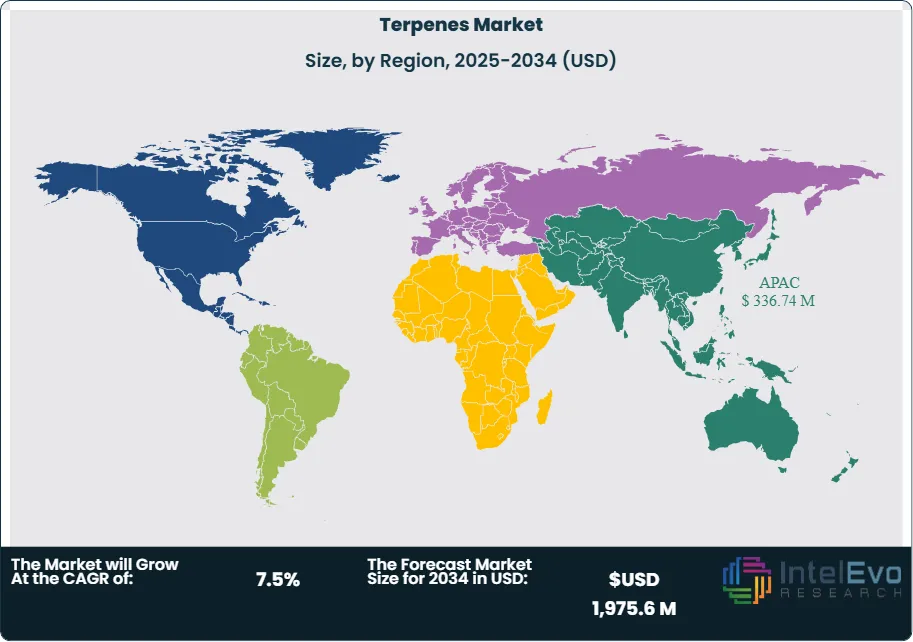
The Terpenes Market size is projected to be worth around USD 1,975.6 million by 2034, up from USD 935.4 million in 2024, growing at a CAGR of 7.5% during the forecast period from 2025 to 2034. The market is witnessing strong growth due to the increasing use of terpenes in pharmaceutical formulations, food flavoring, and cosmetics, alongside their rising popularity in natural fragrances and cannabis-derived products. The shift toward bio-based and eco-friendly ingredients continues to propel market demand globally, positioning terpenes as a key component in the sustainable chemical industry of the future.

Get More Information about this report -
Request Free Sample ReportTerpenes are naturally occurring aromatic compounds found in a wide variety of plants, especially in herbs, citrus fruits, and coniferous trees. They are primarily responsible for the distinctive scents of many plants—such as the citrusy smell of lemons or the pine aroma of evergreen trees. In nature, terpenes serve essential roles by protecting plants from predators and attracting pollinators. Beyond their ecological functions, terpenes are widely used in industries such as perfumery, aromatherapy, cosmetics, and even pharmaceuticals due to their unique fragrances and potential therapeutic properties. Some studies suggest that certain terpenes may possess anti-inflammatory, antioxidant, or calming effects, though further scientific validation is needed. Common examples include limonene, known for its citrus scent; pinene, which smells like pine; and linalool, which has a floral, lavender-like aroma. Their presence in essential oils and natural remedies has made terpenes increasingly popular among consumers seeking natural wellness solutions.
The growth dynamics of the terpenes market are influenced by a combination of rising consumer demand for natural products, expanding applications across industries, and ongoing research into their therapeutic potential. A key driver is the growing preference for natural and organic ingredients in personal care, cosmetics, food, and beverages. As consumers become more health-conscious, terpenes are increasingly favored as plant-derived flavoring and fragrance agents over synthetic alternatives. The pharmaceutical and nutraceutical sectors are also contributing significantly to market growth, fueled by studies highlighting the anti-inflammatory, antimicrobial, and antioxidant properties of various terpenes. This has led to their inclusion in wellness products, dietary supplements, and even in formulations for chronic condition management.
The Asia-Pacific region is emerging as a key player in the terpenes market, driven by rapid industrialization, growing consumer awareness of natural products, and increasing demand from the cosmetics, pharmaceuticals, and food & beverage sectors. Countries like China, India, Japan, and South Korea are leading contributors due to their strong manufacturing bases, rising health-conscious population, and growing preference for organic and herbal ingredients. The expansion of traditional medicine systems like Ayurveda and Traditional Chinese Medicine (TCM) also boosts the use of terpenes in natural remedies. Additionally, the region’s rich biodiversity provides a wide range of plant sources for terpene extraction, encouraging local production and innovation.
The COVID-19 pandemic had a mixed impact on the terpenes market. Initially, the market faced disruptions in supply chains, manufacturing, and logistics, particularly in countries heavily involved in terpene production and export, such as China and India. This led to temporary slowdowns in product availability and increased raw material costs. However, the pandemic also triggered a surge in consumer interest in natural health and wellness products, which significantly boosted demand for terpenes used in essential oils, dietary supplements, immunity boosters, and natural remedies. Their known anti-inflammatory, antimicrobial, and stress-relieving properties made terpenes popular in products aimed at managing anxiety, enhancing immunity, and supporting respiratory health—key concerns during COVID-19.

Key Takeaways:
- Market Growth: The Terpenes market is expected to reach USD 1,975.6 million by 2034, growing at a robust CAGR of 7.5%, indicating strong market expansion.
- Product type Segment Dominance: The product type segment is dominated by pinene plastics, accounting for over 40% of the market share. Pinene is a common, naturally occurring terpene found in pine trees and other plants. Available in alpha- and beta-isomers, it offers distinct aromas and is widely used in fragrances, food, and cleaning products. Its abundance and GRAS status make it a cost-effective and safe choice for manufacturers.
- Source Segment Insights: Natural terpenes, sourced from plants, fruits, and trees, are gaining popularity among eco-conscious consumers. Their organic origin and minimal environmental impact make them a preferred alternative to synthetic compounds, aligning with the growing demand for clean, sustainable products.
- Driver: Increasing consumer preference for plant-based, natural ingredients in cosmetics, personal care, food, and pharmaceuticals is fueling terpene demand. Their therapeutic benefits and aromatic properties make them highly sought after across industries.
- Restraint: The extraction of terpenes can be technically challenging and costly. Additionally, maintaining consistency and quality in natural products across large batches can be difficult, impacting scalability and product reliability.
- Opportunity: With more research validating the medicinal benefits of terpenes—such as anti-inflammatory, antimicrobial, and anti-anxiety effects—their use in pharmaceutical formulations and wellness products is expected to grow rapidly.
- Trend: Companies are investing in biotechnology to develop synthetic biology methods for terpene production, aiming for more sustainable, scalable, and high-purity products. Clean-label and eco-friendly product trends are also shaping market innovation.
- Regional Analysis: The Asia-Pacific terpenes market is growing rapidly due to rising demand for natural products in cosmetics, pharmaceuticals, and food industries. Countries like China and India lead the market, supported by traditional medicine practices, abundant plant resources, and increasing consumer preference for herbal and organic ingredients.
Product Type Analysis:
Terpenes market can be categorized by product type. These include limonene, linalool, myrcene, pinene, and others. Pinene is among the most widely occurring terpenes, naturally found in plants like pine trees, rosemary, and cannabis. Its abundance in nature makes it an economical option for manufacturers, especially since it can be sourced sustainably. There are two primary forms—alpha-pinene and beta-pinene—each offering unique scents and functional properties, making them versatile for use in perfumes, air fresheners, and flavorings. Pinene is classified as Generally Recognized As Safe (GRAS) by regulatory bodies in several countries, which simplifies its inclusion in food, cosmetic, and household products such as disinfectants and cleaning agents.
Source Analysis:
There are two categories for source: synthetic and natural. Natural terpenes, which are extracted from plants, fruits, and trees, have seen a rise in demand due to growing consumer awareness about health, sustainability, and environmental impact. These compounds are favored for their purity and absence of harsh chemicals, making them ideal for use in personal care products, food flavoring, aromatherapy, and natural cleaning solutions. As more people prioritize clean-label and eco-friendly products, natural terpenes offer a compelling solution, delivering desirable aromatic and therapeutic properties without contributing to synthetic chemical load. Their renewable nature and biodegradability further enhance their appeal, positioning them as a key component in the shift toward more sustainable, plant-based alternatives across multiple industries.
Application Insights:
Segments in this application include pharmaceuticals, food & beverage, cosmetics & personal care, and others. Consumers are increasingly gravitating toward natural and organic ingredients in their personal care routines, and terpenes have emerged as a popular choice. Derived from plants, terpenes not only serve as natural fragrance alternatives—eliminating the need for synthetic scents—but also align with the growing clean beauty movement. Beyond their aromatic appeal, terpenes provide added functional benefits, such as anti-inflammatory, antioxidant, and antimicrobial properties. These qualities make them valuable ingredients in skincare and haircare formulations, supporting healthier skin and promoting sustainable, eco-conscious cosmetic solutions.
Region Analysis:
Asia Pacific Leads With 36% Market Share in the Terpenes Market. The terpenes market in the Asia-Pacific region is experiencing significant growth, driven by rising demand across multiple industries such as cosmetics, food and beverages, pharmaceuticals, and aromatherapy. Countries like China, India, Japan, and South Korea are leading this expansion due to their strong manufacturing bases, rich biodiversity, and well-established traditional medicine systems that heavily rely on plant-based compounds like terpenes. In particular, China and India benefit from the large-scale availability of raw materials and a growing number of local and international manufacturers focusing on natural ingredients. Increasing consumer awareness regarding health, wellness, and sustainability has further fueled interest in terpene-based products, especially in personal care and therapeutic applications. The growing use of essential oils and herbal remedies in these countries also supports this trend. Moreover, government support for herbal and organic product development, rising disposable income, and a booming middle class are contributing to increased consumption of terpene-infused goods. Overall, the Asia-Pacific region is becoming a key market for terpene producers and is expected to maintain strong growth momentum in the coming years.
Get More Information about this report -
Request Free Sample ReportKey Market Segment
By Product Type
- Pinene
- Limonene
- Myrcene
- Linalool
- Beta-Caryophyllene
- Humulene
- Other Terpenes
By Source
- Natural Terpenes
- Plant-Based Terpenes
- Cannabis-Derived Terpenes
- Synthetic Terpenes
By Application
- Food & Beverages
- Pharmaceuticals
- Cosmetics & Personal Care
- Aromatherapy
- Chemicals
- Others (Agriculture, Household Products)
By End-Use Industry
- Healthcare & Pharmaceuticals
- Food & Beverage Manufacturers
- Cosmetics & Personal Care Companies
- Chemical Manufacturing
- Others
By Region
- North America
- Latin America
- East Asia And Pacific
- Sea And South Asia
- Eastern Europe
- Western Europe
- Middle East & Africa
| Report Attribute | Details |
| Market size (2025) | USD 1,005.56 M |
| Forecast Revenue (2034) | USD 1,975.6 M |
| CAGR (2025-2034) | 7.5% |
| Historical data | 2018-2023 |
| Base Year For Estimation | 2024 |
| Forecast Period | 2025-2034 |
| Report coverage | Revenue Forecast, Competitive Landscape, Market Dynamics, Growth Factors, Trends and Recent Developments |
| Segments covered | By Product Type (Pinene, Limonene, Myrcene, Linalool, Beta-Caryophyllene, Humulene, Other Terpenes), By Source (Natural Terpenes, (Plant-Based Terpenes, Cannabis-Derived Terpenes), Synthetic Terpenes), By Application (Food & Beverages, Pharmaceuticals, Cosmetics & Personal Care, Aromatherapy, Chemicals, Others (Agriculture, Household Products)), By End-Use Industry (Healthcare & Pharmaceuticals, Food & Beverage Manufacturers, Cosmetics & Personal Care Companies, Chemical Manufacturing, Others) |
| Research Methodology |
|
| Regional scope |
|
| Competitive Landscape | Symrise AG, True Terpenes, Merck KGaA, Floraplex Terpenes, Arora Aromatics Pvt. Ltd., Medical Marijuana Inc., Treatt PLC, The Archer-Daniels-Midland Company, Firmenich International SA, International Flavors & Fragrances Inc., Thermo Scientific Chemicals, True Extracts Terpenes, Isodiol International Inc., Mentha & Allied Products |
| Customization Scope | Customization for segments, region/country-level will be provided. Moreover, additional customization can be done based on the requirements. |
| Pricing and Purchase Options | Avail customized purchase options to meet your exact research needs. We have three licenses to opt for: Single User License, Multi-User License (Up to 5 Users), Corporate Use License (Unlimited User and Printable PDF). |


Select Licence Type
Connect with our sales team

Why IntelEvoResearch
100%
Customer
Satisfaction
24x7+
Availability - we are always
there when you need us
200+
Fortune 50 Companies trust
IntelEvoResearch
80%
of our reports are exclusive
and first in the industry
100%
more data
and analysis
1000+
reports published
till date
