

- Home
- Industries
 Aerospace And Defence
 Agriculture
 Automotive And Transportation
 Banking And Finance
 Business
 Chemicals And Materials
 Consumer And Retail
 Electronics And Semiconductors
 Food And Beverages
 Machinery & Equipments
 Manufacturing And Construction
 Medical Devices
 Others
 Pharmaceuticals And Healthcare
 Power And Energy
 Sports
 Technology
- Services
- News Room
- About us
- Contact Us
-
TMJ Disorders Market Size USD 2.56B | 11.2% CAGR Forecast
Global TMJ Disorders Market Size, Share & Clinical Landscape By Disorder Type, By Treatment (Medication, Orthotics, Physical Therapy, Surgery), By End User (Hospitals, Dental Clinics, Specialty Centers), Epidemiology Analysis, Regional Demand Trends, Key Players & Forecast 2025–2034

Report Overview
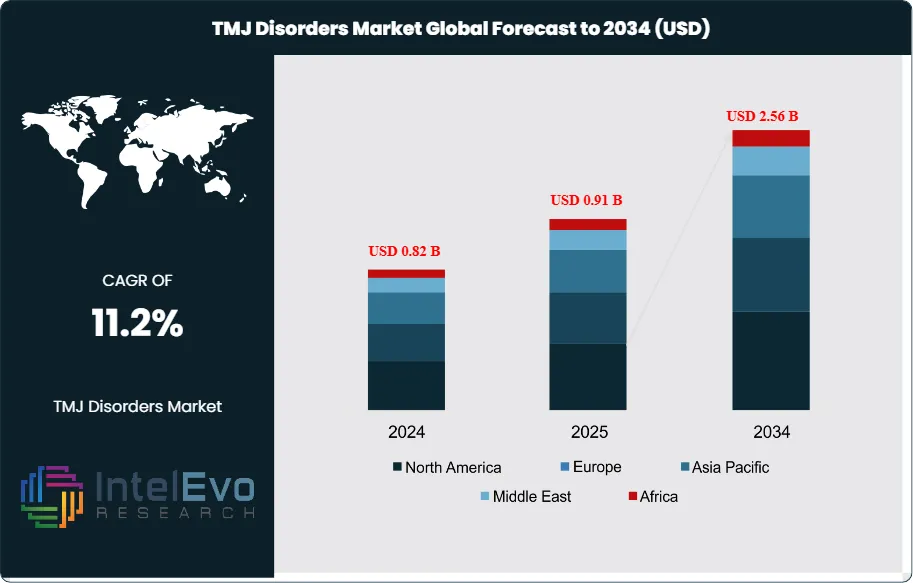
The TMJ Disorders Market is estimated at USD 0.82 billion in 2024 and is projected to reach approximately USD 2.56 billion by 2034, registering a CAGR of about 11.2% during 2025–2034. This accelerated growth reflects rising prevalence of temporomandibular joint disorders linked to stress, bruxism, and lifestyle-related jaw dysfunction, alongside improved diagnostic awareness among dental and orthopedic professionals. Expanding adoption of minimally invasive therapies, digital imaging–based diagnosis, and customized oral appliances is further strengthening market momentum. Additionally, increasing patient preference for non-surgical pain management solutions is positioning TMJ disorder treatments as a fast-growing segment within musculoskeletal and dental care markets.
Get More Information about this report -
Request Free Sample ReportThis growth underscores the escalating demand for effective diagnosis and treatment of temporomandibular disorders (TMD), a condition affecting over 5% of the global population.
TMJ disorders, which cause pain and dysfunction in the jaw joints and surrounding muscles, are the second-most common musculoskeletal condition leading to pain and disability. In the United States alone, approximately 35 million individuals suffer from TMD, with prevalence notably higher among women, particularly those aged 20–40 years. Postmenopausal women are at increased risk due to heightened vulnerability to related health conditions like heart disease and stroke, often leading to higher treatment-seeking behavior.
The market is driven by rising awareness of non-invasive and reversible treatment options, which have gained traction among patients and healthcare professionals. These approaches, which avoid surgical interventions or permanent structural changes, are particularly appealing for managing persistent yet non-debilitating cases of TMD. However, challenges such as underdiagnosis and the complex biopsychosocial nature of the disorder remain barriers to market expansion.
Technological advancements are reshaping the treatment landscape. Emerging solutions include digital diagnostic tools, personalized care delivery through AI-driven systems, and minimally invasive therapies that enhance patient outcomes. Automation in dental devices and imaging technologies is also improving the accuracy of TMD diagnosis and broadening treatment accessibility.
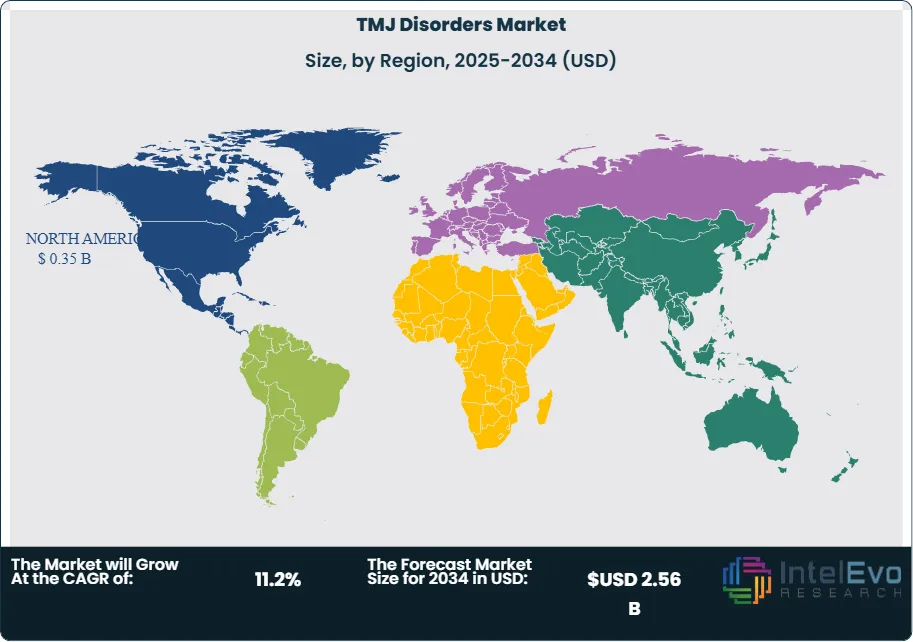
Regionally, North America leads the market due to its high disease prevalence, advanced healthcare infrastructure, and growing adoption of innovative diagnostic tools. Meanwhile, Asia-Pacific is emerging as a key growth region, driven by rising healthcare spending, increasing awareness of TMJ disorders, and significant unmet medical needs within its large population base. Investors are particularly focusing on markets such as China and India, where healthcare modernization is accelerating.
The TMJ Disorders Market’s growth trajectory reflects a combination of increasing patient awareness, technological progression, and regional dynamics, offering significant opportunities for stakeholders to address an expanding yet underserved patient base.

Key Takeaways
- Market Growth: The TMJ Disorders Market was valued at USD 0.82 billion in 2024 and is projected to reach USD 2.56 billion by 2034, growing at a CAGR of 11.2% from 2024 to 2033. Growth is driven by increasing awareness of non-invasive treatment options and rising prevalence among women.
- Type: The Myofascial Pain segment leads the market with a 42.6% share, attributed to its high prevalence and demand for targeted pain management solutions.
- Treatment: Medication accounts for the largest revenue share, contributing 53.3% of the market, as pharmaceuticals remain the primary first-line treatment for TMJ disorders.
- End-User: Ambulatory surgery centers generate 55.7% of market revenue, reflecting the growing preference for outpatient procedures due to lower costs and shorter recovery times.
- Driver: Rising disease prevalence, with TMJ disorders affecting over 35 million individuals in the U.S., coupled with advancements in diagnostic technologies, is fueling market growth.
- Restraint: Limited awareness and underdiagnosis of TMJ disorders remain significant challenges, particularly in emerging markets, reducing patient access to early treatment.
- Opportunity: The Asia-Pacific region offers high growth potential, driven by increasing healthcare expenditure, unmet medical needs, and a projected double-digit CAGR in countries like China and India.
- Trend: Adoption of AI-driven diagnostic tools and minimally invasive therapies is transforming the treatment landscape. Companies are leveraging digital technologies to improve accuracy and patient outcomes.
- Regional Analysis: North America dominates the market with a 42.9% share, generating USD 0.24 billion in revenue in 2023. Meanwhile, Asia-Pacific is emerging as a key growth region due to expanding healthcare infrastructure and increasing awareness.
Type Analysis
The TMJ Disorders Market is segmented into Myofascial Pain, Internal Derangement, and Arthritis. Among these, Myofascial Pain accounts for the largest market share at 42.6%. This condition is characterized by localized pain and tenderness in the muscles responsible for jaw movement, often caused by factors such as stress, teeth grinding, muscle tension, or trauma. Key symptoms include jaw pain, stiffness, and difficulty opening or closing the mouth, which drive demand for diagnostic and treatment solutions.
Management of Myofascial Pain typically involves a combination of medication, such as muscle relaxants, and non-invasive approaches like physical therapy, stress management techniques, and oral appliances such as splints or mouthguards. These approaches aim to alleviate discomfort and improve quality of life for patients. The dominance of this segment reflects its high prevalence and the growing awareness of its effective treatment options.
Treatment Analysis
The treatment segment is divided into Medication, Therapies, and Surgery, with Medication contributing the highest revenue share, at 53.3%. Pharmaceutical interventions, including nonsteroidal anti-inflammatory drugs (NSAIDs), muscle relaxants, and analgesics, are critical in the management of TMJ disorders. NSAIDs primarily target inflammation, while muscle relaxants reduce tension in the jaw muscles, and analgesics provide direct pain relief.
Pharmaceutical therapies remain the cornerstone of TMJ disorder management due to their accessibility and effectiveness in alleviating symptoms. Drug manufacturers are focusing on the development of targeted treatments to address specific underlying causes of TMJ-related discomfort, further solidifying the role of medication as the leading treatment option.
End-Use Analysis
End-use segmentation includes hospitals, clinics, ambulatory surgery centers (ASCs), and academic and research institutes. ASCs dominate this segment, accounting for 55.7% of market revenue. Known for their efficiency and cost-effectiveness, ASCs specialize in outpatient procedures such as arthroscopy and joint lavage, making them a preferred choice for minimally invasive TMJ treatments.
The growth of ASCs is driven by their ability to provide specialized care with shorter wait times and lower costs compared to traditional hospital settings. Equipped with advanced surgical tools and technologies, ASCs are increasingly favored by patients and healthcare providers alike, contributing significantly to the expanding landscape of TMJ disorder treatment options.
Regional Analysis
Geographically, North America leads the TMJ Disorders Market with a 42.9% share, generating USD 0.24 billion in revenue. This dominance is attributed to a high prevalence of TMJ disorders, robust healthcare infrastructure, and favorable reimbursement policies. Additionally, ongoing advancements in both surgical and non-surgical treatments have bolstered the region's market position.
Asia-Pacific is emerging as a growth hotspot due to rising healthcare investments, increasing awareness of TMJ disorders, and significant unmet medical needs in densely populated countries like China and India. With healthcare modernization and growing adoption of advanced diagnostic techniques, the region is expected to witness strong growth over the forecast period, offering lucrative opportunities for market participants.
Get More Information about this report -
Request Free Sample ReportMarket Key Segments
Type
- Myofacial Pain
- Intemal Derangement
- Arthritis
Treatment
- Medication
- Therapies
- Surgery
End-User
- Hospitals
- Clinics
- Ambulatory Surgery Centers
- Academic and Research Institutes
Regions
- North America
- Latin America
- East Asia And Pacific
- Sea And South Asia
- Eastern Europe
- Western Europe
- Middle East & Africa
| Report Attribute | Details |
| Market size (2024) | USD 0.82 B |
| Forecast Revenue (2034) | USD 2.56 B |
| CAGR (2024-2034) | 11.2% |
| Historical data | 2018-2023 |
| Base Year For Estimation | 2024 |
| Forecast Period | 2025-2034 |
| Report coverage | Revenue Forecast, Competitive Landscape, Market Dynamics, Growth Factors, Trends and Recent Developments |
| Segments covered | Type (Myofacial Pain, Intemal Derangement, Arthritis), Treatment (Medication, Therapies, Surgery), End-User (Hospitals, Clinics, Ambulatory Surgery Centers, Academic and Research Institutes) |
| Research Methodology |
|
| Regional scope |
|
| Competitive Landscape | Abbott Laboratories Inc, Teva Pharmaceutical Industries Ltd, Jubilant Life Sciences Limited, Sun Pharmaceutical Industries Ltd, Bristol-Myers Squibb Company, Allergan Inc., Novartis International AG, Bayer International AG, Zydus Cadila |
| Customization Scope | Customization for segments, region/country-level will be provided. Moreover, additional customization can be done based on the requirements. |
| Pricing and Purchase Options | Avail customized purchase options to meet your exact research needs. We have three licenses to opt for: Single User License, Multi-User License (Up to 5 Users), Corporate Use License (Unlimited User and Printable PDF). |


Select Licence Type
Connect with our sales team

Why IntelEvoResearch
100%
Customer
Satisfaction
24x7+
Availability - we are always
there when you need us
200+
Fortune 50 Companies trust
IntelEvoResearch
80%
of our reports are exclusive
and first in the industry
100%
more data
and analysis
1000+
reports published
till date
