
Global Vegan Pet Food Market Size, Share & Industry Analysis By Form (Organic, Conventional), By Pet Type (Dog, Puppy, Adult, Senior, Cat, Kitten, Birds, Others), By Product Type (Dry Pet Food, Wet Pet Food, Treats & Snacks), By Distribution Channel (Supermarkets & Hypermarkets, Specialty Stores, Online Sales) Industry Region & Key Players – Segment Overview, Market Drivers, Restraints, Competitive Strategies, Emerging Trends & Forecast 2025–2034
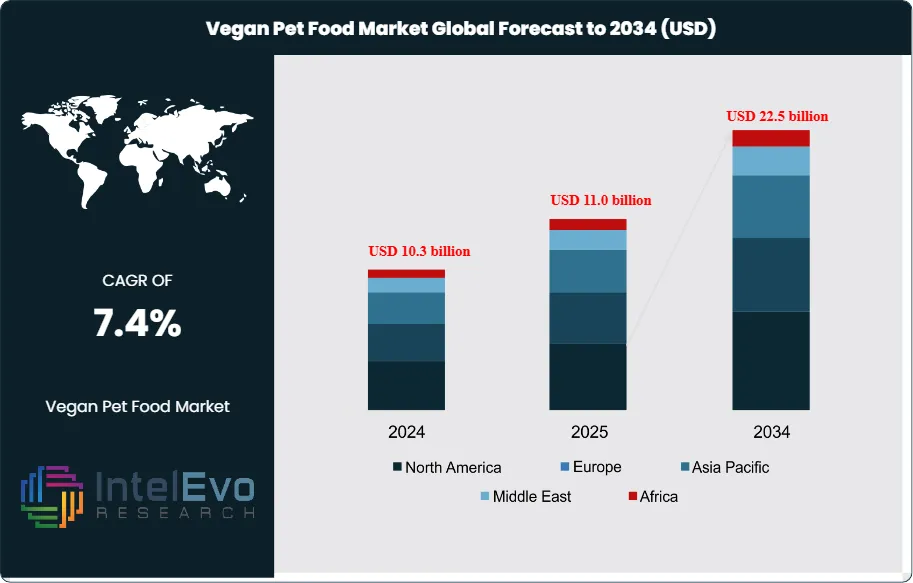
The Vegan Pet Food Market is valued at approximately USD 11.0 billion in 2025 and is projected to reach around USD 22.5 billion by 2034, expanding at a compound annual growth rate (CAGR) of about 7.4% during the forecast period from 2026 to 2034. Market growth is driven by rising pet humanization trends, increasing adoption of plant-based lifestyles among pet owners, and growing awareness of sustainability and ethical sourcing in pet nutrition. In addition, advancements in plant-based protein formulations, improved nutritional completeness, and expanding availability through online and specialty retail channels are accelerating adoption, positioning the market for strong and sustained global expansion. This expansion reflects a steady shift in pet nutrition toward plant-based formulations aligned with health, environmental, and ethical priorities among pet owners.
Vegan pet food consists of plant-based recipes that replace meat, dairy, and other animal inputs with legumes, grains, vegetables, oils, and synthetic amino acids to achieve complete and balanced nutrition. Demand rises as more pets present allergies and intolerances linked to traditional animal-based proteins, pushing households toward hypoallergenic diets. Growth in human vegan and flexitarian eating patterns reinforces this trend, as owners extend personal values and wellness preferences to companion animals.
Capital flows into plant-based and alternative-protein pet food ventures underscore the market’s evolution. Startups such as OMNI in the United Kingdom, which raised €1.3 million in 2022, and Good Dog Food, which secured about £3.6 million (USD 4.5 million) in seed funding in 2023, illustrate growing investor interest. Munich-based Vegdog attracted €3.5 million in 2021 to scale nutritionally complete vegan dog food, while Scrumbles received around £6 million (USD 7.3 million) in 2023 to expand plant-based dog food offerings. Producers increasingly use AI-driven formulation tools, precision nutrition analytics, and automated manufacturing to optimize amino acid profiles, digestibility, and palatability while controlling costs.
On the supply side, producers face challenges around ingredient price volatility, protein quality assurance, and strict compliance with pet food safety and labeling rules. Regulatory agencies closely monitor claims around “complete” and “balanced” nutrition, which raises entry barriers but also builds trust in accredited brands. Digitalization reshapes go-to-market strategies, as direct-to-consumer channels, online subscription models, and data-driven recommendation engines allow brands to target niche segments such as allergy-prone dogs or environmentally conscious urban owners.
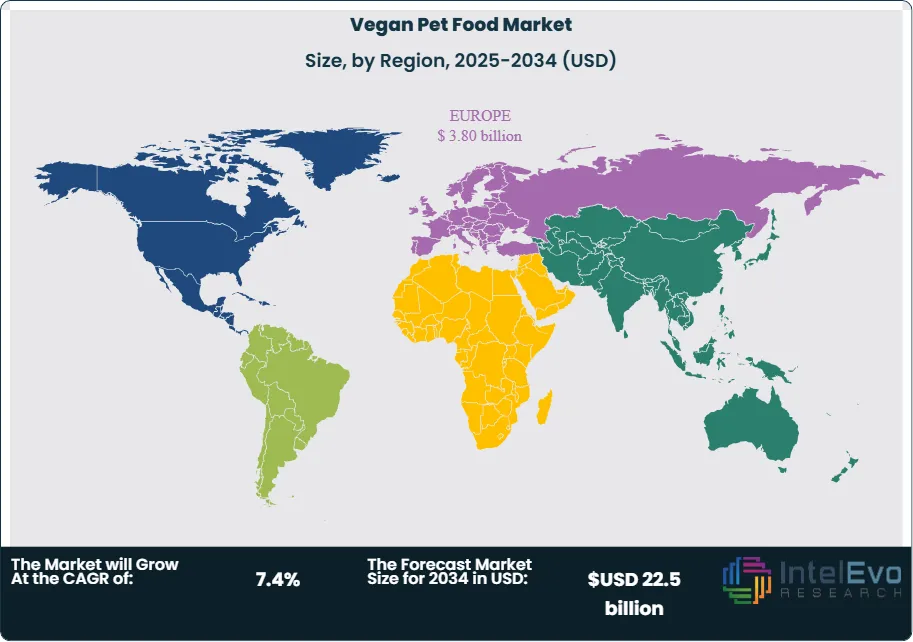
Regionally, Europe leads with an estimated USD 3.8 billion in revenue and about 36.9% share in 2024, supported by high pet humanization, strong retail penetration of vegan products, and stricter environmental policies. North America follows with a sizeable premium segment and active venture funding into alternative proteins. Asia Pacific is likely to post the fastest growth through 2034, driven by rising pet ownership, expanding middle-class incomes, and rapid adoption of e-commerce, making it an emerging hotspot for strategic investment and brand expansion.
Market Growth: The global vegan pet food market stands at 10.3 billion USD, 2024; USD 11.0 billion in 2025 and is projected to reach 22.5 billion USD, 2034, delivering a 7.4% CAGR, 2026-2034.
Segment Dominance: Conventional vegan pet food commands a 63.2% share, 2024, confirming strong preference for familiar formulations. This segment generates estimated: 6.5 billion USD, 2024 in revenue tied to established product formats.
Segment Dominance: Dogs represent 72.3% share, 2024 of vegan pet food demand, underscoring the focus on canine nutrition. This dominance corresponds to estimate: 7.4 billion USD, 2024 in dog-specific vegan offerings.
Driver: Dry vegan pet food holds 56.2% share, 2024 of category sales as buyers prioritize convenience, shelf life, and storage efficiency. This format contributes estimated: 5.8 billion USD, 2024 to global revenues.
Restraint: Supermarkets and hypermarkets account for 48.2% share, 2024 of vegan pet food distribution, reinforcing dependence on large retail chains. The remaining estimated: 51.8% share, 2024 disperses across online, specialty, and independent outlets, limiting visibility in some markets.
Opportunity: Expanding digital and specialty retail channels could unlock estimated: 3.0 billion USD, 2030 in incremental vegan pet food sales. This expansion would build on the 10.3 billion USD, 2024 baseline and support diversification beyond conventional formats.
Trend: Plant-based formulations continue to gain traction, with vegan products projected to reach estimated: 5.0% share of the global pet food market, 2030. This momentum aligns with a 6.7% CAGR, 2024-2034 in the vegan pet food segment.
Regional Analysis: Europe leads with 3.8 billion USD, 2024 in vegan pet food revenue and a 36.9% share, 2024, reflecting strong adoption and retail penetration. High-growth regions such as Asia Pacific are expected to add estimated: 2.0 billion USD, 2034 in new demand over 2024-2034.
By Form
Conventional vegan pet food maintains the largest share of global demand. In 2025, conventional formats account for about 63.2 percent of total sales due to well-established production systems and broad consumer familiarity. Brands continue to scale these lines with plant-based proteins sourced from peas, lentils, soy, and other legumes. Conventional formulas remain widely available across retail channels, which supports consistent adoption in both mature and developing markets.
Growth in this segment is tied to rising concerns about food sensitivities and digestive complications in pets. Many owners are shifting to plant-based diets to address allergies, weight management, and long-term health conditions. Sustainability also plays a central role as households aim to reduce the footprint associated with traditional meat-based pet food. As a result, you see steady interest in products that meet nutritional standards while aligning with environmental values.
The outlook points to further improvement in nutrient composition, especially amino acid fortification and enhanced texture. Companies are working with veterinarians and pet nutrition experts to increase acceptance among pets and reassure owners about adequacy. Expansion in price-sensitive regions is expected as supply chains stabilize and distribution networks broaden.
By Pet Type
Dogs represent the highest share of vegan pet food consumption. In 2025, dogs account for roughly 72.3 percent of global demand. Their omnivorous nature supports easier adaptation to plant-based diets compared to cats, and this has encouraged manufacturers to advance protein blends and balanced formulations targeted at canine needs.
The category benefits from rising cases of food allergies, skin issues, and digestive concerns in dogs. Many owners view plant-based diets as a controlled solution to reduce exposure to certain animal proteins. You also see wider availability of fortified recipes that include taurine, carnitine, and omega fatty acids to support long-term health. These additions help reinforce consumer confidence and expand adoption across urban markets.
Future growth will depend on flavor improvement, palatability research, and premium offerings for puppies, adult dogs, and seniors. Companies that invest in clinical validation and vet-endorsed product ranges are positioned to strengthen share as the market matures.
By Product Type
Dry vegan pet food continues to lead global sales. In 2025, dry formats represent about 56.2 percent of the market. Owners prefer dry kibble for its ease of storage, long shelf life, and compatibility with automated feeders. Brands are also adding fortified nutrients and refined plant-based proteins to address health needs without compromising texture.
Demand rises as more households adopt sustainable and health-focused feeding routines. Dry formats remain widely stocked in supermarkets, specialty stores, and major e-commerce channels. This consistent retail presence strengthens buyer confidence and encourages repeat purchases.
The segment outlook highlights opportunities in premium blends, expanded protein sources, and flavor development. Some companies are testing emerging plant-based ingredients to improve digestibility and support new product tiers. Growth in emerging regions will rely on education campaigns and broader distribution through both online and physical retail chains.
By Distribution Channel
Supermarkets and hypermarkets remain the primary distribution points for vegan pet food. In 2025, these outlets hold about 48.2 percent of global sales. Their broad reach and competitive pricing attract buyers who prefer to compare products in person. Retail chains are increasing shelf space for plant-based pet food as interest in sustainable diets grows.
These stores offer clear labeling, ingredient comparisons, and promotional pricing that influence purchasing decisions. Many major retailers have introduced private-label vegan pet food lines, which appeal to cost-conscious households. The visibility of these products contributes to steady category expansion.
Growth opportunities include stronger in-store displays, retailer-brand partnerships, and tailored assortments for high-volume regions. Companies focused on exclusive supermarket placements and education-driven promotions can strengthen brand recognition and accelerate adoption.
By Region
Europe continues to lead the market in 2025, maintaining a share of about 36.9 percent and a value near 3.8 billion USD. High awareness of plant-based diets, stringent sustainability policies, and a strong retail ecosystem support adoption. Many pet owners in the region cite ethical and environmental considerations as primary factors in switching to vegan diets. The presence of established brands and specialty retailers reinforces market stability.
North America follows with strong demand driven by health-focused consumers and high spending on premium pet food. The United States remains a key market with a growing base of pet parents seeking plant-based formulas to address allergies and chronic conditions. Broad distribution across supermarkets and online channels contributes to consistent growth.
Asia Pacific shows the fastest long-term potential. Rising incomes, expanding pet ownership, and improving retail access support adoption in markets such as China, Japan, and Australia. Latin America and the Middle East and Africa remain in the early adoption stage. Urbanization and rising awareness of pet nutrition will support gradual expansion, especially as brands strengthen distribution networks and introduce affordable product lines.
By Form, (Organic, Conventional), By Pet Type, (Cat, Kitten, Senior, Dog, Puppy, Adult, Senior, Birds, Others), By Product Type, (Dry Pet Food, Wet Pet Food, Treats and Snacks, Others), By Distribution Channel, (Supermarket/Hypermarket, Specialty Stores, Online Sales Channel, Others)
Research Methodology
Primary Research- 100 Interviews of Stakeholders
Secondary Research
Desk Research
Regional scope
North America (United States, Canada, Mexico)
Latin America (Brazil, Argentina, Columbia)
East Asia And Pacific (China, Japan, South Korea, Australia, Cambodia, Fiji, Indonesia)
Sea And South Asia (India, Singapore, Thailand, Taiwan, Malaysia)
Eastern Europe (Poland, Russia, Czech Republic, Romania)
Western Europe (Germany, U.K., France, Spain, Itlay)
Middle East & Africa (GCC Countries, Egypt, Nigeria, South Africa, Israel)
Competitive Landscape
Soopa Pets, Vegeco Ltd., Antos B.V., YARRAH, Bond Pet Foods, Inc., FreshWoof – Urban Tails Pvt. Ltd., V-dog, Inc., My Aistra, Ami Planet Srl, Wild Earth Inc., Halo Pets, Anything Vegan Private Limited, THE PACK PET LIMITED, Isoropimene Zootrofe Georgios Tsappis Ltd., Benevo, Compassion Circle, Inc.
Customization Scope
Customization for segments, region/country-level will be provided. Moreover, additional customization can be done based on the requirements.
Pricing and Purchase Options
Avail customized purchase options to meet your exact research needs. We have three licenses to opt for: Single User License, Multi-User License (Up to 5 Users), Corporate Use License (Unlimited User and Printable PDF).
TABLE OF CONTENTS
1. EXECUTIVE SUMMARY
1.1. MARKET SNAPSHOT
1.2. KEY FINDINGS & INSIGHTS
1.3. ANALYST RECOMMENDATIONS
1.4. FUTURE OUTLOOK
2. RESEARCH METHODOLOGY
2.1. MARKET DEFINITION & SCOPE
2.2. RESEARCH OBJECTIVES: PRIMARY & SECONDARY DATA SOURCES
2.3. DATA COLLECTION SOURCES
2.3.1. COVERAGE OF 100+ PRIMARY RESEARCH/CONSULTATION CALLS WITH INDUSTRY STAKEHOLDERS
FIGURE 17 NORTH AMERICA VEGAN PET FOOD CURRENT AND FUTURE TYPE ANALYSIS, 2025–2034, (USD MILLION)
FIGURE 18 NORTH AMERICA VEGAN PET FOOD CURRENT AND FUTURE END USER ANALYSIS, 2025–2034, (USD MILLION)
FIGURE 19 MARKET SHARE BY COUNTRY
FIGURE 20 LATIN AMERICA VEGAN PET FOOD CURRENT AND FUTURE TYPE ANALYSIS, 2025–2034, (USD MILLION)
FIGURE 21 LATIN AMERICA VEGAN PET FOOD CURRENT AND FUTURE END USER ANALYSIS, 2025–2034, (USD MILLION)
FIGURE 22 MARKET SHARE BY COUNTRY
FIGURE 23 EASTERN EUROPE VEGAN PET FOOD CURRENT AND FUTURE TYPE ANALYSIS, 2025–2034, (USD MILLION)
FIGURE 24 EASTERN EUROPE VEGAN PET FOOD CURRENT AND FUTURE END USER ANALYSIS, 2025–2034, (USD MILLION)
FIGURE 25 MARKET SHARE BY COUNTRY
FIGURE 26 WESTERN EUROPE VEGAN PET FOOD CURRENT AND FUTURE TYPE ANALYSIS, 2025–2034, (USD MILLION)
FIGURE 27 WESTERN EUROPE VEGAN PET FOOD CURRENT AND FUTURE END USER ANALYSIS, 2025–2034, (USD MILLION)
FIGURE 28 MARKET SHARE BY COUNTRY
FIGURE 29 EAST ASIA AND PACIFIC VEGAN PET FOOD CURRENT AND FUTURE TYPE ANALYSIS, 2025–2034, (USD MILLION)
FIGURE 30 EAST ASIA AND PACIFIC VEGAN PET FOOD CURRENT AND FUTURE END USER ANALYSIS, 2025–2034, (USD MILLION)
FIGURE 31 MARKET SHARE BY COUNTRY
FIGURE 32 SEA AND SOUTH ASIA VEGAN PET FOOD CURRENT AND FUTURE TYPE ANALYSIS, 2025–2034, (USD MILLION)
FIGURE 33 SEA AND SOUTH ASIA VEGAN PET FOOD CURRENT AND FUTURE END USER ANALYSIS, 2025–2034, (USD MILLION)
FIGURE 34 MARKET SHARE BY COUNTRY
FIGURE 35 MIDDLE EAST AND AFRICA VEGAN PET FOOD CURRENT AND FUTURE TYPE ANALYSIS, 2025–2034, (USD MILLION)
FIGURE 36 MIDDLE EAST AND AFRICA VEGAN PET FOOD CURRENT AND FUTURE END USER ANALYSIS, 2025–2034, (USD MILLION)
FIGURE 37 NORTH AMERICA VEGAN PET FOOD CURRENT AND FUTURE MARKET VOLUME SHARE REGIONAL ANALYSIS, 2025–2034, (USD MILLION)
FIGURE 38 U.S. VEGAN PET FOOD CURRENT AND FUTURE TYPE ANALYSIS, 2025–2034, (USD MILLION)
FIGURE 39 U.S. VEGAN PET FOOD CURRENT AND FUTURE END USER ANALYSIS, 2025–2034, (USD MILLION)
FIGURE 40 CANADA VEGAN PET FOOD CURRENT AND FUTURE TYPE ANALYSIS, 2025–2034, (USD MILLION)
FIGURE 41 CANADA VEGAN PET FOOD CURRENT AND FUTURE END USER ANALYSIS, 2025–2034, (USD MILLION)
FIGURE 42 LATIN AMERICA VEGAN PET FOOD CURRENT AND FUTURE MARKET VOLUME SHARE REGIONAL ANALYSIS, 2025–2034, (USD MILLION)
FIGURE 43 MEXICO VEGAN PET FOOD CURRENT AND FUTURE TYPE ANALYSIS, 2025–2034, (USD MILLION)
FIGURE 44 MEXICO VEGAN PET FOOD CURRENT AND FUTURE END USER ANALYSIS, 2025–2034, (USD MILLION)
FIGURE 45 BRAZIL VEGAN PET FOOD CURRENT AND FUTURE TYPE ANALYSIS, 2025–2034, (USD MILLION)
FIGURE 46 BRAZIL VEGAN PET FOOD CURRENT AND FUTURE END USER ANALYSIS, 2025–2034, (USD MILLION)
FIGURE 47 ARGENTINA VEGAN PET FOOD CURRENT AND FUTURE TYPE ANALYSIS, 2025–2034, (USD MILLION)
FIGURE 48 ARGENTINA VEGAN PET FOOD CURRENT AND FUTURE END USER ANALYSIS, 2025–2034, (USD MILLION)
FIGURE 49 COLUMBIA VEGAN PET FOOD CURRENT AND FUTURE TYPE ANALYSIS, 2025–2034, (USD MILLION)
FIGURE 50 COLUMBIA VEGAN PET FOOD CURRENT AND FUTURE END USER ANALYSIS, 2025–2034, (USD MILLION)
FIGURE 51 REST OF LATIN AMERICA VEGAN PET FOOD CURRENT AND FUTURE TYPE ANALYSIS, 2025–2034, (USD MILLION)
FIGURE 52 REST OF LATIN AMERICA VEGAN PET FOOD CURRENT AND FUTURE END USER ANALYSIS, 2025–2034, (USD MILLION)
FIGURE 53 EASTERN EUROPE VEGAN PET FOOD CURRENT AND FUTURE MARKET VOLUME SHARE REGIONAL ANALYSIS, 2025–2034, (USD MILLION)
FIGURE 54 POLAND VEGAN PET FOOD CURRENT AND FUTURE TYPE ANALYSIS, 2025–2034, (USD MILLION)
FIGURE 55 POLAND VEGAN PET FOOD CURRENT AND FUTURE END USER ANALYSIS, 2025–2034, (USD MILLION)
FIGURE 56 RUSSIA VEGAN PET FOOD CURRENT AND FUTURE TYPE ANALYSIS, 2025–2034, (USD MILLION)
FIGURE 57 RUSSIA VEGAN PET FOOD CURRENT AND FUTURE END USER ANALYSIS, 2025–2034, (USD MILLION)
FIGURE 58 CZECH REPUBLIC VEGAN PET FOOD CURRENT AND FUTURE TYPE ANALYSIS, 2025–2034, (USD MILLION)
FIGURE 59 CZECH REPUBLIC VEGAN PET FOOD CURRENT AND FUTURE END USER ANALYSIS, 2025–2034, (USD MILLION)
FIGURE 60 ROMANIA VEGAN PET FOOD CURRENT AND FUTURE TYPE ANALYSIS, 2025–2034, (USD MILLION)
FIGURE 61 ROMANIA VEGAN PET FOOD CURRENT AND FUTURE END USER ANALYSIS, 2025–2034, (USD MILLION)
FIGURE 62 REST OF EASTERN EUROPE VEGAN PET FOOD CURRENT AND FUTURE TYPE ANALYSIS, 2025–2034, (USD MILLION)
FIGURE 63 REST OF EASTERN EUROPE VEGAN PET FOOD CURRENT AND FUTURE END USER ANALYSIS, 2025–2034, (USD MILLION)
FIGURE 64 WESTERN EUROPE VEGAN PET FOOD CURRENT AND FUTURE MARKET VOLUME SHARE REGIONAL ANALYSIS, 2025–2034, (USD MILLION)
FIGURE 65 GERMANY VEGAN PET FOOD CURRENT AND FUTURE TYPE ANALYSIS, 2025–2034, (USD MILLION)
FIGURE 66 GERMANY VEGAN PET FOOD CURRENT AND FUTURE END USER ANALYSIS, 2025–2034, (USD MILLION)
FIGURE 67 FRANCE VEGAN PET FOOD CURRENT AND FUTURE TYPE ANALYSIS, 2025–2034, (USD MILLION)
FIGURE 68 FRANCE VEGAN PET FOOD CURRENT AND FUTURE END USER ANALYSIS, 2025–2034, (USD MILLION)
FIGURE 69 UK VEGAN PET FOOD CURRENT AND FUTURE TYPE ANALYSIS, 2025–2034, (USD MILLION)
FIGURE 70 UK VEGAN PET FOOD CURRENT AND FUTURE END USER ANALYSIS, 2025–2034, (USD MILLION)
FIGURE 71 SPAIN VEGAN PET FOOD CURRENT AND FUTURE TYPE ANALYSIS, 2025–2034, (USD MILLION)
FIGURE 72 SPAIN VEGAN PET FOOD CURRENT AND FUTURE END USER ANALYSIS, 2025–2034, (USD MILLION)
FIGURE 73 ITALY VEGAN PET FOOD CURRENT AND FUTURE TYPE ANALYSIS, 2025–2034, (USD MILLION)
FIGURE 74 ITALY VEGAN PET FOOD CURRENT AND FUTURE END USER ANALYSIS, 2025–2034, (USD MILLION)
FIGURE 75 REST OF WESTERN EUROPE VEGAN PET FOOD CURRENT AND FUTURE TYPE ANALYSIS, 2025–2034, (USD MILLION)
FIGURE 76 REST OF WESTERN EUROPE VEGAN PET FOOD CURRENT AND FUTURE END USER ANALYSIS, 2025–2034, (USD MILLION)
FIGURE 77 EAST ASIA AND PACIFIC VEGAN PET FOOD CURRENT AND FUTURE MARKET VOLUME SHARE REGIONAL ANALYSIS, 2025–2034, (USD MILLION)
FIGURE 78 CHINA VEGAN PET FOOD CURRENT AND FUTURE TYPE ANALYSIS, 2025–2034, (USD MILLION)
FIGURE 79 CHINA VEGAN PET FOOD CURRENT AND FUTURE END USER ANALYSIS, 2025–2034, (USD MILLION)
FIGURE 80 JAPAN VEGAN PET FOOD CURRENT AND FUTURE TYPE ANALYSIS, 2025–2034, (USD MILLION)
FIGURE 81 JAPAN VEGAN PET FOOD CURRENT AND FUTURE END USER ANALYSIS, 2025–2034, (USD MILLION)
FIGURE 82 AUSTRALIA VEGAN PET FOOD CURRENT AND FUTURE TYPE ANALYSIS, 2025–2034, (USD MILLION)
FIGURE 83 AUSTRALIA VEGAN PET FOOD CURRENT AND FUTURE END USER ANALYSIS, 2025–2034, (USD MILLION)
FIGURE 84 CAMBODIA VEGAN PET FOOD CURRENT AND FUTURE TYPE ANALYSIS, 2025–2034, (USD MILLION)
FIGURE 85 CAMBODIA VEGAN PET FOOD CURRENT AND FUTURE END USER ANALYSIS, 2025–2034, (USD MILLION)
FIGURE 86 FIJI VEGAN PET FOOD CURRENT AND FUTURE TYPE ANALYSIS, 2025–2034, (USD MILLION)
FIGURE 87 FIJI VEGAN PET FOOD CURRENT AND FUTURE END USER ANALYSIS, 2025–2034, (USD MILLION)
FIGURE 88 INDONESIA VEGAN PET FOOD CURRENT AND FUTURE TYPE ANALYSIS, 2025–2034, (USD MILLION)
FIGURE 89 INDONESIA VEGAN PET FOOD CURRENT AND FUTURE END USER ANALYSIS, 2025–2034, (USD MILLION)
FIGURE 90 SOUTH KOREA VEGAN PET FOOD CURRENT AND FUTURE TYPE ANALYSIS, 2025–2034, (USD MILLION)
FIGURE 91 SOUTH KOREA VEGAN PET FOOD CURRENT AND FUTURE END USER ANALYSIS, 2025–2034, (USD MILLION)
FIGURE 92 REST OF EAST ASIA AND PACIFIC VEGAN PET FOOD CURRENT AND FUTURE TYPE ANALYSIS, 2025–2034, (USD MILLION)
FIGURE 93 REST OF EAST ASIA AND PACIFIC VEGAN PET FOOD CURRENT AND FUTURE END USER ANALYSIS, 2025–2034, (USD MILLION)
FIGURE 94 SEA AND SOUTH ASIA VEGAN PET FOOD CURRENT AND FUTURE MARKET VOLUME SHARE REGIONAL ANALYSIS, 2025–2034, (USD MILLION)
FIGURE 95 BANGLADESH VEGAN PET FOOD CURRENT AND FUTURE TYPE ANALYSIS, 2025–2034, (USD MILLION)
FIGURE 96 BANGLADESH VEGAN PET FOOD CURRENT AND FUTURE END USER ANALYSIS, 2025–2034, (USD MILLION)
FIGURE 97 NEW ZEALAND VEGAN PET FOOD CURRENT AND FUTURE TYPE ANALYSIS, 2025–2034, (USD MILLION)
FIGURE 98 NEW ZEALAND VEGAN PET FOOD CURRENT AND FUTURE END USER ANALYSIS, 2025–2034, (USD MILLION)
FIGURE 99 INDIA VEGAN PET FOOD CURRENT AND FUTURE TYPE ANALYSIS, 2025–2034, (USD MILLION)
FIGURE 100 INDIA VEGAN PET FOOD CURRENT AND FUTURE END USER ANALYSIS, 2025–2034, (USD MILLION)
FIGURE 101 SINGAPORE VEGAN PET FOOD CURRENT AND FUTURE TYPE ANALYSIS, 2025–2034, (USD MILLION)
FIGURE 102 SINGAPORE VEGAN PET FOOD CURRENT AND FUTURE END USER ANALYSIS, 2025–2034, (USD MILLION)
FIGURE 103 THAILAND VEGAN PET FOOD CURRENT AND FUTURE TYPE ANALYSIS, 2025–2034, (USD MILLION)
FIGURE 104 THAILAND VEGAN PET FOOD CURRENT AND FUTURE END USER ANALYSIS, 2025–2034, (USD MILLION)
FIGURE 105 TAIWAN VEGAN PET FOOD CURRENT AND FUTURE TYPE ANALYSIS, 2025–2034, (USD MILLION)
FIGURE 106 TAIWAN VEGAN PET FOOD CURRENT AND FUTURE END USER ANALYSIS, 2025–2034, (USD MILLION)
FIGURE 107 MALAYSIA VEGAN PET FOOD CURRENT AND FUTURE TYPE ANALYSIS, 2025–2034, (USD MILLION)
FIGURE 108 MALAYSIA VEGAN PET FOOD CURRENT AND FUTURE END USER ANALYSIS, 2025–2034, (USD MILLION)
FIGURE 109 REST OF SEA AND SOUTH ASIA VEGAN PET FOOD CURRENT AND FUTURE TYPE ANALYSIS, 2025–2034, (USD MILLION)
FIGURE 110 REST OF SEA AND SOUTH ASIA VEGAN PET FOOD CURRENT AND FUTURE END USER ANALYSIS, 2025–2034, (USD MILLION)
FIGURE 111 MIDDLE EAST AND AFRICA VEGAN PET FOOD CURRENT AND FUTURE MARKET VOLUME SHARE REGIONAL ANALYSIS, 2025–2034, (USD MILLION)
FIGURE 112 GCC COUNTRIES VEGAN PET FOOD CURRENT AND FUTURE TYPE ANALYSIS, 2025–2034, (USD MILLION)
FIGURE 113 GCC COUNTRIES VEGAN PET FOOD CURRENT AND FUTURE END USER ANALYSIS, 2025–2034, (USD MILLION)
FIGURE 114 SAUDI ARABIA VEGAN PET FOOD CURRENT AND FUTURE TYPE ANALYSIS, 2025–2034, (USD MILLION)
FIGURE 115 SAUDI ARABIA VEGAN PET FOOD CURRENT AND FUTURE END USER ANALYSIS, 2025–2034, (USD MILLION)
FIGURE 116 UAE VEGAN PET FOOD CURRENT AND FUTURE TYPE ANALYSIS, 2025–2034, (USD MILLION)
FIGURE 117 UAE VEGAN PET FOOD CURRENT AND FUTURE END USER ANALYSIS, 2025–2034, (USD MILLION)
FIGURE 118 BAHRAIN VEGAN PET FOOD CURRENT AND FUTURE TYPE ANALYSIS, 2025–2034, (USD MILLION)
FIGURE 119 BAHRAIN VEGAN PET FOOD CURRENT AND FUTURE END USER ANALYSIS, 2025–2034, (USD MILLION)
FIGURE 120 KUWAIT VEGAN PET FOOD CURRENT AND FUTURE TYPE ANALYSIS, 2025–2034, (USD MILLION)
FIGURE 121 KUWAIT VEGAN PET FOOD CURRENT AND FUTURE END USER ANALYSIS, 2025–2034, (USD MILLION)
FIGURE 122 OMAN VEGAN PET FOOD CURRENT AND FUTURE TYPE ANALYSIS, 2025–2034, (USD MILLION)
FIGURE 123 OMAN VEGAN PET FOOD CURRENT AND FUTURE END USER ANALYSIS, 2025–2034, (USD MILLION)
FIGURE 124 QATAR VEGAN PET FOOD CURRENT AND FUTURE TYPE ANALYSIS, 2025–2034, (USD MILLION)
FIGURE 125 QATAR VEGAN PET FOOD CURRENT AND FUTURE END USER ANALYSIS, 2025–2034, (USD MILLION)
FIGURE 126 EGYPT VEGAN PET FOOD CURRENT AND FUTURE TYPE ANALYSIS, 2025–2034, (USD MILLION)
FIGURE 127 EGYPT VEGAN PET FOOD CURRENT AND FUTURE END USER ANALYSIS, 2025–2034, (USD MILLION)
FIGURE 128 NIGERIA VEGAN PET FOOD CURRENT AND FUTURE TYPE ANALYSIS, 2025–2034, (USD MILLION)
FIGURE 129 NIGERIA VEGAN PET FOOD CURRENT AND FUTURE END USER ANALYSIS, 2025–2034, (USD MILLION)
FIGURE 130 SOUTH AFRICA VEGAN PET FOOD CURRENT AND FUTURE TYPE ANALYSIS, 2025–2034, (USD MILLION)
FIGURE 131 SOUTH AFRICA VEGAN PET FOOD CURRENT AND FUTURE END USER ANALYSIS, 2025–2034, (USD MILLION)
FIGURE 132 ISRAEL VEGAN PET FOOD CURRENT AND FUTURE TYPE ANALYSIS, 2025–2034, (USD MILLION)
FIGURE 133 ISRAEL VEGAN PET FOOD CURRENT AND FUTURE END USER ANALYSIS, 2025–2034, (USD MILLION)
FIGURE 134 REST OF MEA VEGAN PET FOOD CURRENT AND FUTURE TYPE ANALYSIS, 2025–2034, (USD MILLION)
FIGURE 135 REST OF MEA VEGAN PET FOOD CURRENT AND FUTURE END USER ANALYSIS, 2025–2034, (USD MILLION)
FIGURE 136 U. S. MARKET SHARE ANALYSIS BY TYPE (2024)
FIGURE 137 U. S. MARKET SHARE ANALYSIS BY END USER (2024)
FIGURE 138 CANADA MARKET SHARE ANALYSIS BY TYPE (2024)
FIGURE 139 CANADA MARKET SHARE ANALYSIS BY END USER (2024)
FIGURE 140 MEXICO MARKET SHARE ANALYSIS BY TYPE (2024)
FIGURE 141 MEXICO MARKET SHARE ANALYSIS BY END USER (2024)
FIGURE 142 CHINA MARKET SHARE ANALYSIS BY TYPE (2024)
FIGURE 143 CHINA MARKET SHARE ANALYSIS BY END USER (2024)
FIGURE 144 JAPAN MARKET SHARE ANALYSIS BY TYPE (2024)
FIGURE 145 JAPAN MARKET SHARE ANALYSIS BY END USER (2024)
FIGURE 146 INDIA MARKET SHARE ANALYSIS BY TYPE (2024)
FIGURE 147 INDIA MARKET SHARE ANALYSIS BY END USER (2024)
FIGURE 148 SOUTH KOREA MARKET SHARE ANALYSIS BY TYPE (2024)
FIGURE 149 SOUTH KOREA MARKET SHARE ANALYSIS BY END USER (2024)
FIGURE 150 SAUDI ARABIA MARKET SHARE ANALYSIS BY TYPE (2024)
FIGURE 151 SAUDI ARABIA MARKET SHARE ANALYSIS BY END USER (2024)
FIGURE 152 UAE MARKET SHARE ANALYSIS BY TYPE (2024)
FIGURE 153 UAE MARKET SHARE ANALYSIS BY END USER (2024)
FIGURE 154 EGYPT MARKET SHARE ANALYSIS BY TYPE (2024)
FIGURE 155 EGYPT MARKET SHARE ANALYSIS BY END USER (2024)
FIGURE 156 NIGERIA MARKET SHARE ANALYSIS BY TYPE (2024)
FIGURE 157 NIGERIA MARKET SHARE ANALYSIS BY END USER (2024)
FIGURE 158 SOUTH AFRICA MARKET SHARE ANALYSIS BY TYPE (2024)
FIGURE 159 SOUTH AFRICA MARKET SHARE ANALYSIS BY END USER (2024)
FIGURE 160 GERMANY MARKET SHARE ANALYSIS BY TYPE (2024)
FIGURE 161 GERMANY MARKET SHARE ANALYSIS BY END USER (2024)
FIGURE 162 FRANCE MARKET SHARE ANALYSIS BY TYPE (2024)
FIGURE 163 FRANCE MARKET SHARE ANALYSIS BY END USER (2024)
FIGURE 164 UK MARKET SHARE ANALYSIS BY TYPE (2024)
FIGURE 165 UK MARKET SHARE ANALYSIS BY END USER (2024)
FIGURE 166 SPAIN MARKET SHARE ANALYSIS BY TYPE (2024)
FIGURE 167 SPAIN MARKET SHARE ANALYSIS BY END USER (2024)
FIGURE 168 ITALY MARKET SHARE ANALYSIS BY TYPE (2024)
FIGURE 169 ITALY MARKET SHARE ANALYSIS BY END USER (2024)
FIGURE 170 BRAZIL MARKET SHARE ANALYSIS BY TYPE (2024)
FIGURE 171 BRAZIL MARKET SHARE ANALYSIS BY END USER (2024)
FIGURE 172 ARGENTINA MARKET SHARE ANALYSIS BY TYPE (2024)
FIGURE 173 ARGENTINA MARKET SHARE ANALYSIS BY END USER (2024)
FIGURE 174 COLUMBIA MARKET SHARE ANALYSIS BY TYPE (2024)
FIGURE 175 COLUMBIA MARKET SHARE ANALYSIS BY END USER (2024)
FIGURE 176 GLOBAL VEGAN PET FOOD CURRENT AND FUTURE MARKET KEY COUNTRY LEVEL ANALYSIS, 2024–2034, (USD MILLION)
FIGURE 177 FINANCIAL OVERVIEW:
Key Player Analysis
Antos B.V.: Antos B.V. positions itself as a strong challenger in the vegan pet food segment with a diverse product catalog and established distribution across Europe. The company focuses heavily on plant-based treats and snacks, a category that grows near 8 percent annually as owners seek low-allergen, high-fiber alternatives for daily feeding routines. Antos strengthens its portfolio with expanded formulations that use pea protein, sweet potato, and natural binders to meet nutritional and regulatory requirements in key EU markets.
The company invests in automated production systems to support volume growth and maintain competitive pricing. Antos also expands retail partnerships across Germany, the Netherlands, and the UK, where vegan pet food adoption is among the highest globally. Its focus on clean labeling and compliance with EU feed standards provides a reliable platform for long-term growth. With demand rising for functional treats, Antos uses targeted R&D to introduce products aligned with skin health and weight management trends.
Anything Vegan Private Limited: Anything Vegan Private Limited operates as an emerging niche player with growing influence in Asia and select Western markets. The company supplies plant-based pet food and supplements that address digestive concerns and allergy management. Its formulations rely on lentil, chickpea, and oilseed proteins. The company has recorded consistent double-digit growth since 2022 as vegan adoption rises in India and Southeast Asia.
The firm expands its distribution network through online marketplaces and regional specialty stores, which helps reach households in fast-growing urban areas. Anything Vegan invests in small-batch manufacturing and transparent ingredient sourcing to strengthen trust with first-time buyers. Its focus on affordability positions the brand well in price-sensitive markets where premium vegan products have yet to gain traction. The company also explores partnerships with veterinary clinics to improve awareness of nutrient-complete vegan diets.
Benevo: Benevo holds a leader position within the global vegan pet food market due to its long-standing presence and strong compliance with international feed standards. The company offers a full range of vegan dog and cat food, including dry kibble, wet meals, and treats fortified with taurine, L-carnitine, and essential fatty acids. Benevo continues to expand into North America and Asia Pacific, where interest in premium plant-based diets grows at a projected CAGR above 7 percent through 2034.
Strategically, the company invests in nutritional research and third-party certifications, which create clear differentiation in a crowded market. Benevo also strengthens wholesale and e-commerce partnerships, improving availability across mainstream and specialty retail channels. Its consistent messaging around sustainability and ethical sourcing aligns well with consumer behavior in 2025. As veterinary endorsements play a larger role in adoption, Benevo's documented nutrient profiles and formulation transparency provide a competitive edge.
Market Key Players:
Soopa Pets
Vegeco Ltd.
Antos B.V.
YARRAH
Bond Pet Foods, Inc.
FreshWoof – Urban Tails Pvt. Ltd.
V-dog, Inc.
My Aistra
Ami Planet Srl
Wild Earth Inc.
Halo Pets
Anything Vegan Private Limited
THE PACK PET LIMITED
Isoropimene Zootrofe Georgios Tsappis Ltd.
Benevo
Compassion Circle, Inc.
Driver:
Humanization of Pet Nutrition and Ethical Consumption
The vegan pet food market is growing in 2025 as pet owners apply the same health, ethical, and sustainability standards to their pets’ diets as they do to their own. Concerns about environmental impact, factory farming, and long-term animal wellness are driving demand for plant-based pet food, especially among urban and environmentally conscious households.
Influence of Millennials, Gen Z, and Retail Expansion
Younger consumers, especially millennials and Gen Z, are leading the way in adopting vegan pet food due to a greater acceptance of cruelty-free and sustainable products. These groups are spending more on premium vegan pet food. As availability increases in supermarkets, specialty stores, and online platforms, vegan pet food is shifting from a niche to a mainstream category. This change is altering how established pet food brands compete.
Restraint:
Nutritional Adequacy and Veterinary Concerns
Nutritional uncertainty is a major barrier to wider adoption of vegan pet food. Many pet owners wonder if plant-based diets provide all the essential nutrients needed, especially for cats that require taurine, vitamin B12, and certain fatty acids. Even with improvements in fortified formulas, veterinarians often suggest caution, which affects consumer trust.
Digestibility and Acceptance Challenges
There is still a slower transition from trial to long-term use because of concerns about digestibility and whether pets will accept the taste. Some animals show less tolerance or are reluctant to switch to plant-based diets, which affects repeat sales. In markets where veterinarians heavily influence buying choices, the adoption rates are slower.
Opportunity:
Innovation in Plant-Based Proteins and Supplements
In 2025, there are strong opportunities for companies that advance plant-based protein sources and supplement systems. Investments in bioavailable amino acid blends, algae-based omega oils, and fortified vitamin complexes can help fill nutritional gaps and improve credibility in clinical settings.
Growth Potential Through Differentiation and Validation
New formulas that boost digestion and taste can lead to more repeat purchases. The global vegan pet food market is expected to grow at a mid-single-digit compound annual growth rate through 2034. Brands can gain market share by creating unique products, obtaining clinical validation, and forming partnerships with veterinary networks. Expanding premium offerings and strengthening research efforts can further enhance long-term growth prospects.
Trend:
Shift Toward Premium, Organic, and Clean-Label Products
The trend toward premium and organic vegan pet food continues to shape buying habits in 2025. Pet owners increasingly value non-GMO ingredients, clean labels, and functional benefits like skin health, weight management, and digestive support. This trend aligns with the broader movement of pet humanization.
Functional Formats and High-Quality Processing Methods
High-protein, grain-free, and allergen-sensitive recipes are gaining popularity as pet owners look for diets tailored to specific needs. There is also growing interest in freeze-dried and air-dried formats because they retain nutrients better and offer convenience. As spending shifts from quantity to quality, brands that provide transparent, verified, and premium formulations achieve better profit margins and stronger customer loyalty.
Recent Developments
Dec 2024 – Benevo: Benevo announced a new production line for fortified vegan dog and cat food in the UK, adding capacity of over 15,000 tons per year and targeting premium exports to North America and Asia Pacific. The move strengthens its position as a leader in nutrient-complete vegan pet food and improves scale for international private-label contracts.
Feb 2025 – Mars Petcare: Mars Petcare introduced a dedicated plant-based pet nutrition sub-brand in Europe and North America, with an initial portfolio of dry and wet vegan dog food across more than 8,000 retail outlets and major e-commerce platforms. This launch increases competitive pressure on specialist vegan brands and expands mainstream retail access to plant-based pet diets.
Apr 2025 – Vegdog: Vegdog secured a new funding round valued at over USD 18 million to expand production capacity in Germany and enhance R&D for functional vegan formulations targeting skin, joint, and digestive health. The investment supports product diversification and positions the company as a strong challenger in the fast-growing premium functional segment.
Jul 2025 – OMNI: UK-based OMNI entered a strategic partnership with a leading European supermarket chain to roll out its vegan dog food across more than 1,200 stores, supported by in-store education campaigns and digital promotions. The agreement widens OMNI’s geographic reach and boosts brand visibility in mass retail channels.
Sep 2025 – Nestlé Purina: Nestlé Purina announced a pilot range of hybrid and fully vegan pet food products that combine plant-based proteins with advanced supplement systems, targeting urban consumers in the United States and selected Asia Pacific cities, with projected first-year sales above USD 60 million. This initiative signals stronger engagement of global multinationals in the vegan pet food space and is likely to accelerate category growth and consolidation.
