
Global Zero-Energy Buildings Market Size & Growth Forecast 2025–2034
Global Zero-Energy Buildings Market Size, Share, Analysis Report By Building Type(Residential, Commercial, Industrial), Technology (Renewable Energy Systems, Energy Storage Systems, Energy Efficiency Technologies, Building Energy Management Systems), Region and Key Players - Industry Segment Overview, Market Dynamics, Competitive Strategies, Trends and Forecast 2025-2034
The Zero-Energy Buildings Market size is projected to reach approximately USD 252.3 Billion by 2034, up from USD 96.4 Billion in 2024, growing at a CAGR of 5.1% during the forecast period from 2025 to 2034. The market is witnessing strong growth due to rising demand for sustainable and energy-efficient construction, increasing government incentives for green buildings, and the integration of renewable energy sources like solar and wind. Advancements in smart building technologies, energy storage systems, and automated energy management solutions are further driving adoption. As urbanization intensifies, zero-energy buildings are becoming essential for reducing carbon footprints and promoting sustainable urban development worldwide.
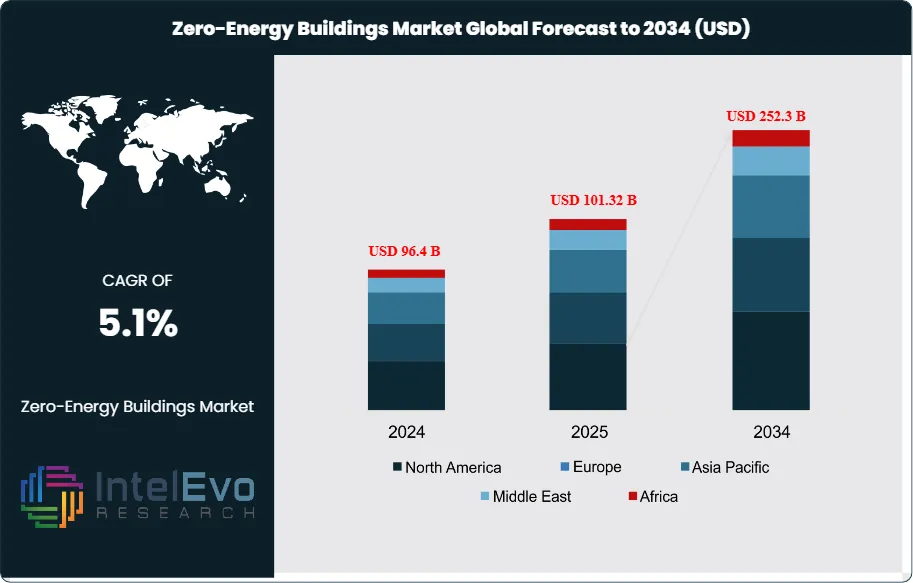
The Zero-Energy Buildings (ZEB) market is gaining traction across various sectors, primarily driven by the increasing emphasis on sustainability and energy efficiency. Zero-Energy Buildings are designed to produce as much energy as they consume over a year, typically utilizing renewable energy sources such as solar panels and wind turbines. This innovative approach significantly reduces greenhouse gas emissions and operational costs, making it an attractive option for both residential and commercial applications.
In the residential sector, ZEBs enhance energy independence and lower utility bills, appealing to eco-conscious homeowners. In commercial settings, organizations are investing in ZEBs to meet corporate sustainability goals, enhance brand reputation, and comply with stringent regulations on energy consumption and emissions. The education sector is also embracing this trend, with many new school constructions aimed at achieving zero energy status to serve as models of sustainability for students and communities.
The growth of the Zero-Energy Buildings market is propelled by advancements in building technologies, including energy-efficient HVAC systems, smart building automation, and improved insulation materials. Increased investment in research and development is further fostering innovation, leading to more effective energy management systems and renewable energy integration.
Geographically, North America and Europe are currently the largest markets for ZEBs, with numerous government incentives and policies supporting their development. However, the Asia-Pacific region is anticipated to experience the highest growth rate due to rapid urbanization, rising energy demands, and a strong push towards sustainable building practices.
Key players in the ZEB market include companies like Johnson Controls, Schneider Electric, and Siemens, which are focused on developing comprehensive energy solutions that support the design, construction, and operation of zero-energy buildings.
Despite the promising outlook, the Zero-Energy Buildings market faces challenges, including high initial investment costs and potential barriers related to building codes and standards. Additionally, the COVID-19 pandemic caused temporary disruptions in construction and supply chains, affecting project timelines. Nevertheless, the market is on a recovery path, driven by the increasing awareness of climate change and the need for energy-efficient buildings. As technologies continue to evolve, particularly in renewable energy and building materials, the demand for Zero-Energy Buildings is expected to rise significantly, solidifying their place in future urban development.
Key Takeaways:
Market Growth: The zero-energy buildings market is expected to reach USD 92.8 Billion by 2034, growing at a robust CAGR of 4.9%, indicating strong market expansion.
Building Type: The Zero-Energy Buildings (ZEB) market includes various building types, primarily segmented into residential, commercial, and industrial categories. Residential ZEBs consist of single-family homes and multi-family units. Commercial ZEBs encompass offices, retail spaces, educational institutions, and healthcare facilities. Industrial ZEBs include factories, warehouses, and manufacturing plants. In terms of market share, residential buildings dominate, accounting for approximately 40% of the ZEB market, followed by commercial (35%) and industrial (25%) segments.
Technology: The Zero-Energy Buildings market utilizes advanced technologies to achieve energy efficiency and sustainability. Key technologies include Renewable Energy Systems (like solar PV, wind, geothermal, and biomass), Energy Storage Systems (including lithium-ion and thermal storage), and Energy Efficiency Technologies (such as high-performance HVAC systems, smart lighting, and building automation). The market share for renewable energy systems is estimated to be around 40%, while energy efficiency technologies account for approximately 35%. Energy storage systems contribute about 25% to the overall market.
Driver: The Zero-Energy Buildings market is driven by rising energy costs, increased regulatory support for sustainability, and growing consumer awareness of environmental impact. Technological advancements in renewable energy and energy efficiency also enhance building performance, while urbanization boosts demand for sustainable housing and commercial spaces. These factors collectively propel market growth.
Restraint: The Zero-Energy Buildings market faces several restraints, including high upfront construction and technology costs, limited availability of skilled labor for advanced building techniques, and resistance to change from traditional construction practices. Additionally, inadequate regulatory frameworks and insufficient consumer awareness can hinder market growth and adoption of zero-energy solutions.
Opportunity: he Zero-Energy Buildings market presents significant opportunities driven by increasing regulatory support, rising energy costs, and growing awareness of environmental sustainability. Advancements in renewable energy technologies and energy-efficient solutions further enhance market potential. Collaboration among stakeholders, including governments, builders, and technology providers, can accelerate the adoption of zero-energy practices.
Trend: The Zero-Energy Buildings market presents opportunities in technological advancements, increased government support, rising energy costs, and growing consumer demand for sustainable living, driving innovation in energy-efficient design and renewable energy solutions.
Regional Analysis: North America is a leading region in the Zero-Energy Buildings market, driven by strong government incentives, growing consumer awareness, and advancements in renewable energy technologies. The U.S. and Canada are actively promoting sustainable building practices, resulting in significant investments in energy-efficient solutions and the adoption of zero-energy standards across residential and commercial sectors.
Building Type Analysis:
The dominant building type in the Zero-Energy Buildings (ZEB) market is commercial buildings, particularly offices and educational institutions. These structures benefit from extensive energy-efficient technologies and renewable energy systems, significantly reducing operational costs and environmental impact. The increasing emphasis on sustainability and corporate responsibility drives demand for energy-efficient designs in commercial spaces. Additionally, government incentives and regulations promote the adoption of zero-energy practices in commercial real estate, making it a key segment in the ZEB market.
Technology Analysis:
The dominant technology in the Zero-Energy Buildings (ZEB) market is Solar Photovoltaic (PV) Systems. These systems convert sunlight directly into electricity, making them a crucial component for achieving zero energy consumption. Solar PV technology is highly scalable, allowing for integration into various building types, from residential homes to commercial and industrial structures. Coupled with Energy Storage Systems, such as lithium-ion batteries, they enable buildings to store excess energy for use during peak demand or nighttime, enhancing energy efficiency. As costs continue to decline and efficiency improves, solar PV remains at the forefront of ZEB technology, driving sustainable building practices.
Region Analysis:
North America Leads with 45% Market Share in Zero-Energy Buildings Market: North America emerges as the dominant region in the Zero-Energy Buildings market, driven by robust government policies promoting sustainability and energy efficiency. The presence of leading technology firms and an increasing number of stakeholders focusing on renewable energy integration further solidify this position. High consumer awareness regarding environmental impacts, combined with favorable incentives for green building practices, has accelerated the adoption of zero-energy solutions. Urbanization trends and substantial investments in energy-efficient technologies have also contributed to North America's market leadership, positioning it as a key player in the global transition towards sustainable construction.
Asia-Pacific is experiencing rapid growth in the Zero-Energy Buildings market, with several countries prioritizing energy efficiency and sustainability initiatives. The region benefits from increasing urbanization, which fuels demand for innovative building solutions. Government support in the form of incentives and regulations promoting renewable energy usage significantly enhances market growth prospects. Countries like China and Japan are at the forefront, investing heavily in green building technologies and infrastructure. A rising middle class with heightened environmental awareness further drives the adoption of zero-energy buildings. This combination of factors positions Asia-Pacific as the region expanding at the fastest compound annual growth rate (CAGR).
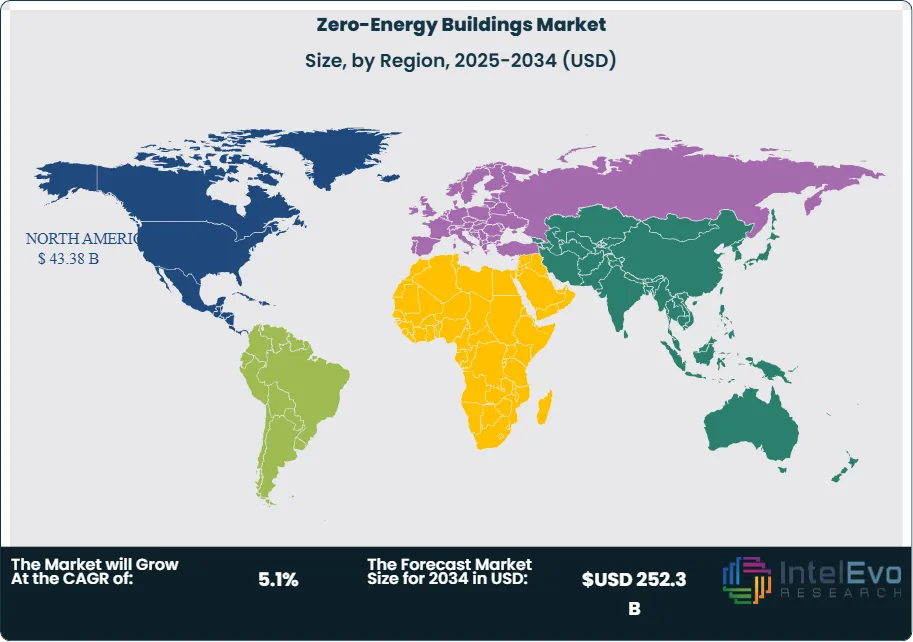
Building-Integrated Renewable Energy (Solar Photovoltaic (PV) Systems, Wind Energy Systems, Geothermal Energy Systems, Biomass Energy Systems)
Energy Storage Solutions (Battery Storage (Lithium-ion, Lead-acid), Thermal Energy Storage)
Smart Energy Management Systems (High-performance HVAC Systems, Smart Lighting Solutions, Building Automation Systems, Insulation and Building Envelope Materials, Building Energy Management Systems (BEMS))
By Building Type (Residential Buildings, Commercial Buildings, Institutional Buildings, Industrial Buildings), By Construction Material (High-Performance Insulation Materials, Energy-Efficient Windows & Doors, Solar Panels & Photovoltaic Systems, HVAC & Energy Management Systems), By Technology (Solar Photovoltaic Systems, Building-Integrated Renewable Energy, Energy Storage Solutions, Smart Energy Management Systems), By End-User (Government & Public Sector, Real Estate Developers, Commercial Enterprises, Residential Consumers)
Research Methodology
Primary Research- 100 Interviews of Stakeholders
Secondary Research
Desk Research
Regional scope
North America (United States, Canada, Mexico)
Latin America (Brazil, Argentina, Columbia)
East Asia And Pacific (China, Japan, South Korea, Australia, Cambodia, Fiji, Indonesia)
Sea And South Asia (India, Singapore, Thailand, Taiwan, Malaysia)
Eastern Europe (Poland, Russia, Czech Republic, Romania)
Western Europe (Germany, U.K., France, Spain, Itlay)
Middle East & Africa (GCC Countries, Egypt, Nigeria, South Africa, Israel)
Competitive Landscape
Siemens AG, Schneider Electric, Johnson Controls International plc, Honeywell International Inc., Trane Technologies plc, General Electric Company (GE), Itron Inc., NREL (National Renewable Energy Lab), WSP Global Inc., Fujitsu Ltd., Mitsubishi Electric Corporation, Kingspan Group, Veolia Environnement S.A., Arcadia Power, Ramboll Group, Sika AG, SunPower Corporation, Tesla Inc., Lendlease Group, First Solar Inc.
Customization Scope
Customization for segments, region/country-level will be provided. Moreover, additional customization can be done based on the requirements.
Pricing and Purchase Options
Avail customized purchase options to meet your exact research needs. We have three licenses to opt for: Single User License, Multi-User License (Up to 5 Users), Corporate Use License (Unlimited User and Printable PDF).
TABLE OF CONTENTS
1. EXECUTIVE SUMMARY
1.1. MARKET SNAPSHOT
1.2. KEY FINDINGS & INSIGHTS
1.3. ANALYST RECOMMENDATIONS
1.4. FUTURE OUTLOOK
2. RESEARCH METHODOLOGY
2.1. MARKET DEFINITION & SCOPE
2.2. RESEARCH OBJECTIVES: PRIMARY & SECONDARY DATA SOURCES
2.3. DATA COLLECTION SOURCES
2.3.1. COVERAGE OF 100+ PRIMARY RESEARCH/CONSULTATION CALLS WITH INDUSTRY STAKEHOLDERS
FIGURE 17 NORTH AMERICA ZERO-ENERGY BUILDINGS CURRENT AND FUTURE TYPE ANALYSIS, 2025–2034, (USD MILLION)
FIGURE 18 NORTH AMERICA ZERO-ENERGY BUILDINGS CURRENT AND FUTURE END USER ANALYSIS, 2025–2034, (USD MILLION)
FIGURE 19 MARKET SHARE BY COUNTRY
FIGURE 20 LATIN AMERICA ZERO-ENERGY BUILDINGS CURRENT AND FUTURE TYPE ANALYSIS, 2025–2034, (USD MILLION)
FIGURE 21 LATIN AMERICA ZERO-ENERGY BUILDINGS CURRENT AND FUTURE END USER ANALYSIS, 2025–2034, (USD MILLION)
FIGURE 22 MARKET SHARE BY COUNTRY
FIGURE 23 EASTERN EUROPE ZERO-ENERGY BUILDINGS CURRENT AND FUTURE TYPE ANALYSIS, 2025–2034, (USD MILLION)
FIGURE 24 EASTERN EUROPE ZERO-ENERGY BUILDINGS CURRENT AND FUTURE END USER ANALYSIS, 2025–2034, (USD MILLION)
FIGURE 25 MARKET SHARE BY COUNTRY
FIGURE 26 WESTERN EUROPE ZERO-ENERGY BUILDINGS CURRENT AND FUTURE TYPE ANALYSIS, 2025–2034, (USD MILLION)
FIGURE 27 WESTERN EUROPE ZERO-ENERGY BUILDINGS CURRENT AND FUTURE END USER ANALYSIS, 2025–2034, (USD MILLION)
FIGURE 28 MARKET SHARE BY COUNTRY
FIGURE 29 EAST ASIA AND PACIFIC ZERO-ENERGY BUILDINGS CURRENT AND FUTURE TYPE ANALYSIS, 2025–2034, (USD MILLION)
FIGURE 30 EAST ASIA AND PACIFIC ZERO-ENERGY BUILDINGS CURRENT AND FUTURE END USER ANALYSIS, 2025–2034, (USD MILLION)
FIGURE 31 MARKET SHARE BY COUNTRY
FIGURE 32 SEA AND SOUTH ASIA ZERO-ENERGY BUILDINGS CURRENT AND FUTURE TYPE ANALYSIS, 2025–2034, (USD MILLION)
FIGURE 33 SEA AND SOUTH ASIA ZERO-ENERGY BUILDINGS CURRENT AND FUTURE END USER ANALYSIS, 2025–2034, (USD MILLION)
FIGURE 34 MARKET SHARE BY COUNTRY
FIGURE 35 MIDDLE EAST AND AFRICA ZERO-ENERGY BUILDINGS CURRENT AND FUTURE TYPE ANALYSIS, 2025–2034, (USD MILLION)
FIGURE 36 MIDDLE EAST AND AFRICA ZERO-ENERGY BUILDINGS CURRENT AND FUTURE END USER ANALYSIS, 2025–2034, (USD MILLION)
FIGURE 37 NORTH AMERICA ZERO-ENERGY BUILDINGS CURRENT AND FUTURE MARKET VOLUME SHARE REGIONAL ANALYSIS, 2025–2034, (USD MILLION)
FIGURE 38 U.S. ZERO-ENERGY BUILDINGS CURRENT AND FUTURE TYPE ANALYSIS, 2025–2034, (USD MILLION)
FIGURE 39 U.S. ZERO-ENERGY BUILDINGS CURRENT AND FUTURE END USER ANALYSIS, 2025–2034, (USD MILLION)
FIGURE 40 CANADA ZERO-ENERGY BUILDINGS CURRENT AND FUTURE TYPE ANALYSIS, 2025–2034, (USD MILLION)
FIGURE 41 CANADA ZERO-ENERGY BUILDINGS CURRENT AND FUTURE END USER ANALYSIS, 2025–2034, (USD MILLION)
FIGURE 42 LATIN AMERICA ZERO-ENERGY BUILDINGS CURRENT AND FUTURE MARKET VOLUME SHARE REGIONAL ANALYSIS, 2025–2034, (USD MILLION)
FIGURE 43 MEXICO ZERO-ENERGY BUILDINGS CURRENT AND FUTURE TYPE ANALYSIS, 2025–2034, (USD MILLION)
FIGURE 44 MEXICO ZERO-ENERGY BUILDINGS CURRENT AND FUTURE END USER ANALYSIS, 2025–2034, (USD MILLION)
FIGURE 45 BRAZIL ZERO-ENERGY BUILDINGS CURRENT AND FUTURE TYPE ANALYSIS, 2025–2034, (USD MILLION)
FIGURE 46 BRAZIL ZERO-ENERGY BUILDINGS CURRENT AND FUTURE END USER ANALYSIS, 2025–2034, (USD MILLION)
FIGURE 47 ARGENTINA ZERO-ENERGY BUILDINGS CURRENT AND FUTURE TYPE ANALYSIS, 2025–2034, (USD MILLION)
FIGURE 48 ARGENTINA ZERO-ENERGY BUILDINGS CURRENT AND FUTURE END USER ANALYSIS, 2025–2034, (USD MILLION)
FIGURE 49 COLUMBIA ZERO-ENERGY BUILDINGS CURRENT AND FUTURE TYPE ANALYSIS, 2025–2034, (USD MILLION)
FIGURE 50 COLUMBIA ZERO-ENERGY BUILDINGS CURRENT AND FUTURE END USER ANALYSIS, 2025–2034, (USD MILLION)
FIGURE 51 REST OF LATIN AMERICA ZERO-ENERGY BUILDINGS CURRENT AND FUTURE TYPE ANALYSIS, 2025–2034, (USD MILLION)
FIGURE 52 REST OF LATIN AMERICA ZERO-ENERGY BUILDINGS CURRENT AND FUTURE END USER ANALYSIS, 2025–2034, (USD MILLION)
FIGURE 53 EASTERN EUROPE ZERO-ENERGY BUILDINGS CURRENT AND FUTURE MARKET VOLUME SHARE REGIONAL ANALYSIS, 2025–2034, (USD MILLION)
FIGURE 54 POLAND ZERO-ENERGY BUILDINGS CURRENT AND FUTURE TYPE ANALYSIS, 2025–2034, (USD MILLION)
FIGURE 55 POLAND ZERO-ENERGY BUILDINGS CURRENT AND FUTURE END USER ANALYSIS, 2025–2034, (USD MILLION)
FIGURE 56 RUSSIA ZERO-ENERGY BUILDINGS CURRENT AND FUTURE TYPE ANALYSIS, 2025–2034, (USD MILLION)
FIGURE 57 RUSSIA ZERO-ENERGY BUILDINGS CURRENT AND FUTURE END USER ANALYSIS, 2025–2034, (USD MILLION)
FIGURE 58 CZECH REPUBLIC ZERO-ENERGY BUILDINGS CURRENT AND FUTURE TYPE ANALYSIS, 2025–2034, (USD MILLION)
FIGURE 59 CZECH REPUBLIC ZERO-ENERGY BUILDINGS CURRENT AND FUTURE END USER ANALYSIS, 2025–2034, (USD MILLION)
FIGURE 60 ROMANIA ZERO-ENERGY BUILDINGS CURRENT AND FUTURE TYPE ANALYSIS, 2025–2034, (USD MILLION)
FIGURE 61 ROMANIA ZERO-ENERGY BUILDINGS CURRENT AND FUTURE END USER ANALYSIS, 2025–2034, (USD MILLION)
FIGURE 62 REST OF EASTERN EUROPE ZERO-ENERGY BUILDINGS CURRENT AND FUTURE TYPE ANALYSIS, 2025–2034, (USD MILLION)
FIGURE 63 REST OF EASTERN EUROPE ZERO-ENERGY BUILDINGS CURRENT AND FUTURE END USER ANALYSIS, 2025–2034, (USD MILLION)
FIGURE 64 WESTERN EUROPE ZERO-ENERGY BUILDINGS CURRENT AND FUTURE MARKET VOLUME SHARE REGIONAL ANALYSIS, 2025–2034, (USD MILLION)
FIGURE 65 GERMANY ZERO-ENERGY BUILDINGS CURRENT AND FUTURE TYPE ANALYSIS, 2025–2034, (USD MILLION)
FIGURE 66 GERMANY ZERO-ENERGY BUILDINGS CURRENT AND FUTURE END USER ANALYSIS, 2025–2034, (USD MILLION)
FIGURE 67 FRANCE ZERO-ENERGY BUILDINGS CURRENT AND FUTURE TYPE ANALYSIS, 2025–2034, (USD MILLION)
FIGURE 68 FRANCE ZERO-ENERGY BUILDINGS CURRENT AND FUTURE END USER ANALYSIS, 2025–2034, (USD MILLION)
FIGURE 69 UK ZERO-ENERGY BUILDINGS CURRENT AND FUTURE TYPE ANALYSIS, 2025–2034, (USD MILLION)
FIGURE 70 UK ZERO-ENERGY BUILDINGS CURRENT AND FUTURE END USER ANALYSIS, 2025–2034, (USD MILLION)
FIGURE 71 SPAIN ZERO-ENERGY BUILDINGS CURRENT AND FUTURE TYPE ANALYSIS, 2025–2034, (USD MILLION)
FIGURE 72 SPAIN ZERO-ENERGY BUILDINGS CURRENT AND FUTURE END USER ANALYSIS, 2025–2034, (USD MILLION)
FIGURE 73 ITALY ZERO-ENERGY BUILDINGS CURRENT AND FUTURE TYPE ANALYSIS, 2025–2034, (USD MILLION)
FIGURE 74 ITALY ZERO-ENERGY BUILDINGS CURRENT AND FUTURE END USER ANALYSIS, 2025–2034, (USD MILLION)
FIGURE 75 REST OF WESTERN EUROPE ZERO-ENERGY BUILDINGS CURRENT AND FUTURE TYPE ANALYSIS, 2025–2034, (USD MILLION)
FIGURE 76 REST OF WESTERN EUROPE ZERO-ENERGY BUILDINGS CURRENT AND FUTURE END USER ANALYSIS, 2025–2034, (USD MILLION)
FIGURE 77 EAST ASIA AND PACIFIC ZERO-ENERGY BUILDINGS CURRENT AND FUTURE MARKET VOLUME SHARE REGIONAL ANALYSIS, 2025–2034, (USD MILLION)
FIGURE 78 CHINA ZERO-ENERGY BUILDINGS CURRENT AND FUTURE TYPE ANALYSIS, 2025–2034, (USD MILLION)
FIGURE 79 CHINA ZERO-ENERGY BUILDINGS CURRENT AND FUTURE END USER ANALYSIS, 2025–2034, (USD MILLION)
FIGURE 80 JAPAN ZERO-ENERGY BUILDINGS CURRENT AND FUTURE TYPE ANALYSIS, 2025–2034, (USD MILLION)
FIGURE 81 JAPAN ZERO-ENERGY BUILDINGS CURRENT AND FUTURE END USER ANALYSIS, 2025–2034, (USD MILLION)
FIGURE 82 AUSTRALIA ZERO-ENERGY BUILDINGS CURRENT AND FUTURE TYPE ANALYSIS, 2025–2034, (USD MILLION)
FIGURE 83 AUSTRALIA ZERO-ENERGY BUILDINGS CURRENT AND FUTURE END USER ANALYSIS, 2025–2034, (USD MILLION)
FIGURE 84 CAMBODIA ZERO-ENERGY BUILDINGS CURRENT AND FUTURE TYPE ANALYSIS, 2025–2034, (USD MILLION)
FIGURE 85 CAMBODIA ZERO-ENERGY BUILDINGS CURRENT AND FUTURE END USER ANALYSIS, 2025–2034, (USD MILLION)
FIGURE 86 FIJI ZERO-ENERGY BUILDINGS CURRENT AND FUTURE TYPE ANALYSIS, 2025–2034, (USD MILLION)
FIGURE 87 FIJI ZERO-ENERGY BUILDINGS CURRENT AND FUTURE END USER ANALYSIS, 2025–2034, (USD MILLION)
FIGURE 88 INDONESIA ZERO-ENERGY BUILDINGS CURRENT AND FUTURE TYPE ANALYSIS, 2025–2034, (USD MILLION)
FIGURE 89 INDONESIA ZERO-ENERGY BUILDINGS CURRENT AND FUTURE END USER ANALYSIS, 2025–2034, (USD MILLION)
FIGURE 90 SOUTH KOREA ZERO-ENERGY BUILDINGS CURRENT AND FUTURE TYPE ANALYSIS, 2025–2034, (USD MILLION)
FIGURE 91 SOUTH KOREA ZERO-ENERGY BUILDINGS CURRENT AND FUTURE END USER ANALYSIS, 2025–2034, (USD MILLION)
FIGURE 92 REST OF EAST ASIA AND PACIFIC ZERO-ENERGY BUILDINGS CURRENT AND FUTURE TYPE ANALYSIS, 2025–2034, (USD MILLION)
FIGURE 93 REST OF EAST ASIA AND PACIFIC ZERO-ENERGY BUILDINGS CURRENT AND FUTURE END USER ANALYSIS, 2025–2034, (USD MILLION)
FIGURE 94 SEA AND SOUTH ASIA ZERO-ENERGY BUILDINGS CURRENT AND FUTURE MARKET VOLUME SHARE REGIONAL ANALYSIS, 2025–2034, (USD MILLION)
FIGURE 95 BANGLADESH ZERO-ENERGY BUILDINGS CURRENT AND FUTURE TYPE ANALYSIS, 2025–2034, (USD MILLION)
FIGURE 96 BANGLADESH ZERO-ENERGY BUILDINGS CURRENT AND FUTURE END USER ANALYSIS, 2025–2034, (USD MILLION)
FIGURE 97 NEW ZEALAND ZERO-ENERGY BUILDINGS CURRENT AND FUTURE TYPE ANALYSIS, 2025–2034, (USD MILLION)
FIGURE 98 NEW ZEALAND ZERO-ENERGY BUILDINGS CURRENT AND FUTURE END USER ANALYSIS, 2025–2034, (USD MILLION)
FIGURE 99 INDIA ZERO-ENERGY BUILDINGS CURRENT AND FUTURE TYPE ANALYSIS, 2025–2034, (USD MILLION)
FIGURE 100 INDIA ZERO-ENERGY BUILDINGS CURRENT AND FUTURE END USER ANALYSIS, 2025–2034, (USD MILLION)
FIGURE 101 SINGAPORE ZERO-ENERGY BUILDINGS CURRENT AND FUTURE TYPE ANALYSIS, 2025–2034, (USD MILLION)
FIGURE 102 SINGAPORE ZERO-ENERGY BUILDINGS CURRENT AND FUTURE END USER ANALYSIS, 2025–2034, (USD MILLION)
FIGURE 103 THAILAND ZERO-ENERGY BUILDINGS CURRENT AND FUTURE TYPE ANALYSIS, 2025–2034, (USD MILLION)
FIGURE 104 THAILAND ZERO-ENERGY BUILDINGS CURRENT AND FUTURE END USER ANALYSIS, 2025–2034, (USD MILLION)
FIGURE 105 TAIWAN ZERO-ENERGY BUILDINGS CURRENT AND FUTURE TYPE ANALYSIS, 2025–2034, (USD MILLION)
FIGURE 106 TAIWAN ZERO-ENERGY BUILDINGS CURRENT AND FUTURE END USER ANALYSIS, 2025–2034, (USD MILLION)
FIGURE 107 MALAYSIA ZERO-ENERGY BUILDINGS CURRENT AND FUTURE TYPE ANALYSIS, 2025–2034, (USD MILLION)
FIGURE 108 MALAYSIA ZERO-ENERGY BUILDINGS CURRENT AND FUTURE END USER ANALYSIS, 2025–2034, (USD MILLION)
FIGURE 109 REST OF SEA AND SOUTH ASIA ZERO-ENERGY BUILDINGS CURRENT AND FUTURE TYPE ANALYSIS, 2025–2034, (USD MILLION)
FIGURE 110 REST OF SEA AND SOUTH ASIA ZERO-ENERGY BUILDINGS CURRENT AND FUTURE END USER ANALYSIS, 2025–2034, (USD MILLION)
FIGURE 111 MIDDLE EAST AND AFRICA ZERO-ENERGY BUILDINGS CURRENT AND FUTURE MARKET VOLUME SHARE REGIONAL ANALYSIS, 2025–2034, (USD MILLION)
FIGURE 112 GCC COUNTRIES ZERO-ENERGY BUILDINGS CURRENT AND FUTURE TYPE ANALYSIS, 2025–2034, (USD MILLION)
FIGURE 113 GCC COUNTRIES ZERO-ENERGY BUILDINGS CURRENT AND FUTURE END USER ANALYSIS, 2025–2034, (USD MILLION)
FIGURE 114 SAUDI ARABIA ZERO-ENERGY BUILDINGS CURRENT AND FUTURE TYPE ANALYSIS, 2025–2034, (USD MILLION)
FIGURE 115 SAUDI ARABIA ZERO-ENERGY BUILDINGS CURRENT AND FUTURE END USER ANALYSIS, 2025–2034, (USD MILLION)
FIGURE 116 UAE ZERO-ENERGY BUILDINGS CURRENT AND FUTURE TYPE ANALYSIS, 2025–2034, (USD MILLION)
FIGURE 117 UAE ZERO-ENERGY BUILDINGS CURRENT AND FUTURE END USER ANALYSIS, 2025–2034, (USD MILLION)
FIGURE 118 BAHRAIN ZERO-ENERGY BUILDINGS CURRENT AND FUTURE TYPE ANALYSIS, 2025–2034, (USD MILLION)
FIGURE 119 BAHRAIN ZERO-ENERGY BUILDINGS CURRENT AND FUTURE END USER ANALYSIS, 2025–2034, (USD MILLION)
FIGURE 120 KUWAIT ZERO-ENERGY BUILDINGS CURRENT AND FUTURE TYPE ANALYSIS, 2025–2034, (USD MILLION)
FIGURE 121 KUWAIT ZERO-ENERGY BUILDINGS CURRENT AND FUTURE END USER ANALYSIS, 2025–2034, (USD MILLION)
FIGURE 122 OMAN ZERO-ENERGY BUILDINGS CURRENT AND FUTURE TYPE ANALYSIS, 2025–2034, (USD MILLION)
FIGURE 123 OMAN ZERO-ENERGY BUILDINGS CURRENT AND FUTURE END USER ANALYSIS, 2025–2034, (USD MILLION)
FIGURE 124 QATAR ZERO-ENERGY BUILDINGS CURRENT AND FUTURE TYPE ANALYSIS, 2025–2034, (USD MILLION)
FIGURE 125 QATAR ZERO-ENERGY BUILDINGS CURRENT AND FUTURE END USER ANALYSIS, 2025–2034, (USD MILLION)
FIGURE 126 EGYPT ZERO-ENERGY BUILDINGS CURRENT AND FUTURE TYPE ANALYSIS, 2025–2034, (USD MILLION)
FIGURE 127 EGYPT ZERO-ENERGY BUILDINGS CURRENT AND FUTURE END USER ANALYSIS, 2025–2034, (USD MILLION)
FIGURE 128 NIGERIA ZERO-ENERGY BUILDINGS CURRENT AND FUTURE TYPE ANALYSIS, 2025–2034, (USD MILLION)
FIGURE 129 NIGERIA ZERO-ENERGY BUILDINGS CURRENT AND FUTURE END USER ANALYSIS, 2025–2034, (USD MILLION)
FIGURE 130 SOUTH AFRICA ZERO-ENERGY BUILDINGS CURRENT AND FUTURE TYPE ANALYSIS, 2025–2034, (USD MILLION)
FIGURE 131 SOUTH AFRICA ZERO-ENERGY BUILDINGS CURRENT AND FUTURE END USER ANALYSIS, 2025–2034, (USD MILLION)
FIGURE 132 ISRAEL ZERO-ENERGY BUILDINGS CURRENT AND FUTURE TYPE ANALYSIS, 2025–2034, (USD MILLION)
FIGURE 133 ISRAEL ZERO-ENERGY BUILDINGS CURRENT AND FUTURE END USER ANALYSIS, 2025–2034, (USD MILLION)
FIGURE 134 REST OF MEA ZERO-ENERGY BUILDINGS CURRENT AND FUTURE TYPE ANALYSIS, 2025–2034, (USD MILLION)
FIGURE 135 REST OF MEA ZERO-ENERGY BUILDINGS CURRENT AND FUTURE END USER ANALYSIS, 2025–2034, (USD MILLION)
FIGURE 136 U. S. MARKET SHARE ANALYSIS BY TYPE (2024)
FIGURE 137 U. S. MARKET SHARE ANALYSIS BY END USER (2024)
FIGURE 138 CANADA MARKET SHARE ANALYSIS BY TYPE (2024)
FIGURE 139 CANADA MARKET SHARE ANALYSIS BY END USER (2024)
FIGURE 140 MEXICO MARKET SHARE ANALYSIS BY TYPE (2024)
FIGURE 141 MEXICO MARKET SHARE ANALYSIS BY END USER (2024)
FIGURE 142 CHINA MARKET SHARE ANALYSIS BY TYPE (2024)
FIGURE 143 CHINA MARKET SHARE ANALYSIS BY END USER (2024)
FIGURE 144 JAPAN MARKET SHARE ANALYSIS BY TYPE (2024)
FIGURE 145 JAPAN MARKET SHARE ANALYSIS BY END USER (2024)
FIGURE 146 INDIA MARKET SHARE ANALYSIS BY TYPE (2024)
FIGURE 147 INDIA MARKET SHARE ANALYSIS BY END USER (2024)
FIGURE 148 SOUTH KOREA MARKET SHARE ANALYSIS BY TYPE (2024)
FIGURE 149 SOUTH KOREA MARKET SHARE ANALYSIS BY END USER (2024)
FIGURE 150 SAUDI ARABIA MARKET SHARE ANALYSIS BY TYPE (2024)
FIGURE 151 SAUDI ARABIA MARKET SHARE ANALYSIS BY END USER (2024)
FIGURE 152 UAE MARKET SHARE ANALYSIS BY TYPE (2024)
FIGURE 153 UAE MARKET SHARE ANALYSIS BY END USER (2024)
FIGURE 154 EGYPT MARKET SHARE ANALYSIS BY TYPE (2024)
FIGURE 155 EGYPT MARKET SHARE ANALYSIS BY END USER (2024)
FIGURE 156 NIGERIA MARKET SHARE ANALYSIS BY TYPE (2024)
FIGURE 157 NIGERIA MARKET SHARE ANALYSIS BY END USER (2024)
FIGURE 158 SOUTH AFRICA MARKET SHARE ANALYSIS BY TYPE (2024)
FIGURE 159 SOUTH AFRICA MARKET SHARE ANALYSIS BY END USER (2024)
FIGURE 160 GERMANY MARKET SHARE ANALYSIS BY TYPE (2024)
FIGURE 161 GERMANY MARKET SHARE ANALYSIS BY END USER (2024)
FIGURE 162 FRANCE MARKET SHARE ANALYSIS BY TYPE (2024)
FIGURE 163 FRANCE MARKET SHARE ANALYSIS BY END USER (2024)
FIGURE 164 UK MARKET SHARE ANALYSIS BY TYPE (2024)
FIGURE 165 UK MARKET SHARE ANALYSIS BY END USER (2024)
FIGURE 166 SPAIN MARKET SHARE ANALYSIS BY TYPE (2024)
FIGURE 167 SPAIN MARKET SHARE ANALYSIS BY END USER (2024)
FIGURE 168 ITALY MARKET SHARE ANALYSIS BY TYPE (2024)
FIGURE 169 ITALY MARKET SHARE ANALYSIS BY END USER (2024)
FIGURE 170 BRAZIL MARKET SHARE ANALYSIS BY TYPE (2024)
FIGURE 171 BRAZIL MARKET SHARE ANALYSIS BY END USER (2024)
FIGURE 172 ARGENTINA MARKET SHARE ANALYSIS BY TYPE (2024)
FIGURE 173 ARGENTINA MARKET SHARE ANALYSIS BY END USER (2024)
FIGURE 174 COLUMBIA MARKET SHARE ANALYSIS BY TYPE (2024)
FIGURE 175 COLUMBIA MARKET SHARE ANALYSIS BY END USER (2024)
FIGURE 176 GLOBAL ZERO-ENERGY BUILDINGS CURRENT AND FUTURE MARKET KEY COUNTRY LEVEL ANALYSIS, 2024–2034, (USD MILLION)
FIGURE 177 FINANCIAL OVERVIEW:
Key Players Analysis:
Siemens AG: Siemens AG excels in smart building technologies and energy management solutions. With a strong focus on innovation, Siemens integrates digitalization into buildings, promoting energy efficiency and sustainability. Their comprehensive offerings include building automation, HVAC systems, and renewable energy solutions tailored for various building types.
Schneider Electric: Schneider Electric is a global leader in energy management and automation solutions. Their EcoStruxure platform enhances building efficiency through smart technology integration. Schneider Electric focuses on renewable energy systems, energy storage, and efficient building operations, helping clients achieve sustainability goals while reducing operational costs.
Johnson Controls International plc: Johnson Controls specializes in optimizing building performance through innovative HVAC and energy solutions. The company emphasizes sustainability and efficiency, providing smart technologies and building management systems. Johnson Controls works across sectors, enabling clients to improve energy consumption and reduce carbon footprints in zero-energy buildings.
Honeywell International Inc: Honeywell International develops advanced technologies for energy management in buildings. Their solutions include smart building systems, HVAC controls, and energy-efficient automation technologies. Honeywell is committed to sustainability, helping clients achieve operational efficiency and compliance with regulations while promoting renewable energy utilization in various building types.
Trane Technologies plc: Trane Technologies focuses on sustainable HVAC solutions for commercial and residential buildings. Their products promote energy efficiency and environmental responsibility, contributing to the zero-energy building market. Trane integrates smart technologies to enhance comfort and reduce energy consumption, aligning with global sustainability initiatives.
General Electric Company (GE): General Electric (GE) is a pioneer in renewable energy solutions, including solar and wind technologies. Their commitment to sustainability extends to energy-efficient building systems. GE focuses on integrating renewable energy with advanced energy management systems, helping buildings achieve net-zero energy consumption through innovative solutions.
Itron, Inc.: Itron specializes in energy and water resource management technologies. Their smart grid solutions empower building owners with data analytics for better energy management. Itron's technologies support the transition to zero-energy buildings by optimizing energy consumption and promoting the integration of renewable energy sources.
Market Key Players
Siemens AG
Schneider Electric
Johnson Controls International plc
Honeywell International Inc.
Trane Technologies plc
General Electric Company (GE)
Itron, Inc.
NREL (National Renewable Energy Lab)
WSP Global Inc.
Fujitsu Ltd.
Mitsubishi Electric Corporation
Kingspan Group
Veolia Environnement S.A.
Arcadia Power
Ramboll Group
Sika AG
SunPower Corporation
Tesla, Inc.
Lendlease Group
First Solar, Inc.
Driver:
Government Regulations and Incentives
Governments worldwide are implementing stringent regulations and providing incentives to promote energy efficiency. These policies encourage the construction of zero-energy buildings, ensuring compliance with sustainability targets and creating a favorable environment for developers and investors.
Rising Energy Costs
Increasing energy prices are prompting consumers and businesses to seek cost-effective solutions for energy consumption. Zero-energy buildings reduce reliance on external energy sources, resulting in long-term savings and appealing to those looking to manage operational expenses effectively.
Environmental Sustainability Awareness
Growing awareness of climate change and environmental degradation is driving demand for sustainable building practices. Consumers increasingly prefer eco-friendly options, motivating developers to adopt zero-energy designs that minimize carbon footprints and promote responsible resource utilization in construction.
Restrain:
High Initial Costs
The upfront investment required for zero-energy buildings can be significantly higher than conventional buildings. This financial barrier discourages developers and homeowners, limiting widespread adoption despite long-term energy savings and environmental benefits associated with zero-energy construction.
Regulatory Challenges
Variability in building codes, zoning laws, and energy efficiency standards across regions creates uncertainty for developers. Navigating these regulatory frameworks can be complex and time-consuming, often delaying projects and increasing costs, which may deter investment in zero-energy building initiatives.
Opportunities:
Growing Demand for Sustainable Solutions
The increasing global focus on sustainability presents a significant opportunity for the ZEB market. As consumers and businesses seek eco-friendly alternatives, zero-energy buildings offer a compelling solution to reduce carbon footprints. This demand is further supported by government incentives and regulations promoting energy efficiency, creating a robust market for developers, architects, and technology providers to innovate and deliver sustainable building solutions.
Advancements in Technology
Rapid advancements in renewable energy technologies and energy efficiency solutions create opportunities for innovation in the ZEB market. Breakthroughs in solar photovoltaic systems, energy storage solutions, and smart building technologies enable the construction of more efficient and cost-effective zero-energy buildings. Companies can capitalize on these advancements by integrating cutting-edge technologies into their offerings, improving overall building performance, and enhancing consumer interest in sustainable construction.
Trends:
Increased Adoption of Smart Technologies
The integration of smart technologies is rapidly transforming ZEBs. Building Energy Management Systems (BEMS) utilize IoT devices to monitor and optimize energy usage in real-time, leading to significant energy savings. Smart lighting, HVAC systems, and automation controls improve energy efficiency while enhancing occupant comfort. This trend reflects a growing demand for intelligent solutions that provide actionable insights, enabling buildings to operate more sustainably.
Recent Development:
July 2022: Siemens has introduced its new Masterguard E-Hybrid solution for zero-energy buildings. This revolutionary technology combines energy storage, solar panels, and smart building controls to allow buildings to create, store, and regulate their energy, decreasing dependency on the grid and assisting in the pursuit of zero energy use. The Masterguard E-Hybrid system is intended to optimize energy usage, reduce greenhouse gas emissions, and increase building sustainability, in line with the trend towards zero-energy buildings.
November 2021: Schneider Electric launched its new EcoStruxure for Buildings solution, a comprehensive platform that integrates building management systems, energy management systems, and digital services to optimize building performance and sustainability. The solution monitors, analyses, and optimizes building energy consumption using advanced analytics, automation, and IoT technologies, enabling effective operation and administration of zero-energy buildings.